China Sidewall conveyor belt Supplier, Factory

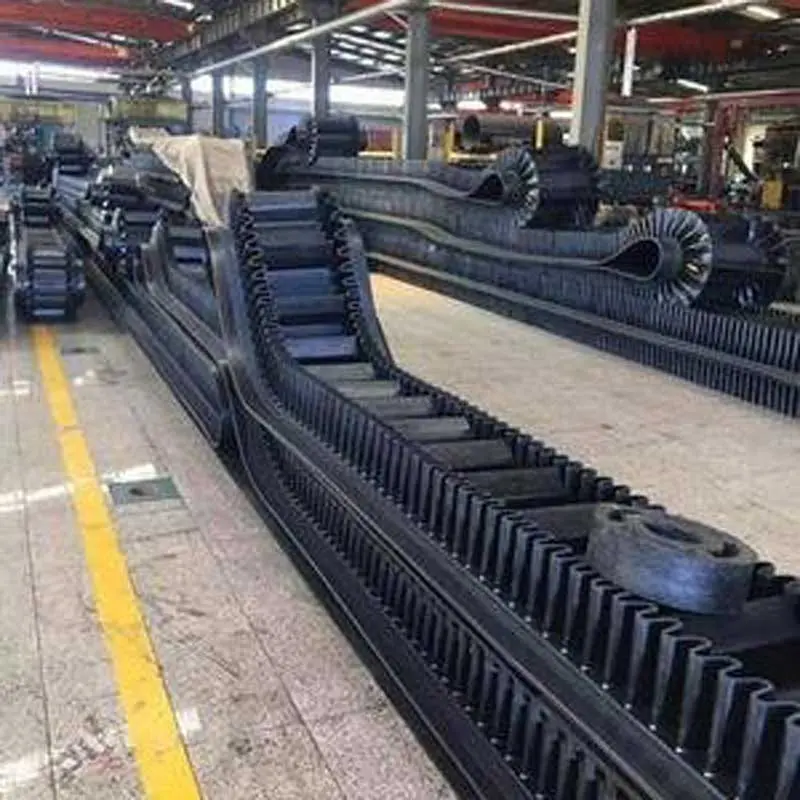
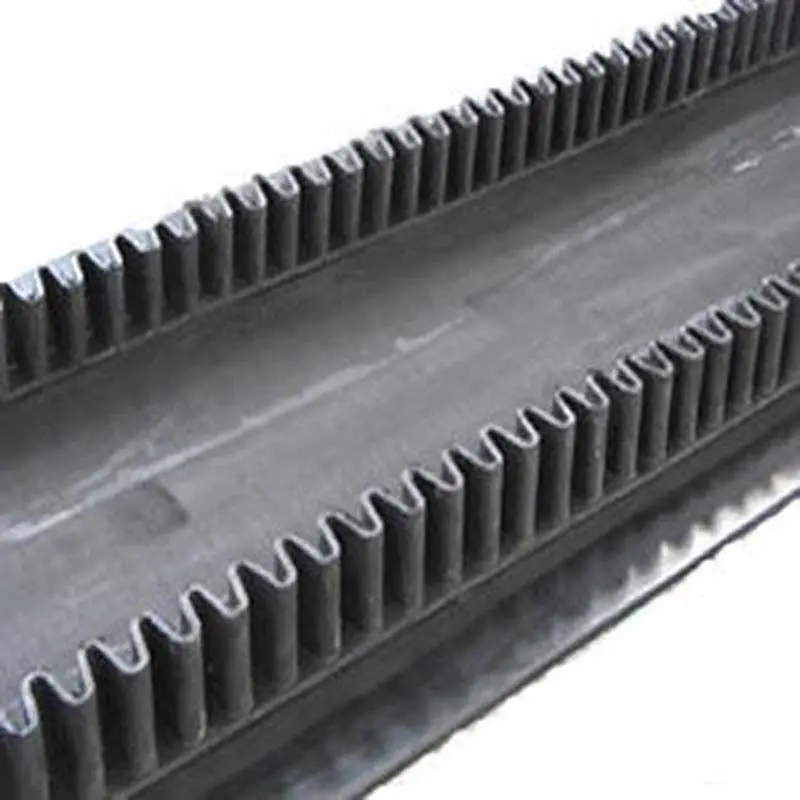
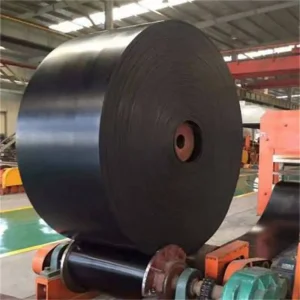
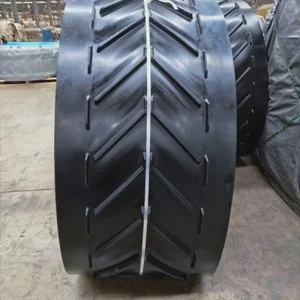
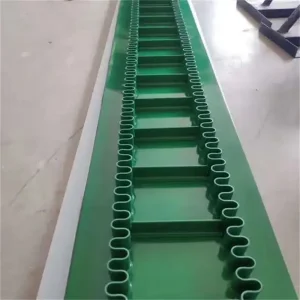
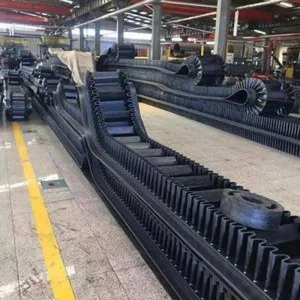
The high angle wavy edge band consists of three parts: the base band, the edge band, and the transverse partition. The blocking edge plays a role in preventing materials from slipping and falling. To facilitate bypassing the drum, the edge is designed in a corrugated shape; The function of the transverse partition is to support the material, and in order to achieve large angle conveying, a T-shaped TC type is used. The edge and bulkhead are connected to the base tape through secondary vulcanization, which has high connection strength.

Wave shaped edge conveyor belt (ordinary large angle wave shaped edge conveyor belt) varieties: According to the different properties of the covering adhesive, it can be divided into ordinary type, heat-resistant type, flame-retardant type, cold resistant type, acid alkali resistant type, oil resistant type, etc.

Product Description

Specifications & Core Materials

Wave Shaped Edge Belt Specifications

  • Core Materials: CC-56, NN100, NN150, NN200, NN300, NN400
  • Bandwidth: 100mm - 2400mm
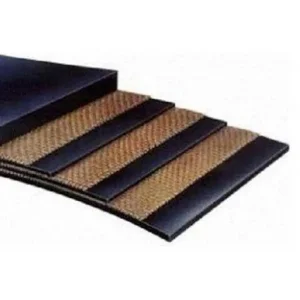
  • Fabric Layer: 2 - 10 layers
  • Cover Adhesive (Working Surface): 1.5 - 8mm
  • Cover Adhesive (Non-working Surface): 0mm - 4.5mm

Available Core Materials

  • Cotton Canvas Core: CC-56
  • Nylon Fabric Core: NN100, NN150, NN200, NN300, NN400, NN500
  • Polyester Fabric Core: EP100, EP150, EP200, EP300, EP400, EP500
  • Wire Rope Core: ST1000 - ST5400

Edge, Partition & Sizing

  • Edge Height: S80, S100, S120, S160, S200, S240, S300, S400, S500
  • Partition Height: TC75, TC90, TC110, TC140, TC180, TC220, TC280, TC380, TC480
  • Writing Style: B800 * 6 (3+3+1.5) * 110m / S120-120 TC110-252-460

Product Features

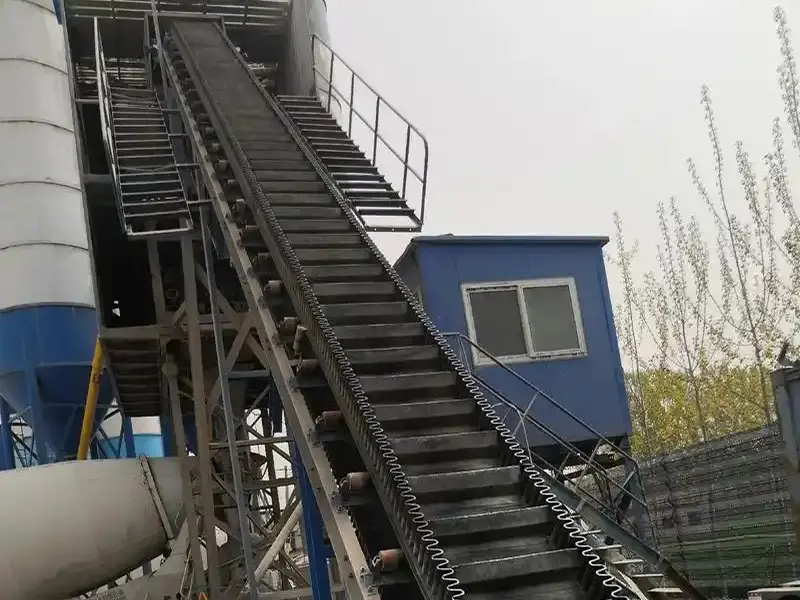
1 Increased the conveying angle capability, allowing efficient vertical transport from 30 to 90 degrees.
2 Designed with a small footprint, resulting in low initial capital investment requirements.
3 Delivers large conveying capacities combined with significantly higher lifting heights.
4 Facilitates a smooth operational transition from horizontal to inclined or vertical configurations.
5 Ideally suited for conveying powdery, granular, small, pasty, and liquid materials prone to scattering.
6 Features low energy consumption, a simple structural layout, high tape strength, and long service life.

Product Description & Technical Performance

The load-bearing capacity of the edge conveyor belt is improved, and the lateral bending deformation of the edge conveyor belt is minimized after being loaded. Therefore, improving the lateral rigidity of the edge conveyor belt is the key to reducing the lateral load-bearing deformation of the belt and increasing its load-bearing capacity.

The lateral rigidity value of the edge blocking conveyor belt body refers to the ratio of the bending weight of the belt body caused by the self weight of the edge blocking conveyor belt body to the width value of the belt body on both sides of the freely supported belt body in the transverse vertical section of the belt body.

Technical Standard The standard requirement for the lateral rigidity value of a high lateral rigidity edge conveyor belt is not greater than 0.05. After optimizing and improving the structure of the edge conveyor belt, the lateral rigidity detection value reaches 0.036 after adding a lateral rigidity reinforcement layer. The lateral deformation of the belt body is reduced after bearing, which can increase the bearing capacity by 15% to 20%.

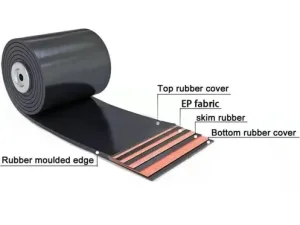
An effective measure to improve the lateral rigidity of large heavy-duty conveyor belts is to set up a special composite adhesive layer made of polyester short fibers that have been specially mixed and rolled between the multi-layer tensile canvas layers of the flat base belt. That is, the polyester short fibers are embedded in the adhesive layer along the transverse direction of the belt in a single direction.

The use of this specialized composite adhesive layer that enhances the lateral bending resistance of the edge conveyor belt can increase the lateral rigidity value of the belt body by 2.5 times compared to ordinary structured edge conveyor belts, even if its lateral rigidity value increases from 0.09 to 0.036.

Frequently Asked Questions (FAQ)

Q: What is the conveying angle range of this edge conveyor belt?

The edge conveyor belt supports a large conveying angle ranging from 30 degrees up to a vertical 90 degrees.

Q: What core materials are available for the conveyor belt construction?

It is available in Cotton Canvas (CC-56), Nylon Fabric (NN100 to NN500), Polyester Fabric (EP100 to EP500), and Wire Rope (ST1000 to ST5400) cores.

Q: How much can the load capacity be increased by improving lateral rigidity?

Optimizing the structure of the edge conveyor belt and adding a reinforcement layer reduces lateral deformation, which can increase the load-bearing capacity by 15% to 20%.

Q: What is the standard technical requirement for the belt's lateral rigidity?

The standard technical requirement for high lateral rigidity is a value not greater than 0.05. Our optimized edge conveyor belt features a lateral rigidity detection value of 0.036.

Q: How is the lateral rigidity of heavy-duty conveyor belts effectively improved?

A special composite adhesive layer made of transversely oriented, mixed, and rolled polyester short fibers is embedded between the multi-layer tensile canvas layers of the base belt.

Q: What kinds of materials are best suited for this type of conveyor belt?

It is highly suitable for conveying powdery, granular, small, pasty, and liquid materials that are otherwise prone to scattering during transport.
Related Products