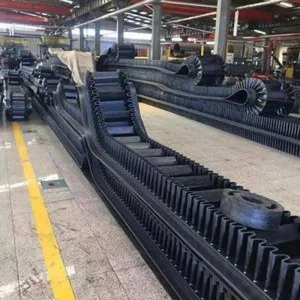
In modern bulk materials handling, traditional open-trough conveyors are increasingly limited by strict environmental mandates, spatial constraints, and material vulnerability. The Pipe Conveyor Belt (often termed tube conveyor) has emerged as the definitive solution for long-distance, high-capacity dry bulk cargo transport where dust emission control and multidirectional curve navigation are critical design parameters. By utilizing a circular configuration, pipe conveyor belts secure bulk materials within an enclosed rubber jacket, effectively mitigating environmental hazards, cargo contamination, and return-run spillages.
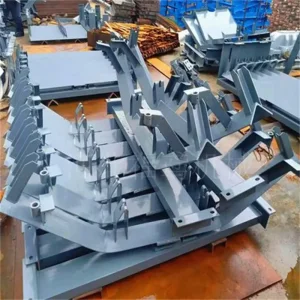
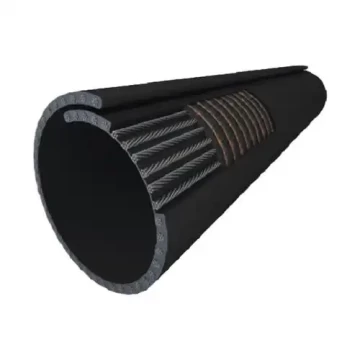
The transformation of a conveyor belt from a flat profile to an enclosed cylindrical shape is a complex process. The belt is initially loaded in a flat state at the tail station. As it passes through transition idlers, the belt is progressively rolled into a tube shape, with the edges overlapping. It is then held in this tubular shape by six hexagonally arranged idler rolls along the conveying path. Before entering the discharge pulley, the belt returns to a flat configuration for clean material discharge.
Achieving stable circular formation requires deep structural balance. Overlap seals must maintain consistent contact pressure to prevent leakage, particularly around tight curves. In addition, the belt must resist twisting. Torsional rotation must be minimized to ensure the overlap remains at the optimal 12 o'clock position throughout the layout.
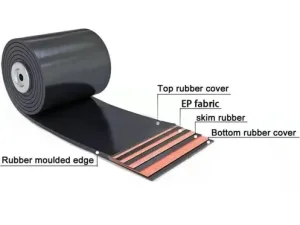
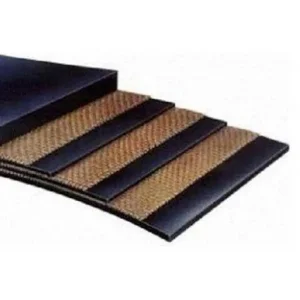
Traditional conveyor belt design prioritizes high longitudinal tensile stiffness (modulus) and flexibility across the width to form a trough. Pipe conveyor design, however, requires a precise balance of both characteristics. The belt carcass must have sufficient stiffness across its width to maintain its circular shape and prevent collapse under material weight, while remaining flexible enough to form a pipe without using excessive energy.
Our Jinao brand formulations optimize this balance by carefully calculating the transverse and longitudinal stiffness. This prevents common operation issues such as line buckling, fold-overs at curve sections, and excessive motor load due to structural resistance.
Established in 2004, Hebei Boao Rubber Technology Co., Ltd. (producing the premier "Jinao" brand) occupies over 30 acres of advanced industrial manufacturing area within the Rubber Industrial Park of Boye County, Baoding, Hebei Province.
We perform raw material testing, polymer characterization, and dynamic simulation. Every run is audited for tensile strength, elongation at break, and abrasion index before release.
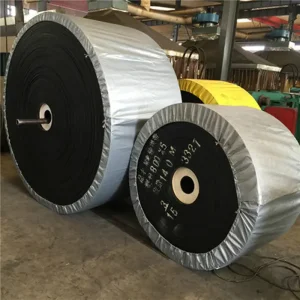
Our factory operates high-precision multi-roll calendering systems and vulcanization lines, ensuring uniform cord tension and optimal thickness control.
We comply with ISO9001, ISO14001, ISO18001, and hold key industry certifications to guarantee reliability in demanding industrial environments.
In response to changing global requirements, our R&D efforts are focused on three main developmental trajectories:
Power consumption accounts for a significant portion of a conveyor system's operating costs. By using specialized additives in the bottom cover rubber, our latest LRR compounds reduce indentation rolling resistance by up to 20% compared to standard formulations, lowering power consumption on long-distance systems.
Future industrial setups will rely heavily on predictive maintenance. We are developing smart belts with integrated sensor loops that monitor indicators like longitudinal splits, temperature spikes, and carcass fatigue in real time, helping operators prevent costly unplanned downtime.
Our materials laboratory has introduced cover compounds designed to handle temperatures up to 200°C, and others with high resistance to chemical corrosion. These developments expand the application of pipe conveyors in sectors like chemicals, heavy metallurgy, and mining.
Our conveyor systems are engineered for reliable operation in challenging industrial environments worldwide, including heavy mining, steel production, and cement plants.
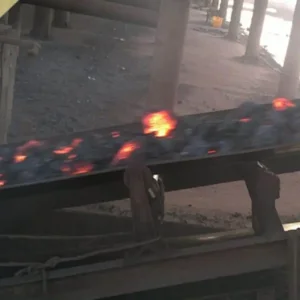
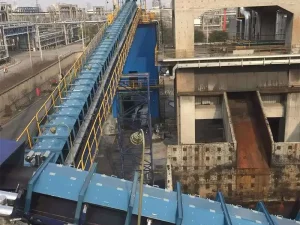
Taihang Steel & Tsingshan Group: Supplied hot sinter and iron ore transport lines. The enclosed design protects materials from outdoor moisture and prevents dust dispersion in surrounding areas.
Zijin Mining & Datong Coal Group: High-tensile steel cord belts for deep mining applications. Engineered to handle high vertical lifts and sharp directional changes along rough terrain.
Conch Cement & China Railway Group: Installed closed-loop clinker transport lines. The dust-tight enclosure complies with local environmental regulations regarding particulate emissions.

 Boao Rubber