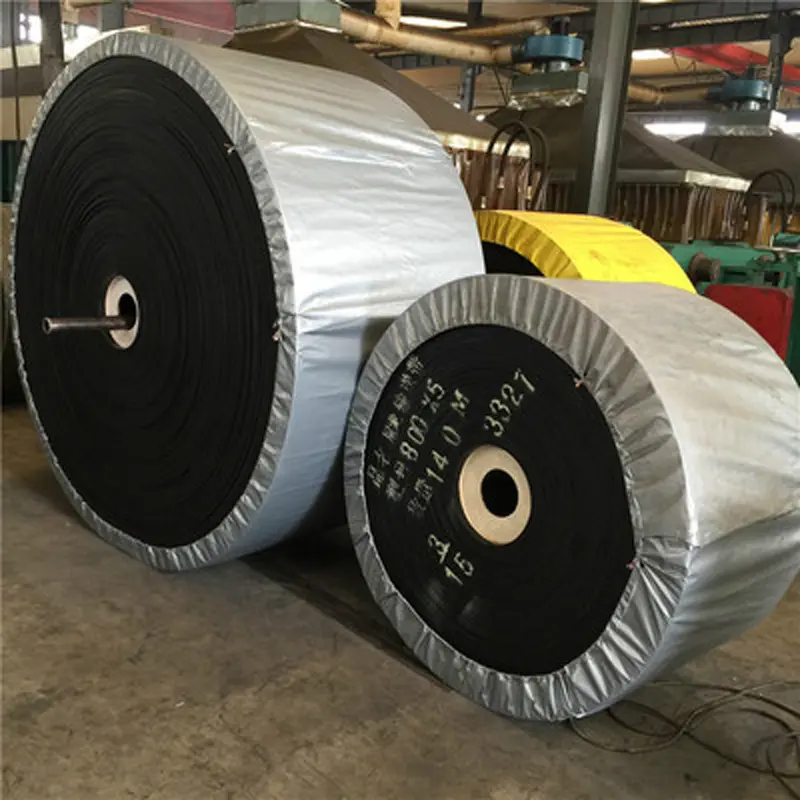
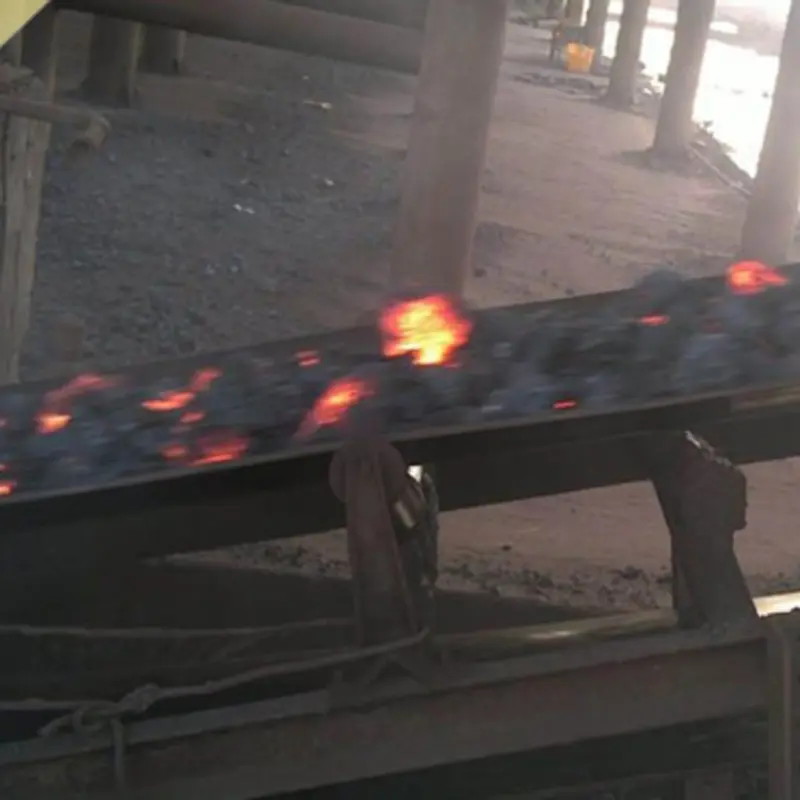
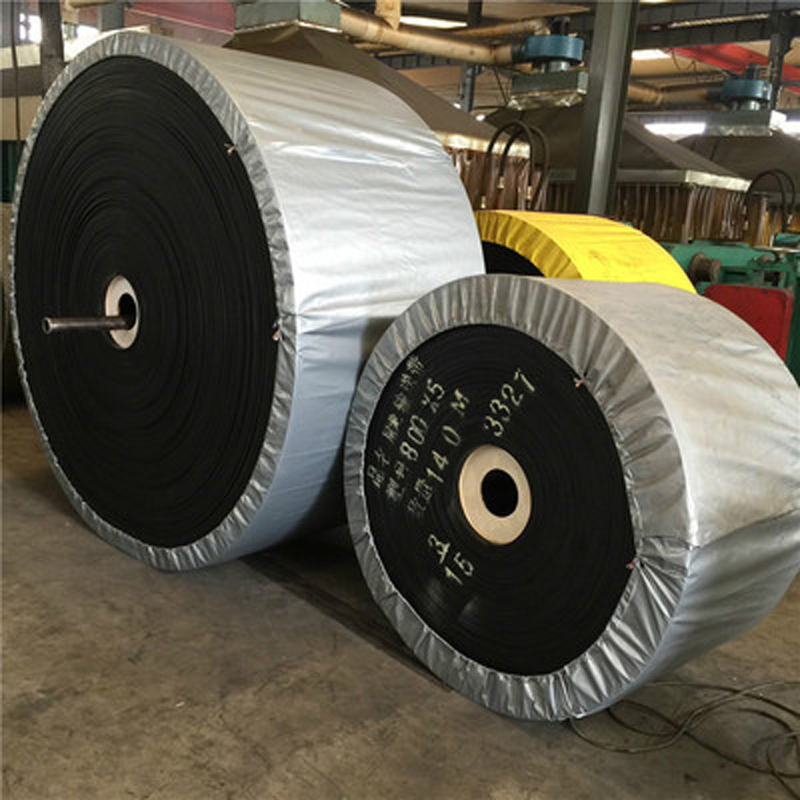
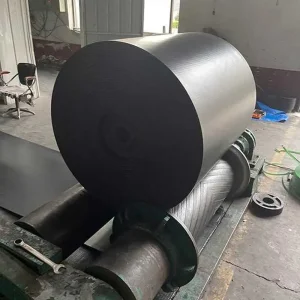
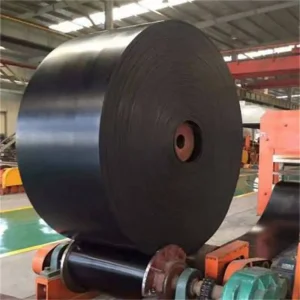
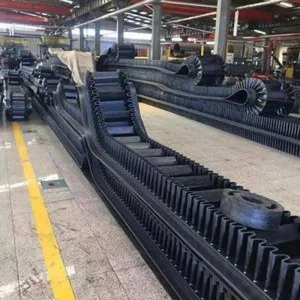
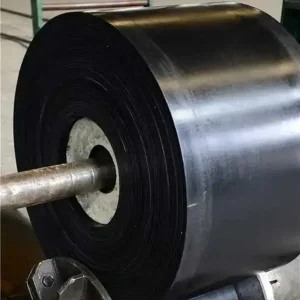
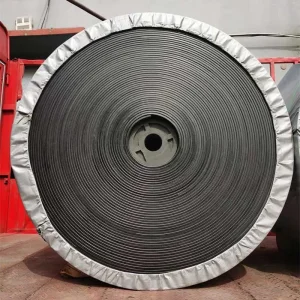
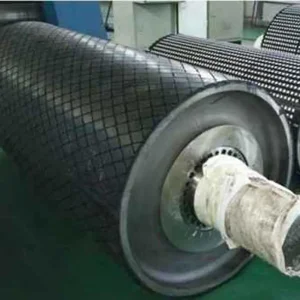
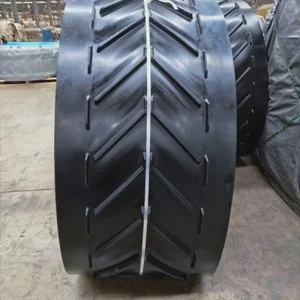
🔥Purpose
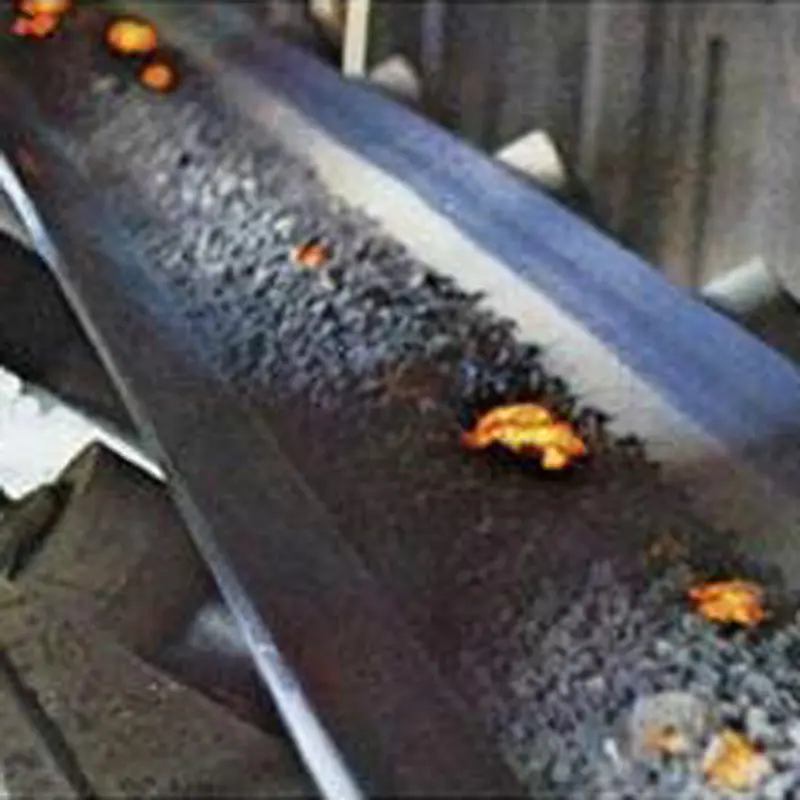
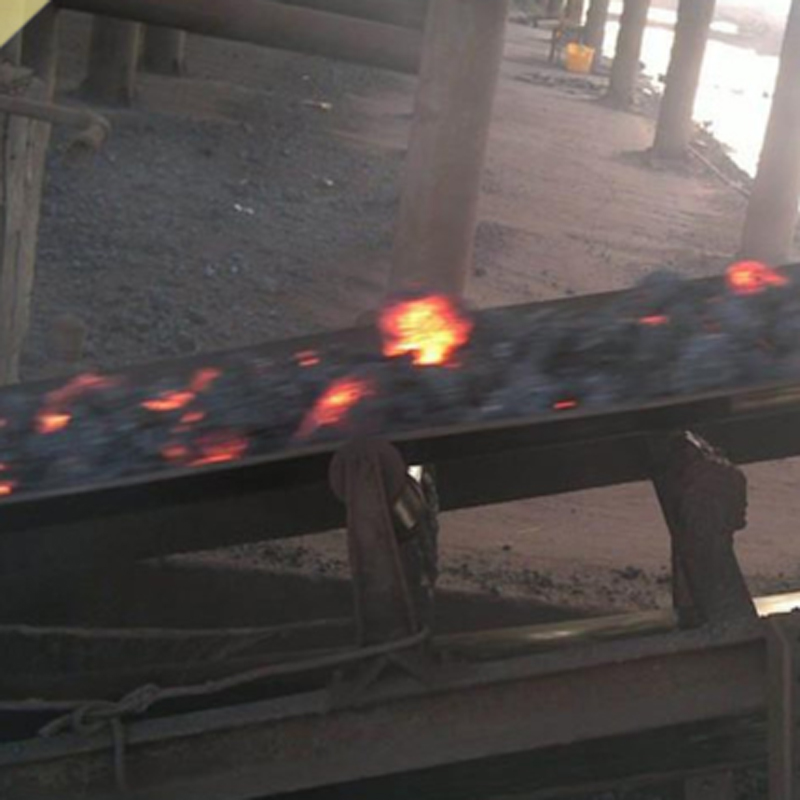
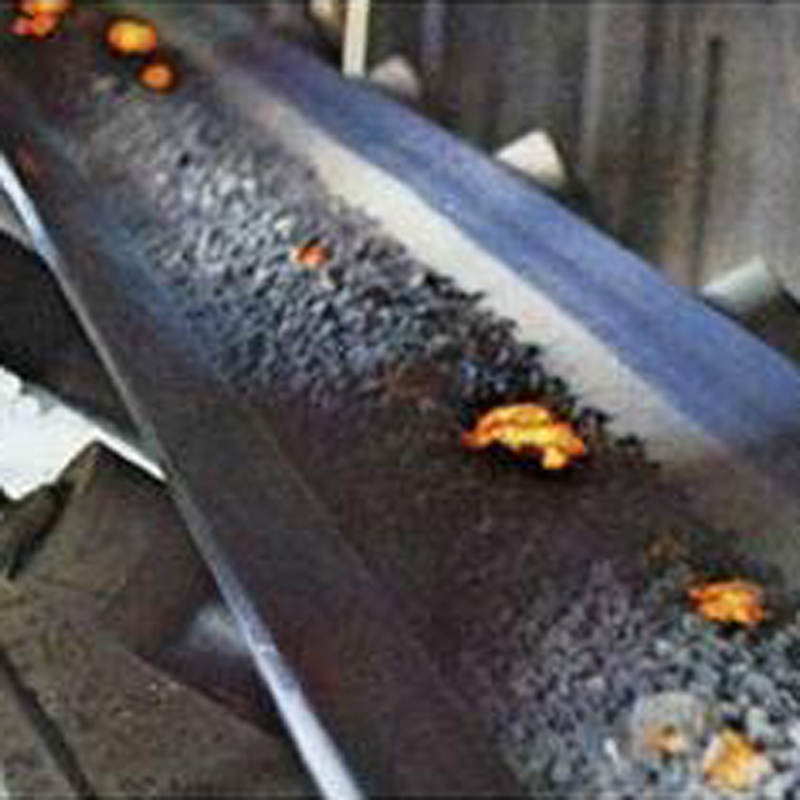
Mainly used in metallurgy and construction industries to transport high-temperature materials such as sintered ore, coke, and cement clinker. Material temperature should not exceed 800 ℃; surface temperature should not exceed 220 ℃.
🧱
Cover Layer: Made of EPDM rubber with unique formula design — solves issues of high saturation, poor adhesion, and low interlayer adhesion.
🧵
Skeleton Material: Domestically used high-temperature resistant canvas, providing light weight, long lifespan (approx. 2–4× longer), and excellent heat resistance.
📋
Standard: Implements "General purpose fabric core conveyor belts with rubber or plastic covering", adopting ISO/FDIS14890-1999 standard.
🏗️
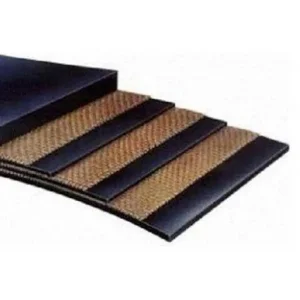
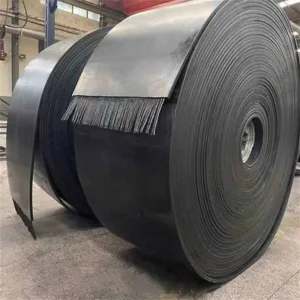
Construction: Multiple layers of rubber cotton canvas or polyester canvas covered with high-temperature resistant rubber, bonded by high-temperature vulcanization. Suitable for transporting hot coke, cement, slag, and hot castings below 175 ℃.
⚙️ Specifications: Same as ordinary conveyor belts. | Standard Compliance: HG2297-92.
🌡️ Heat Resistant Conveyor Belt Types (4 Types):
Type I — T1
Test temp: ≤ 100 ℃
Max short-term operating temp: 150 ℃
Type II — T2
Test temp: ≤ 125 ℃
Max short-term operating temp: 170 ℃
Type III — T3
Test temp: ≤ 150 ℃
Max short-term operating temp: 200 ℃
Type IV — T4
Test temp: ≤ 175 ℃
Max short-term operating temp: 250 ℃
📊Physical Properties
| Property |
Value |
| Difference between Strength Aging and Pre-Aging (IRHD) |
23 |
| Maximum value after aging (IRHD) |
88 |
| Decreased rate of change in tensile strength performance |
40% |
| Lowest value after aging |
5 MPa |
| Change rate of tensile strength performance |
60% |
| Minimum value after aging |
150% |
🔗 High-Temperature Resistant Steel Mesh Conveyor Belt: Made of steel wires woven vertically and horizontally. The surface is galvanized or copper plated, and the lower surface is covered with a rubber layer. During transportation of high-temperature materials, the overall surface does not peel off — more reliable than layered heat-resistant conveyor belts.
A heat-resistant conveyor belt is made of multiple layers of rubber cotton canvas (polyester cotton cloth) covered with high-temperature resistant or heat-resistant rubber, bonded together by high-temperature vulcanization — suitable for transporting hot coke, cement, slag, and hot castings below 240 ℃.
- Specifications are the same as ordinary conveyor belts.
- Product complies with HG2297-92 and GB/T20021-2005 standards.
🌡️ Heat Resistant Conveyor Belt Types (5 Types):
Type I — T1
Test temp: ≤ 100 ℃
Max short-term operating temp: 150 ℃
Type II — T2
Test temp: ≤ 125 ℃
Max short-term operating temp: 170 ℃
Type III — T3
Test temp: ≤ 150 ℃
Max short-term operating temp: 200 ℃
Type IV — T4
Test temp: ≤ 175 ℃
Max short-term operating temp: 400 ℃
Type V — T5
Test temp: ≤ 240 ℃
Max short-term operating temp: 600 ℃
⭐Key Features
This type of conveyor belt is mainly used in metallurgy, building materials, casting, coking, and chemical engineering industries to transport high-temperature solid materials such as sintered ore, coke, cement, and fertilizers, with specified heat resistance performance.
🛡️
Heat-Resistant Cover Materials: Styrene butadiene rubber, butyl rubber, and ethylene propylene rubber are used as main rubber materials for excellent thermal performance.
🧶
Heat-Resistant Belt Core: Polyester cotton and polyester canvas with heat resistance and minimal heat shrinkage are used as the core materials.
📌 Tape Marking Example:
200 1200 EP 5 1000 8+3 T2
Length: 200m | Width: 1200mm | Core: EP canvas, 5 layers | Strength: 1000 N/mm | Cover layers: 8mm (top) + 3mm (bottom) | Max test temp: ≤ 125 ℃
Complies with national standard GB/T 20021-2005 "Canvas Heat-resistant Conveyor Belt".
To meet higher operating temperatures, some manufacturers have developed heat-resistant conveyor belts for higher temperature levels — including high-temperature conveyor belts that can withstand burning. Flame retardant insulation agents, anti-ablation agents, and thermal conductivity agents are added to the cover layer rubber to improve high-temperature and anti-ablation properties.
🌡️ Temperature Grade Summary:
T1
Withstands test temp: ≤ 100 ℃
T2
Withstands test temp: ≤ 125 ℃
T3
Withstands test temp: ≤ 150 ℃
T4
Withstands test temp: ≤ 175 ℃
❓Frequently Asked Questions
Q
What is the maximum material temperature a heat-resistant conveyor belt can handle?
Heat-resistant conveyor belts can handle material temperatures up to 800 ℃, with the belt surface temperature not exceeding 220 ℃. For specific grades, Type V (T5) models can withstand material temperatures up to 240 ℃ with a maximum short-term operating temperature of 600 ℃.
Q
What industries use heat-resistant conveyor belts?
Heat-resistant conveyor belts are widely used in metallurgy, building materials, casting, coking, and chemical engineering industries. They are designed to transport high-temperature solid materials such as sintered ore, coke, cement clinker, hot slag, and fertilizers.
Q
What are the different types of heat-resistant conveyor belts and their temperature ratings?
Heat-resistant conveyor belts are classified into up to five types: T1 (≤100 ℃ test / 150 ℃ short-term), T2 (≤125 ℃ / 170 ℃), T3 (≤150 ℃ / 200 ℃), T4 (≤175 ℃ / 400 ℃), and T5 (≤240 ℃ / 600 ℃). Selection depends on the specific operating environment and material temperature requirements.
Q
What materials are used in the construction of heat-resistant conveyor belts?
The cover layer is typically made from EPDM rubber, styrene butadiene rubber, butyl rubber, or ethylene propylene rubber — all known for excellent heat resistance. The belt core uses polyester cotton canvas or polyester canvas with minimal heat shrinkage. For extreme temperatures, a steel mesh structure with galvanized or copper-plated wires and a rubber layer is used.
Q
What standards do heat-resistant conveyor belts comply with?
Heat-resistant conveyor belts comply with multiple international and national standards, including HG2297-92, GB/T20021-2005 "Canvas Heat-resistant Conveyor Belt", and the ISO/FDIS14890-1999 international standard for general purpose fabric core conveyor belts with rubber or plastic coverings.
Q
How long do heat-resistant conveyor belts last compared to ordinary conveyor belts?
Heat-resistant conveyor belts made with EPDM rubber and high-temperature resistant canvas typically last approximately 2 to 4 times longer than ordinary conveyor belts. Their superior heat resistance, unique formula design, and strong interlayer adhesion contribute to significantly extended service life in high-temperature environments.
 Boao Rubber