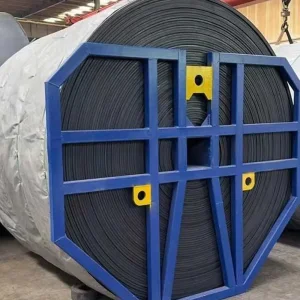
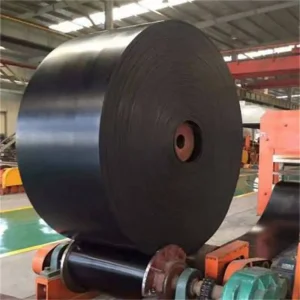
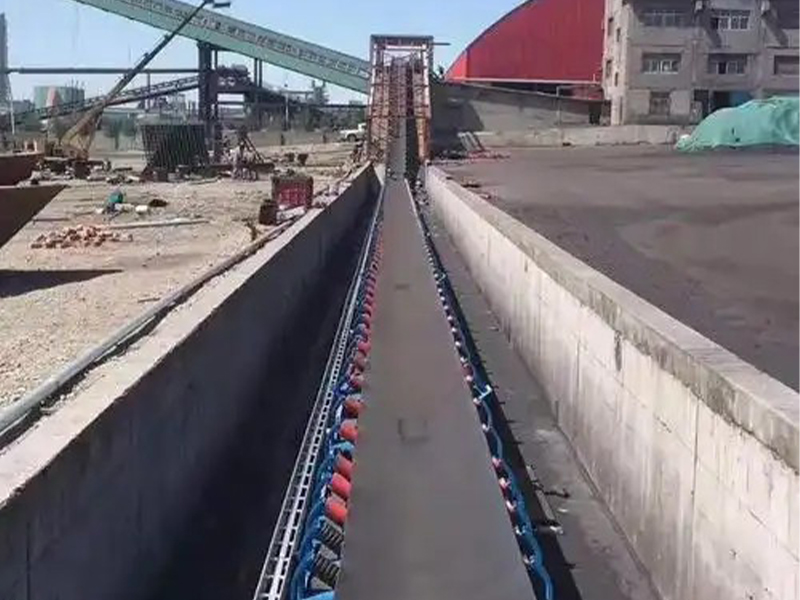
Best Rubber Band Belt Supplier & Factory

Hebei Boao Rubber Technology Co., Ltd. — 22 Years of Engineering Heavy-Duty Industrial Conveying & Material Handling Solutions Worldwide

Primary Industrial Conveyor Solutions

Engineered for extreme tensile strength, impact absorption, and temperature resilience.
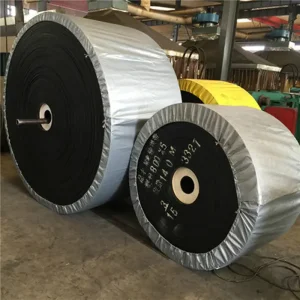
China Heat-Resistant Rubber Conveyor Belts

Heat-Resistant Rubber Conveyor Belts from China Factory

View Specifications
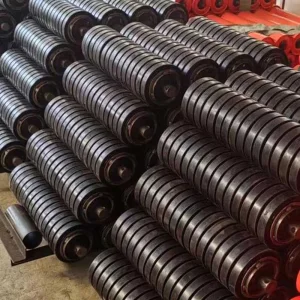
China Conveyor Trough-Type Idler Rollers

Conveyor Trough-Type Idler Rollers for Efficient Material Handling

View Specifications
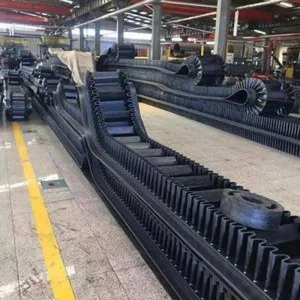
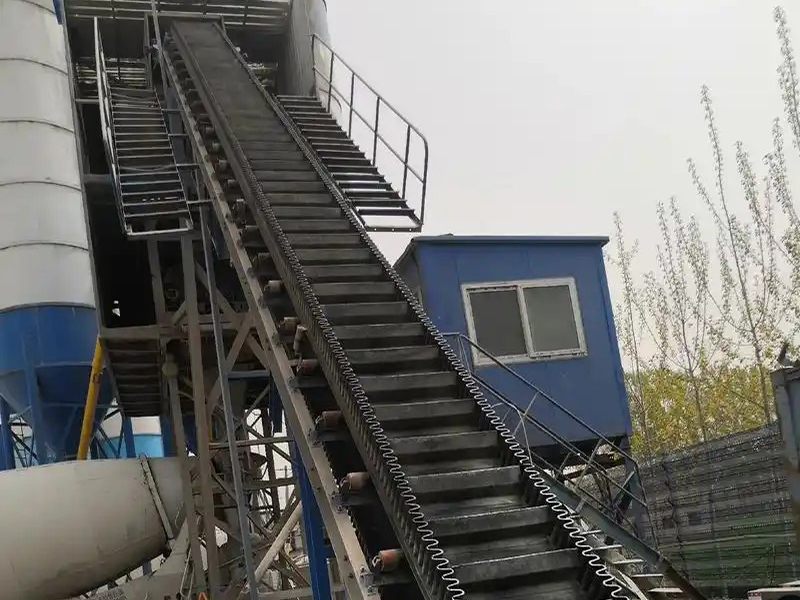
High Angle Wavy Edge Rubber Conveyor Belt

Best High Angle Wavy Edge Rubber Conveyor Belt Options

View Specifications
China Edge Conveyor Belt Manufacturers

China Edge Conveyor Belt Factory Manufacturing

View Specifications
High-Quality Anti Tear Steel Wire Rope Core Conveyor Belt

Anti Tear Steel Wire Rope Core Conveyor Belt for Safe Transport

View Specifications
Best Conveyor Trough-Type Idler Rollers Suppliers

Trough-Type Idler Rollers & Supporting Rollers Factory Direct

View Specifications
China Nylon Rubber Conveyor Belt

High Strength Polyamide (NN) Nylon Rubber Conveyor Belts

View Specifications
High Angle Wavy Edge Rubber Conveyor Belt Supply

High Angle Wavy Edge Rubber Conveyor Belts for Various Applications

View Specifications

Global Industrial Status & The Physics of Rubber Band Belting

Analyzing the global trade landscape, polymer design, and industrial application sectors.

22+
Years Industry Experience
30+
Acres of Manufacturing Area
100%
ISO9001 Testing Compliance
50+
Global Enterprise Partnerships

1. The Commercial & Industrial Landscape of Rubber Band Belting

Heavy-duty industrial rubber band belts—predominantly known in bulk material transport as rubber conveyor belts—form the dynamic skeletal system of modern raw materials logistics. Globally, the reliance on high-durability elastomeric compound belts is expanding at an unprecedented rate. In mining hubs like Australia and South America, in manufacturing giants in East Asia, and in infrastructure networks across Europe, the efficiency of dry bulk handling centers directly upon the reliability of these vulcanized rubber configurations. As mineral extraction processes grow deeper and cargo vessel capacities swell, these belt systems are subjected to higher speeds, longer center-to-center pulley distances, and punishing vertical drops.

Historically, generic rubber belts suffered from severe carcass degradation when exposed to mineral oils, acidic ores, and high ambient friction temperatures. The modern B2B buyer is no longer searching merely for a standard rubber strip. Instead, the demand centers upon targeted chemical profiles. Elastomers must be synthesized to resist thermodynamic breakdown at temperatures exceeding 200°C while maintaining deep structural pliability in sub-zero Arctic operations (-40°C). As a result, the procurement of a "Rubber Band Belt" has moved from a commodity transaction to a specialized polymer engineering consultation.

!Information Gain Insight: The longevity of a conveyor belt is not determined by rubber thickness alone. The key metric is the *interfacial adhesion energy* between the reinforcing carcass (such as Polyester-Polyamide fabrics or high-tensile steel wire cords) and the protective cover rubber. Without precise chemical bonding agents during vulcanization, high shear loads cause catastrophic ply separation.

2. Material Science and Reinforcement Chemistry

At Hebei Boao Rubber Technology Co., Ltd., our proprietary "Jinao" brand products represent decades of polymer synthesis research. We divide our core vulcanizate materials into distinct chemical and physical groups:

  • Polyamide (NN) & Polyester (EP) Reinforcement: NN (Nylon-Nylon) cores offer unparalleled flexibility, excellent elasticity under high-impact zones, and superior fatigue life. EP (Polyester-Nylon) cores provide a low-elongation modulus, meaning they require far shorter take-up strokes, making them the industry standard for medium-to-long distance conveyors.
  • Steel Wire Rope Core Belting: Engineered for extreme tensile configurations, steel cords are treated with specialized zinc-galvanizing methods before being encased in highly adhesive rubber matrices. This is the optimal configuration for high-load, cross-country bulk transport where stretch must be minimized to less than 0.1%.
  • Specialty Cover Compounds: Our covers are infused with specialized antioxidants and antiozonants. For heat-resistant configurations, we employ ethylene-propylene-diene monomer (EPDM) rubbers which actively resist thermal cracking and structural hardening under continuous operating conditions.

3. Emerging Industry Trends: Smart Belts & Sustainability

The global conveyor belt sector is undergoing a massive transformation, driven by two prominent trends: IoT integration and carbon footprint mitigation. Industry 4.0 has introduced the concept of the "Smart Belt". By embedding RFID chips, fiber-optic sensors, and magnetic tear-detectors directly into the rubber layers, plants can detect microscopic structural shifts before they cause system-wide failures.

Furthermore, environmental guidelines are pushing factories to minimize energy loss from belt indentation. As the belt passes over idlers, it undergoes cyclical compression. By formulating "Low Rolling Resistance" (LRR) compounds for the bottom cover rubber, we can reduce overall conveyor power consumption by up to 15%, saving megawatt-hours of electricity across large-scale ports and mining sites.
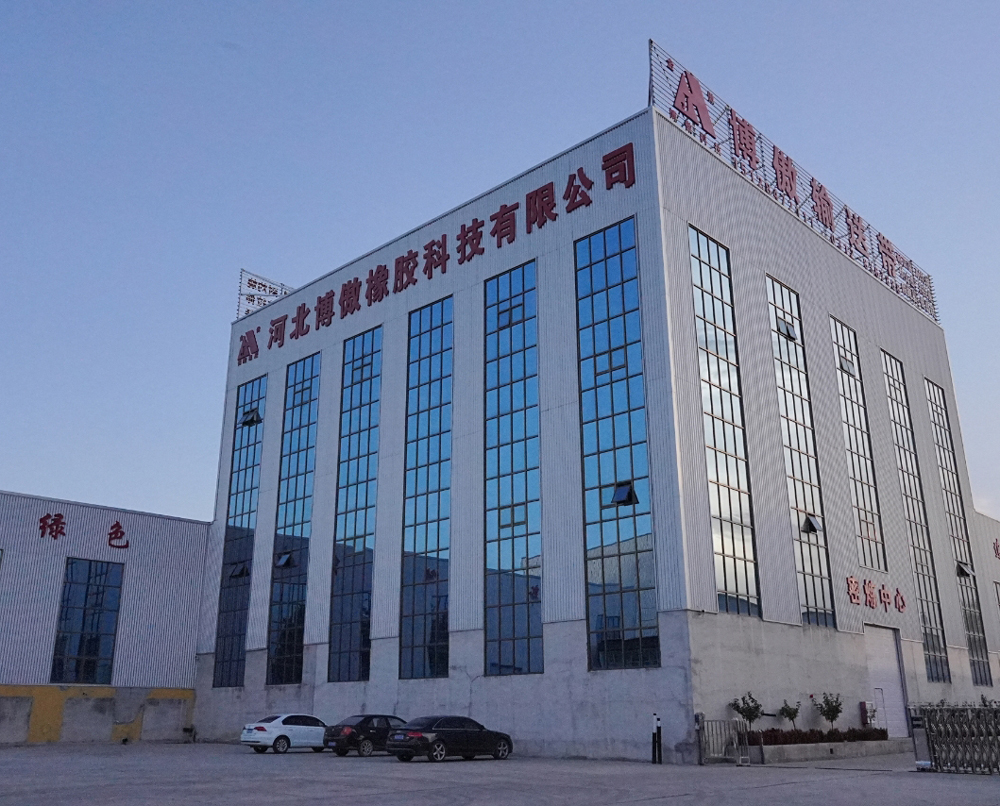
Hebei Boao Rubber Technology Manufacturing Plant

About Hebei Boao Rubber Technology Co., Ltd.

Manufacturer of "Jinao" Brand Heavy-Duty Rubber Belting Solutions Since 2004

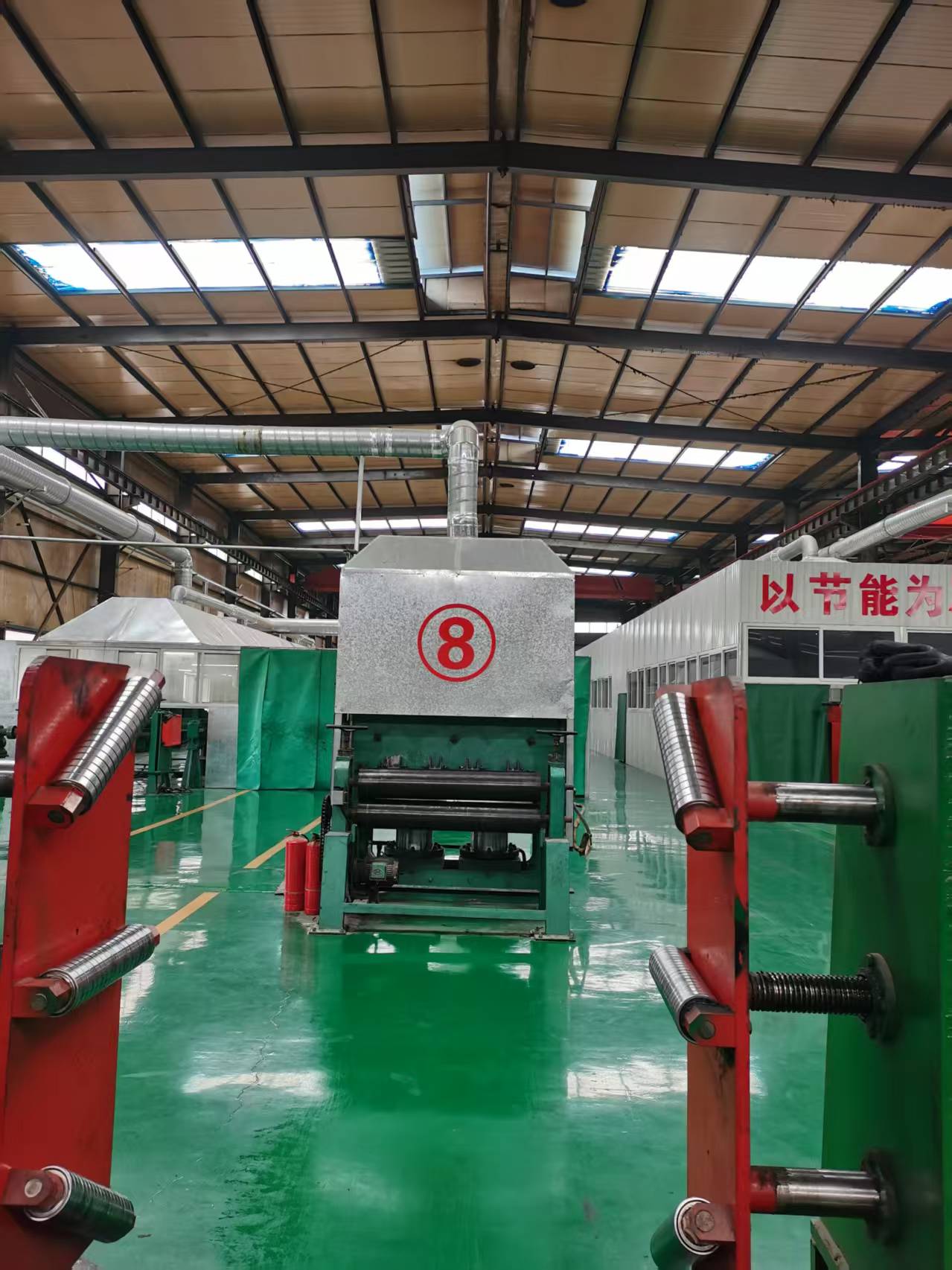
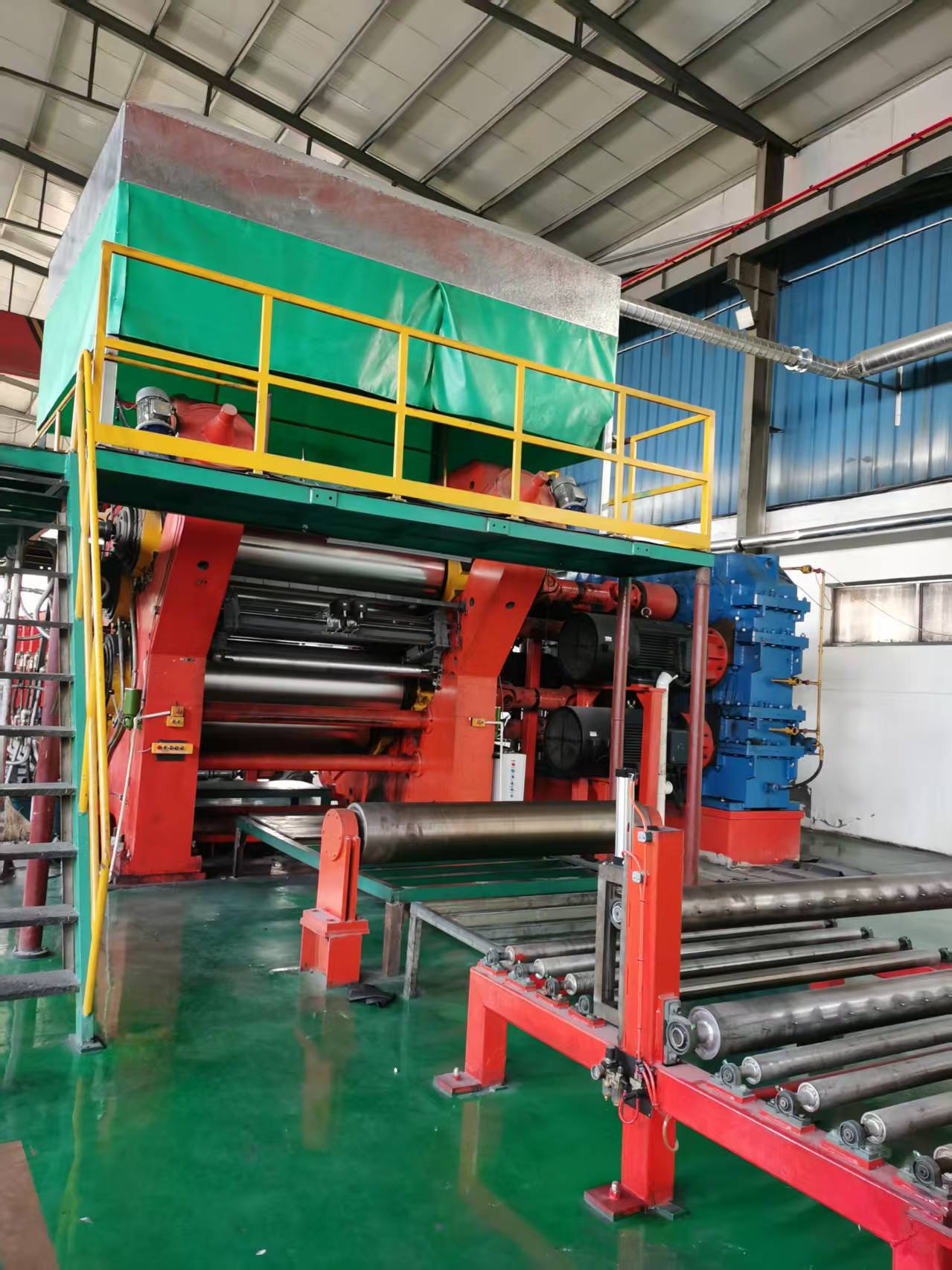
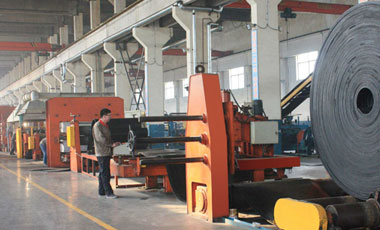
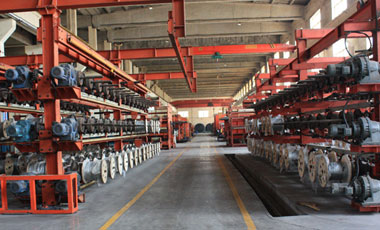
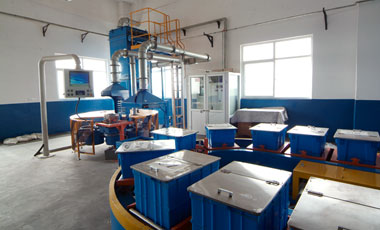
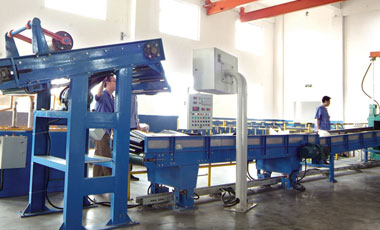
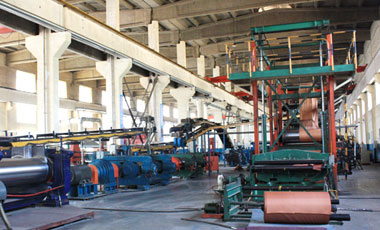
Located in the dedicated Rubber Industrial Park of Boye County, Baoding, Hebei Province, Hebei Boao Rubber Technology Co., Ltd. has established itself as an industry leader over a span of 22 years. Spanning a state-of-the-art facility of over 30 acres, we run complete production lines including compounding, calender steel cord application, high-pressure vulcanizing presses, and final product QA labs.

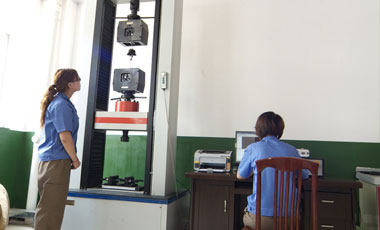
Our dedication to international manufacturing standards is reflected in our rigorous compliance setup. We possess our own independent chemical analysis rooms and physics laboratories. Raw rubber polymers, reinforcement fibers, and chemical accelerators are checked prior to entry into the mixing center. No unqualified material enters our processing lines, and no finished belt leaves our warehouse without passing a complete physical test suite.

Our Global Certification Portfolio

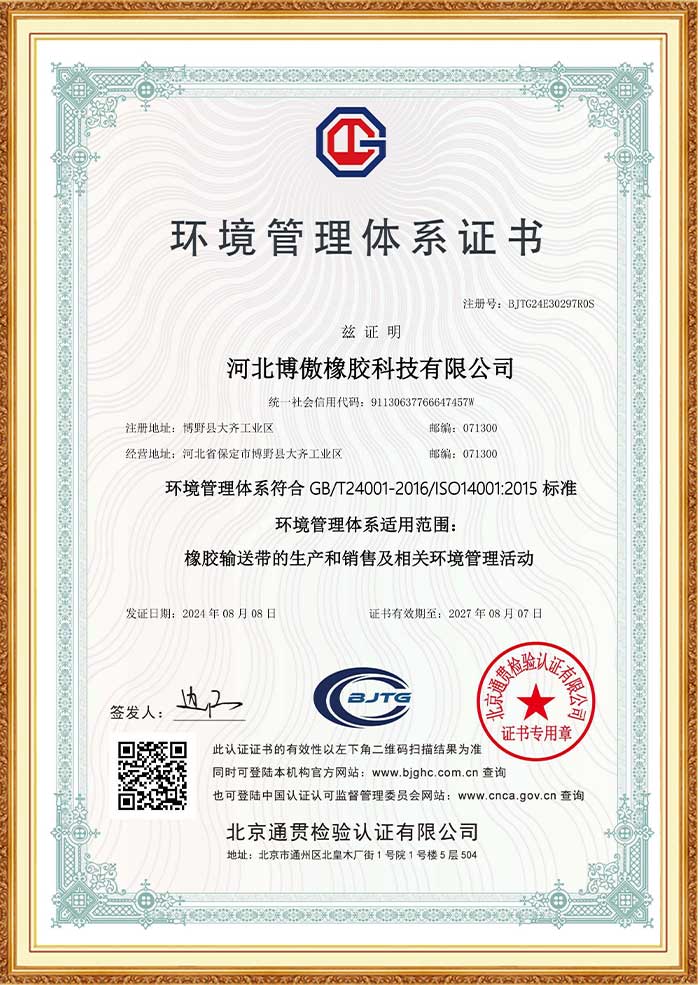
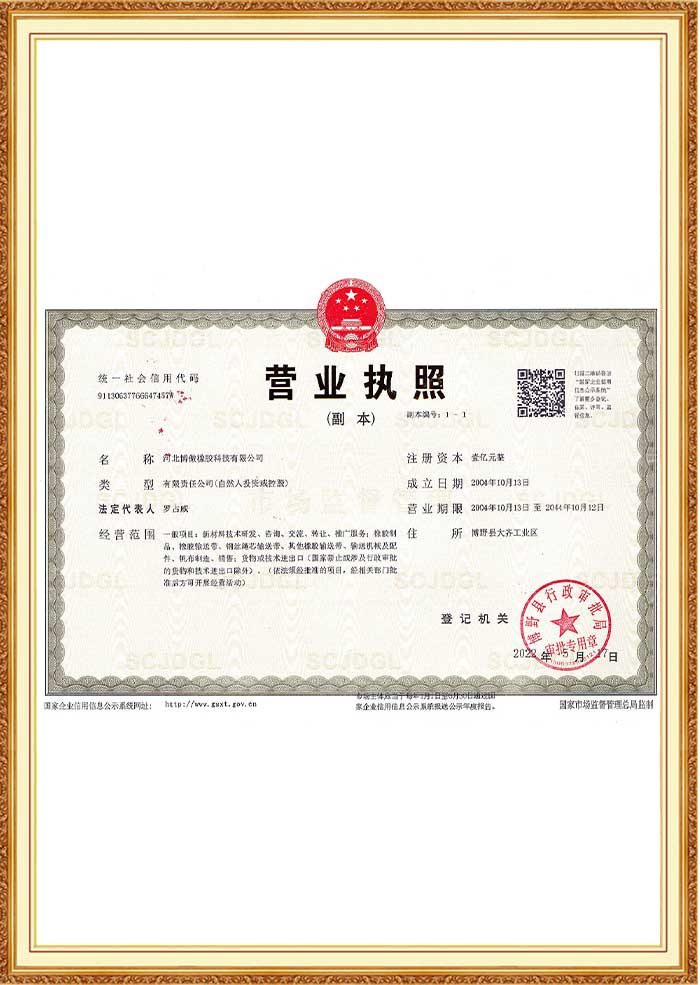
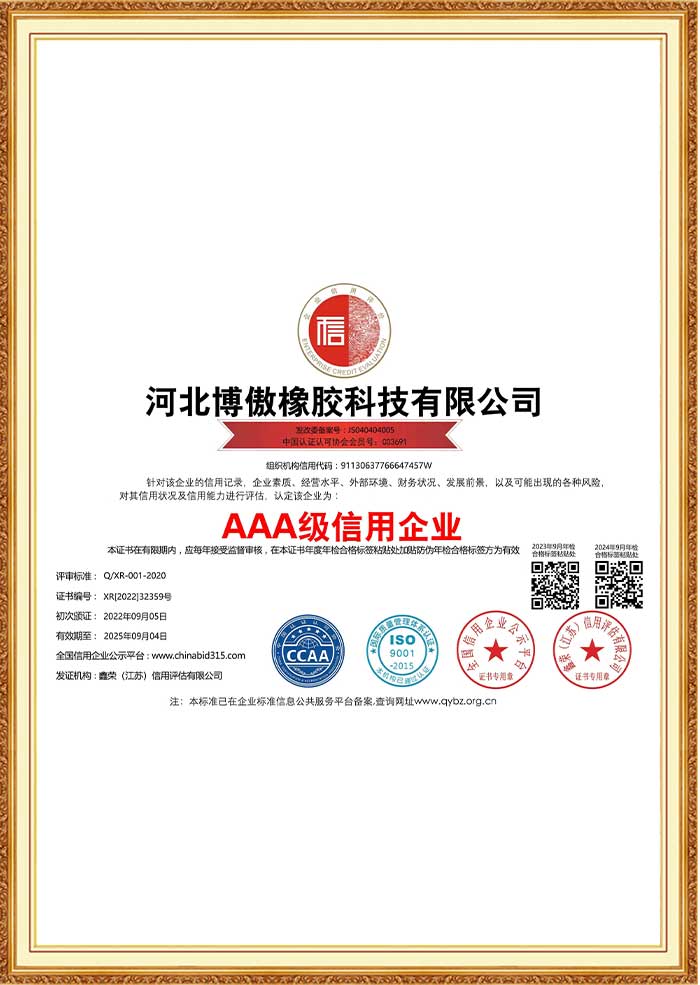
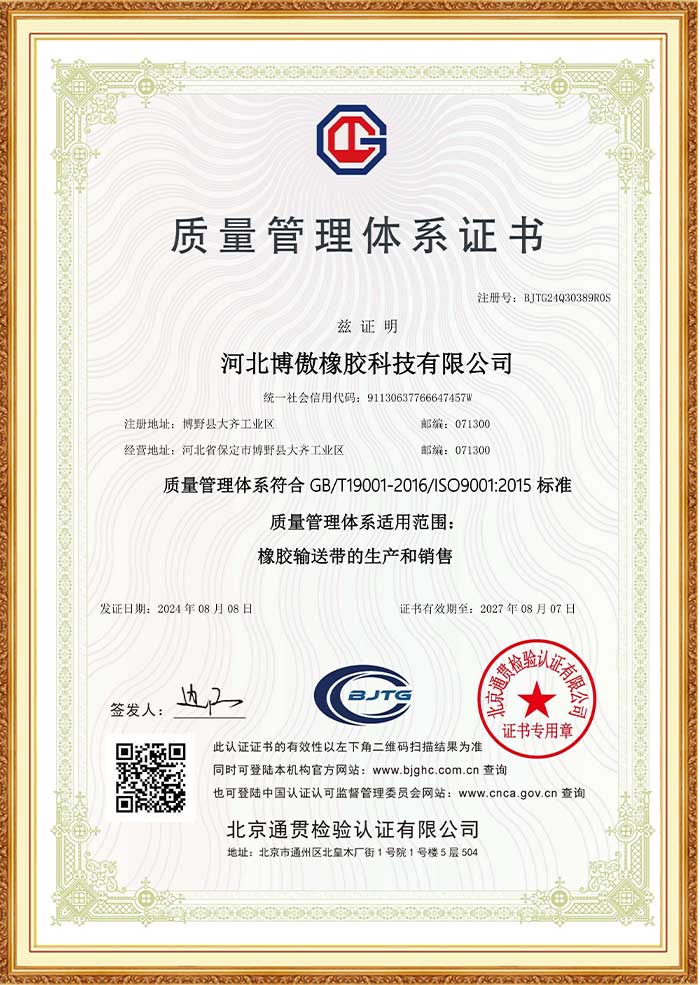
To maintain high reliability, we operate under rigorous quality management certificates including API 6D, API 607, CE, ISO9001, ISO14001, ISO18001, and TS standards. We welcome international third-party inspection teams (such as SGS or Bureau Veritas) to run load-tests, abrasion resistance evaluations, and fire-retardancy tests on our batches.
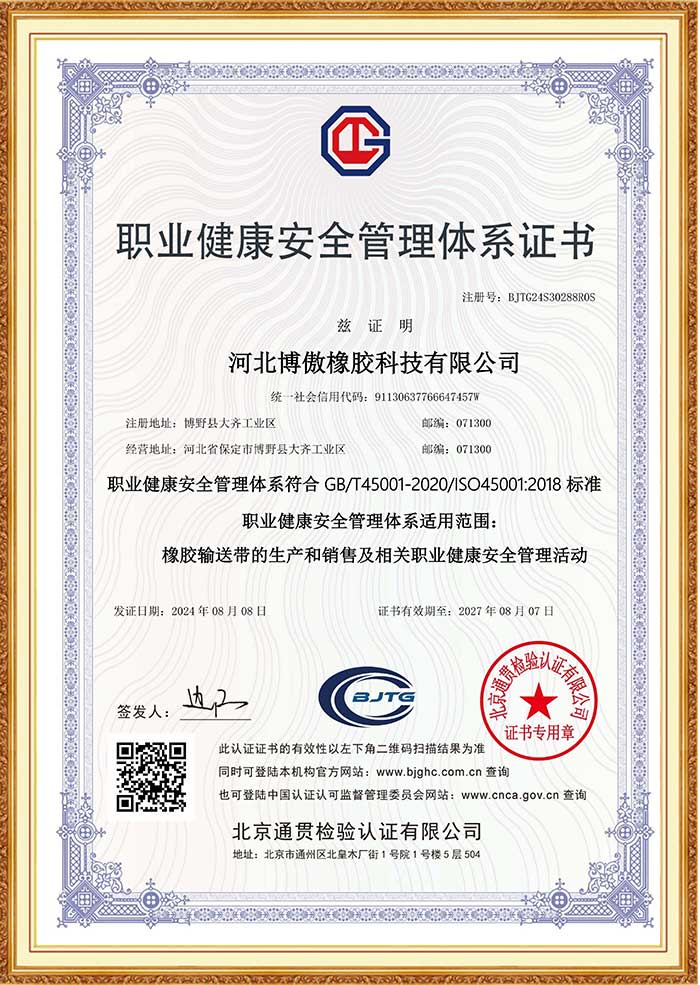
ISO Certification Document

ISO9001 Certificate

Quality Standard Documentation

ISO14001 Environment

OHSAS Certificate

ISO45001 Health & Safety

CE Standard Document

CE Conformity

Factory Testing Approval Document

Industry Compliance TS

Industrial Application Scenarios & Collaboration Cases

Field-proven durability across steel mills, cement plants, mining sectors, and deep-sea ports.

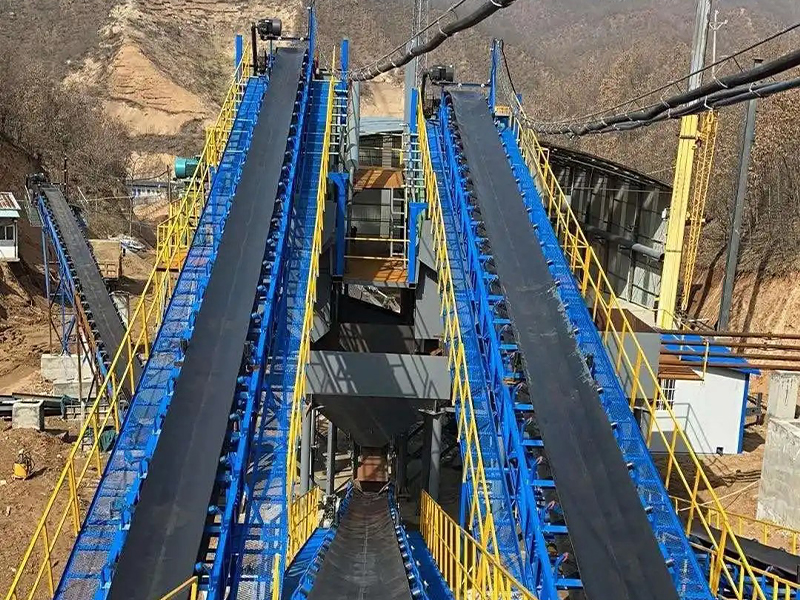
"Jinao" brand rubber band belts are deployed across complex dry bulk handling sites globally. Our clients represent the pinnacle of heavy industry, relying on our engineering department for system design, scheduled maintenance, and emergency splicing training.
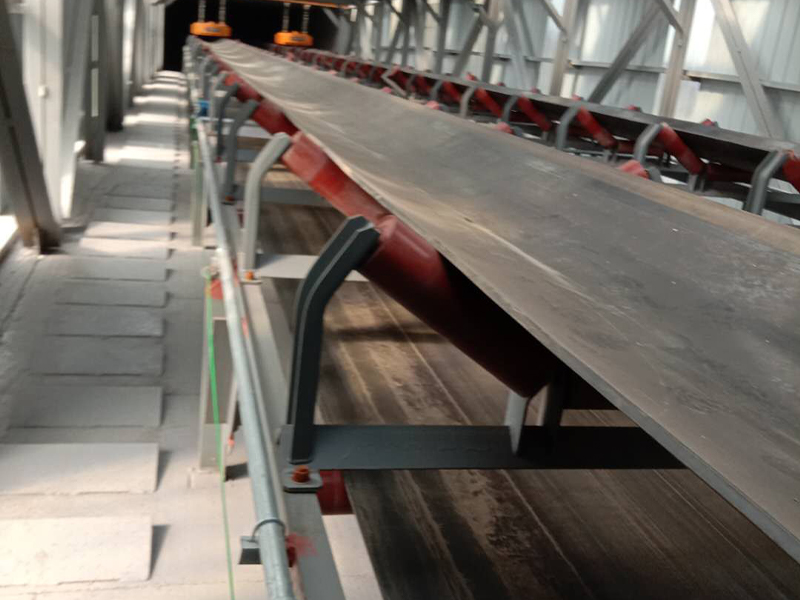
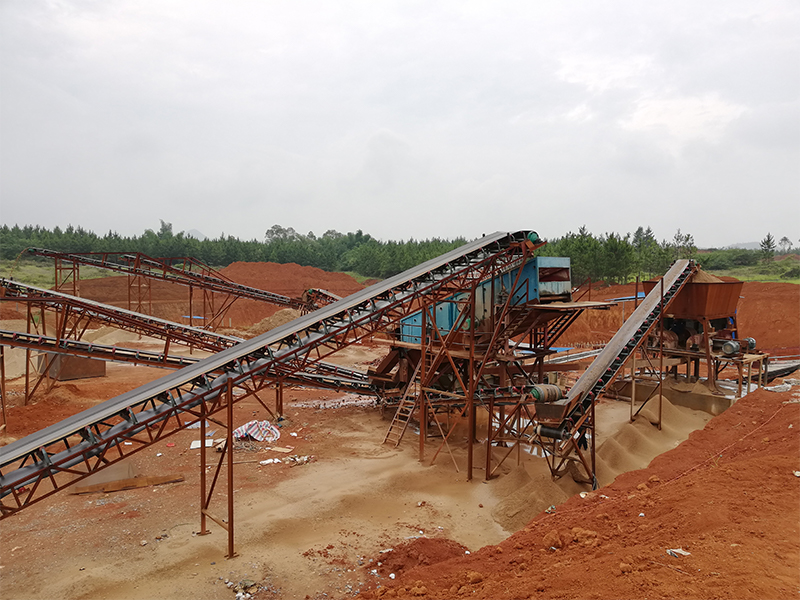
Taihang Steel Application

Taihang Steel Conveyor Infrastructure

Tsingshan Group Processing Line

Tsingshan Group Smelting Plant

Zijin Mining Operations

Zijin Mining Heavy Extraction Line

China Railway Group Mixing Plant

China Railway Group Mixing Plant

Conch Cement Conveyor Lines

Conch Cement Clinker Transport

Datong Coal Group Coal Handling

Datong Coal Group Underground Extraction

Jidong Cement Group Application

Jidong Cement Group Raw Materials Line

Jinmei Group Coal Conveying Line

Jinmei Group Coal Preparation Plant

Puyang Steel Group System

Puyang Steel Group Sintering Plant

Technical Service Roadmap & Engineering Standards

How we ensure continuous operation, planned replacements, and maximum belt lifespans.

We provide full lifecycle service support, eliminating the risks of procurement from fragmented suppliers. Our technical service plan consists of four major phases:

1Audit & Design

We audit your conveyor mechanical structures, calculating custom wrapping angles, drive pulley power, and wear factors.

2Precision Blending

Mixing custom polymers in our automated dosing facility based on chemical environments (acid, oil, extreme heat, cold).

3Vulcanization Control

Controlling temperature curves in our curing presses to lock the polymer chain grid structure for optimal elasticity.

4Splicing & Support

Providing dynamic onsite hot-vulcanized splicing guidelines and cold bonding kits to guarantee seamless joints.

Global Dynamic Standards Met by Hebei Boao Rubber

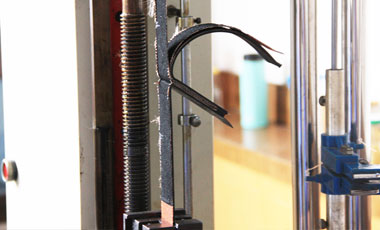
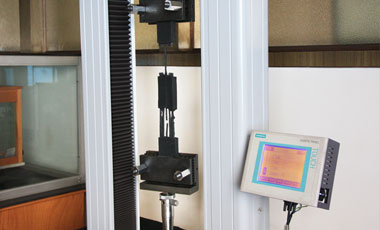
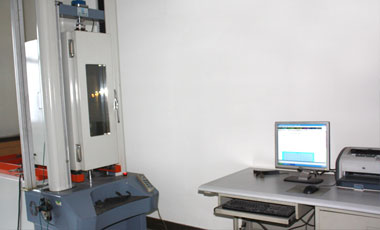
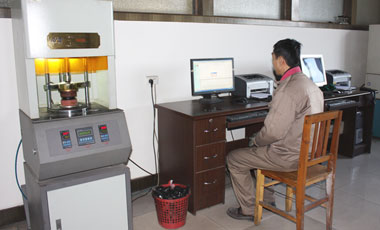
Our heavy-duty rubber belts are manufactured to match the key global performance classifications. Whether your operation demands adherence to DIN 22102 (Z, W, Y, X), ISO 15236, AS 1332, or SANS 1173, we deliver. Below is our testing verification suite, managed internally within our physics lab:
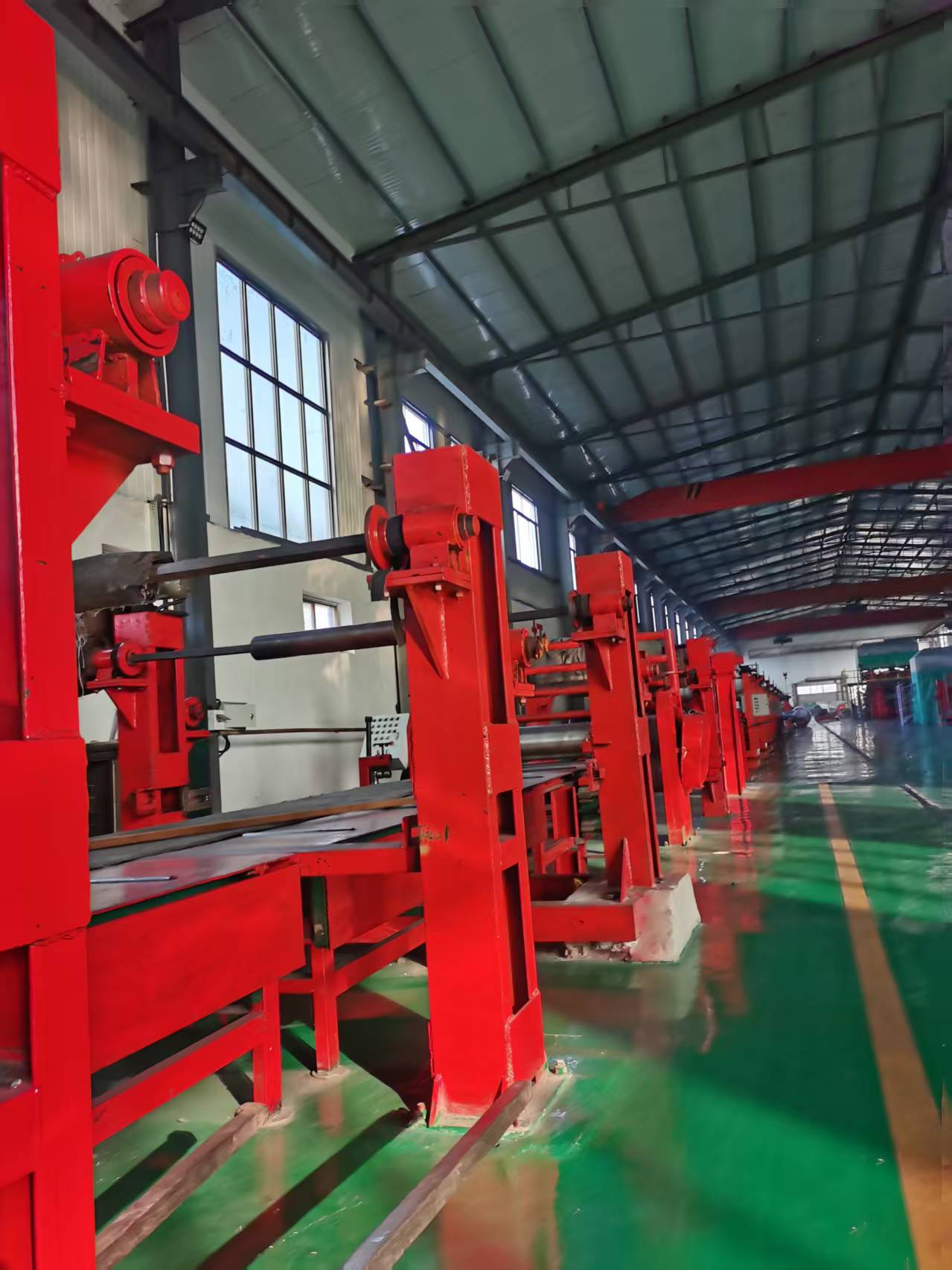
Production Equipment fabric belt

Fabric Belt Calender

Conveyor belt curing press

Vulcanization Line

Conveyor Belt Production Line

Winding & Inspection Station
Raw Rubber compounding

Calendering & Shaping Machine

Production Line of Fabric Conveyor Belt

Fabric Conveyor Belt Line

Production Equipment of Steel Cord Conveyor Belt

Steel Cord Curing Press

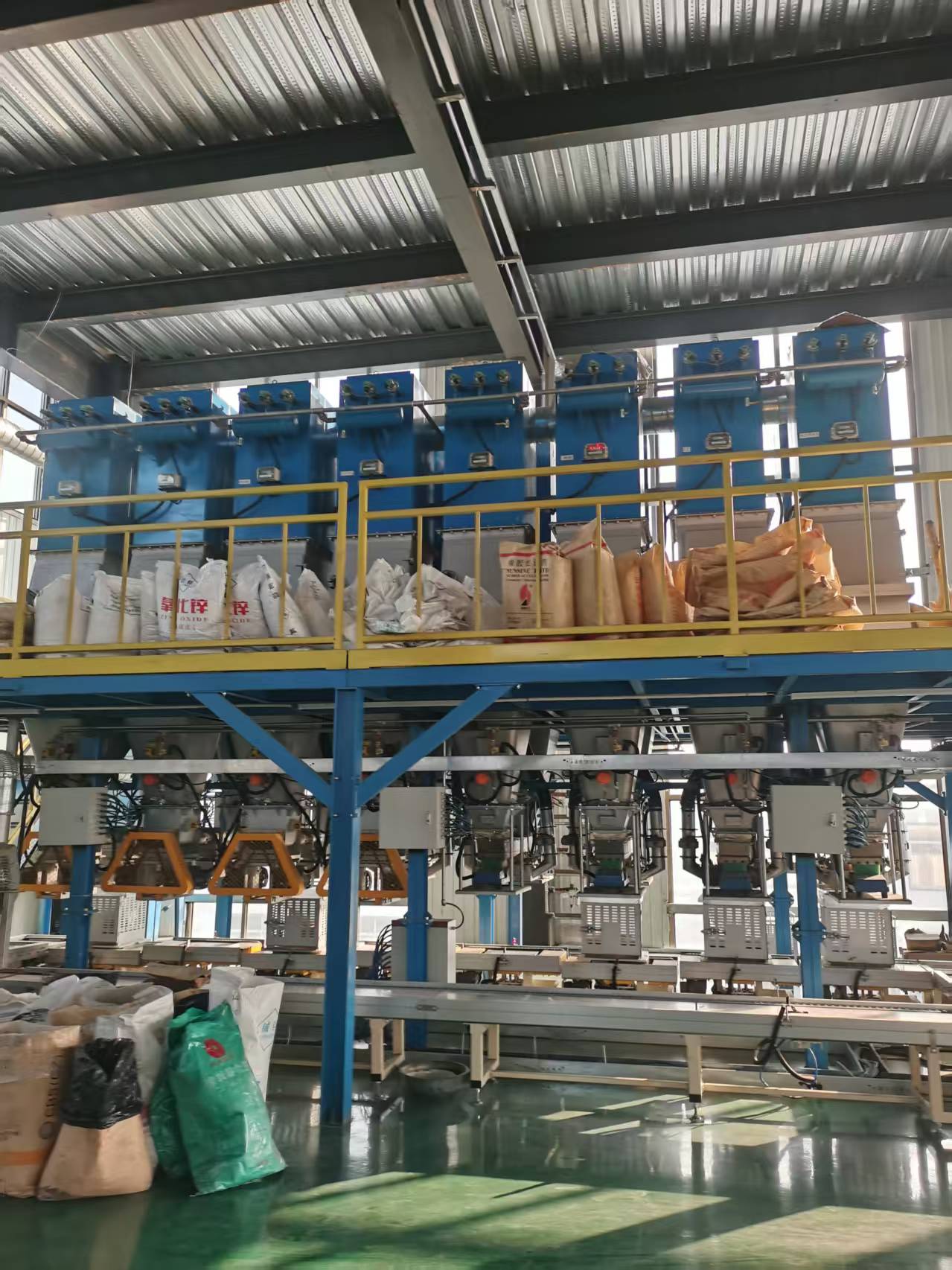
Proportioning Room of Mixing Center
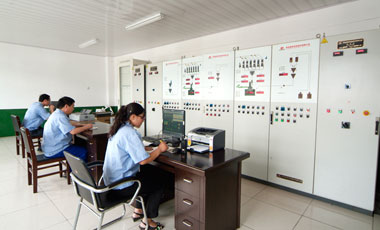
Proportioning Room

Proportioning System of Mixing Center

Proportioning Automation

Feeding Device

Automated Feeding System

Calendering & Shaping Machine

Four-Roll Calendering

Peeling Test

Peeling Test Device

Steel Cord Pull-out Machine
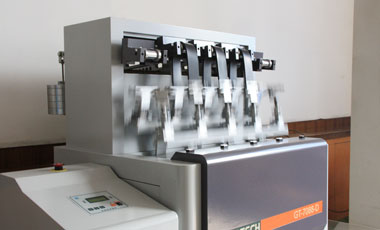
Steel Cord Pull-out Machine

Dynamic Fatigue Tester
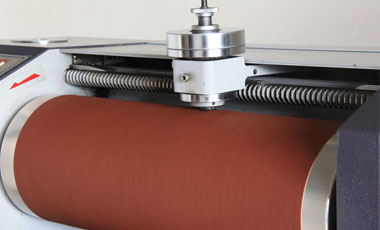
Dynamic Fatigue Tester

Abrasion Tester

Abrasion Testing Unit

Abrasion Tester 2

Polymer Mass-Loss Tester

Physical Properties Testing

Physical Properties Lab

Quality Test

Rubber Rheometer Testing

Specialty Rubber Belting & Component Lineup

Targeted solutions for cold conditions, corrosive acids, and steep-angle material elevation.
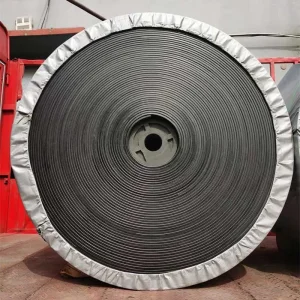
China Cold Resistant Rubber Conveyor Belt

China Cold Resistant Rubber Conveyor Belt

View Specifications
High-Quality Rubber Lifting Conveyor Belt

Best High-Quality Rubber Lifting Conveyor Belt

View Specifications
Best Anti Tear Steel Wire Rope Conveyor Belt

Best Anti Tear Steel Wire Rope Core Conveyor Belt

View Specifications
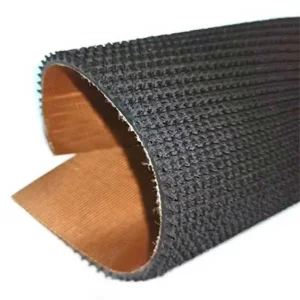
China Suppliers Magic Carpet Conveyor Belts

Magic Carpet, Concave & Convex Patterned Conveyor Belts

View Specifications
China Heat-Resistant Rubber Conveyor Belt Suppliers

Heat-Resistant Rubber Conveyor Belt Factory Direct

View Specifications
China Anti Tear Steel Wire Rope Conveyor Belt Suppliers

Reliable China Anti Tear Steel Wire Rope Core Conveyor Belting

View Specifications
Best Rubber Buffer Idler Roller

Rubber Buffer Idler Roller for Corrosive Environments

View Specifications
China Suppliers Impact Idler Roller

Impact Idler Roller Corrosion-Resistant Buffered Solutions

View Specifications

Conveyor & Rubber Belting Technical FAQ

Expert insights on maintenance, mechanical selection, and troubleshooting bulk material transport lines.

Q1: What are the primary indicators for replacing a rubber band belt in high-temperature applications?
In heat-intensive environments (temperatures above 120°C), rubber belts deteriorate via oxidative hardening and structural cracking. The key replacement indicators are: 1) Cover hardening (exceeding 85 Shore A durometer hardness); 2) Micro-cracks running transversely across the belt cover; and 3) Significant cover thickness loss due to abrasion. If the cover thickness drops below 50% of the nominal thickness, the textile or steel reinforcement loses its heat protection, leading to belt failure.
Q2: How do EP and NN textile carcass materials differ in terms of tension and elongation?
EP (Polyester-Nylon) carcasses offer low warp elongation (typically 1.5% at nominal working tension) and high resistance to moisture, making them ideal for long-distance outdoor systems. NN (Nylon-Nylon) carcasses have a higher elastic modulus, providing greater stretchability under high impact loads. NN is the preferred option for heavy impact zones and shorter setups with high-frequency pulley transitions.
Q3: What causes edge-wear on a wavy edge sidewall conveyor belt, and how can it be prevented?
Edge-wear on sidewall (high angle) belts is typically caused by system tracking issues, return-idler misalignment, or asymmetric load distribution. To prevent this, ensure that the centering brackets and idler assemblies are calibrated, the loading point is centered, and vertical rollers are installed to guide the corrugated edges smoothly through the deflection points.
Q4: Why are rubber buffer rollers crucial at conveyor transfer chute zones?
At product transfer chutes, materials drop from heights, applying substantial impact energy to the belt. Standard steel rollers cannot absorb this impact, resulting in structural tears or ply separation. Rubber buffer rollers (impact idlers) feature heavy-duty elastomeric rings that compress under load, absorbing the drop force and extending the service life of the belt carcass.
Q5: How does ambient temperature affect cold-resistant conveyor belts?
In sub-zero temperatures (below -20°C), standard rubber compounds reach their glass transition phase, hardening and losing elasticity. Under bending stress around pulleys, this leads to cracking. Cold-resistant belts utilize specialized polymer formulations (such as butadiene rubber blends) to maintain flexibility, preventing structural failures at temperatures down to -50°C.
Q6: What is the process for ensuring high joint strength during belt splicing?
For heavy-duty belts, hot vulcanization is the standard jointing method. It involves: 1) Cutting the belt ends into step joints corresponding to the carcass plies; 2) Cleaning and applying tie-gum compound and vulcanizing cement; and 3) Clamping the joint inside a vulcanizing press under controlled heat (145°C ± 5°C) and pressure (approx 1.2 to 1.5 MPa) for a specified curing cycle. This results in a splice strength of up to 90% of the original belt rating.

Need a Technical Splicing or Custom Belt Quote?

Our engineers will design the exact elastomeric compound matching your material properties, environmental conditions, and mechanical limits.