Pioneering High-Efficiency, Zero-Emission Closed Transport Systems Engineered for Ashdod Port, Dead Sea Mineral Projects, and Negev Heavy Industries
Engineered to handle extreme dust suppression requirements and prevent material loss in sensitive agricultural, chemical, and urban port zones.
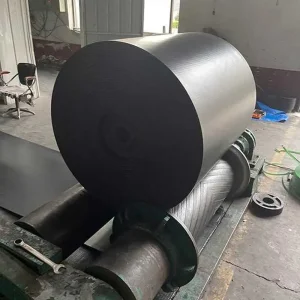
The State of Israel faces unique ecological and mechanical challenges when implementing bulk transport networks. From the chemical-rich, humid air of the Mediterranean coastlines in Haifa and Ashdod Ports, to the highly corrosive and dust-prone mineral basins of the Dead Sea Works and the arid terrains of the Negev Desert, ordinary open belt systems are no longer viable. Strict regulations from the Ministry of Environmental Protection (MoEP) dictate that zero dust emissions must be maintained near urban areas and nature reserves.
Dead Sea minerals, including potash and phosphates, require conveyor fabrics that can withstand chemical erosion, high salinity, and extreme daily heat fluctuations without hardening or cracking.
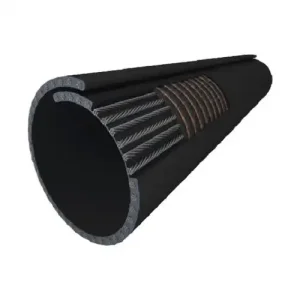
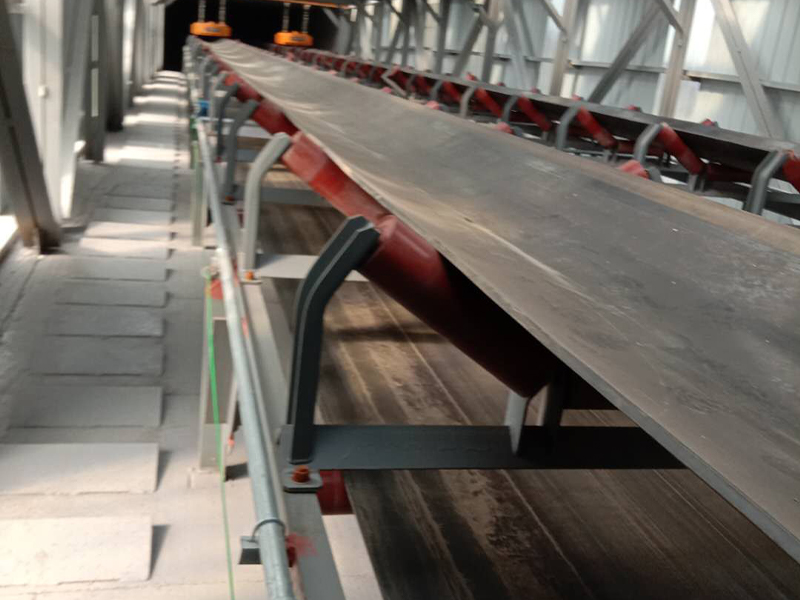
Enclosed pipe conveyor belts fold into a protective tube, isolating the material from high-speed crosswinds, preventing moisture penetration during maritime handling, and completely eliminating environmental contamination.
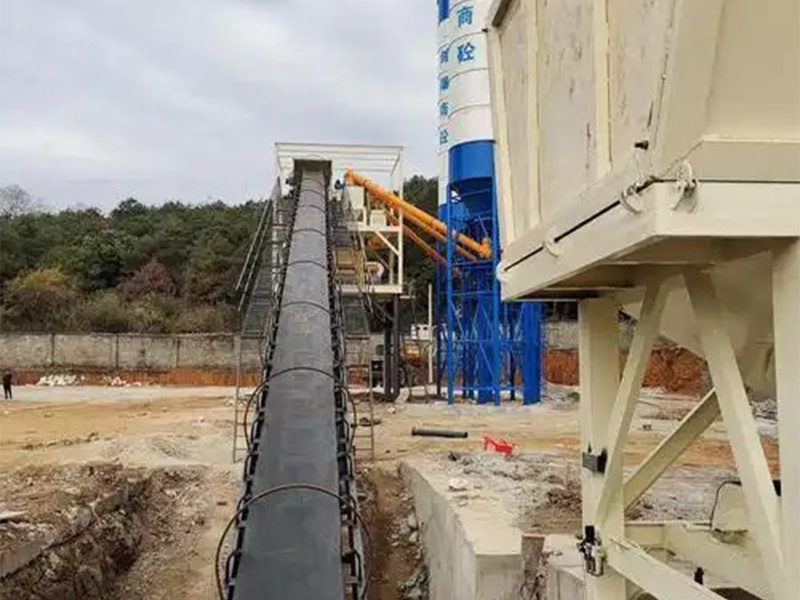
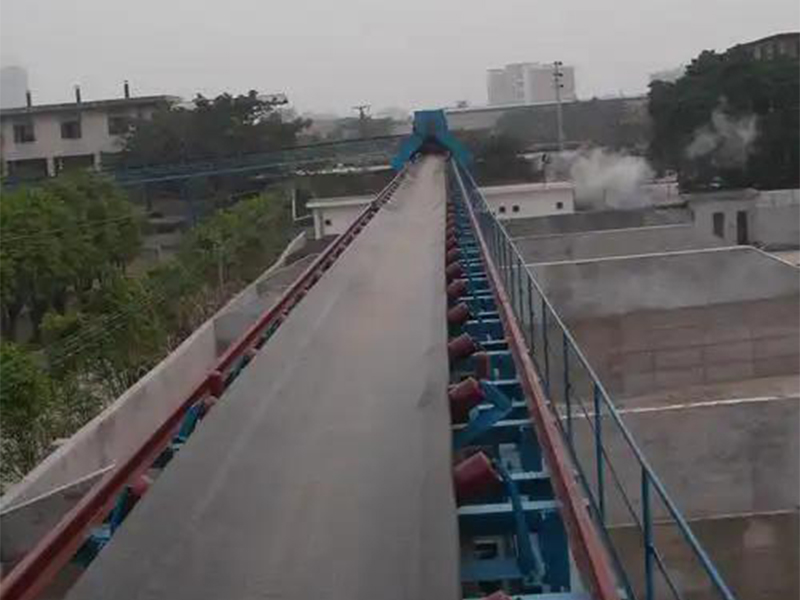
Industrial space around Israel's major ports is heavily congested. Our pipe conveyors offer spatial routing, negotiating sharp horizontal and vertical curves to transport cargo cleanly over existing structures.
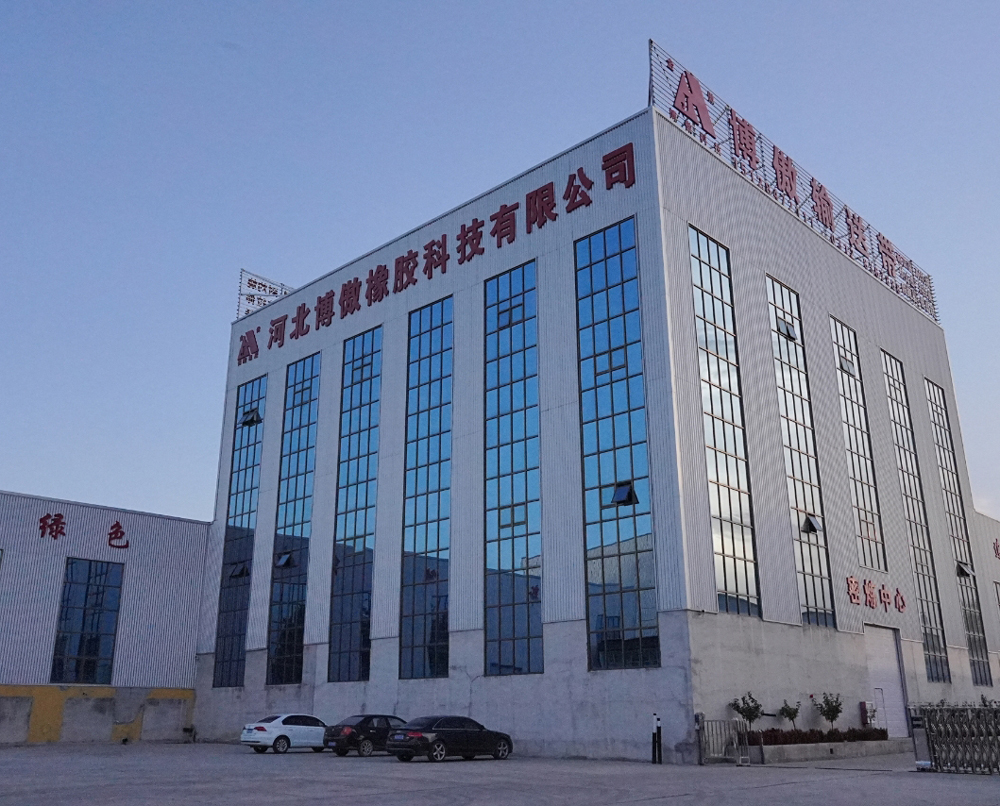
A deep look into the structural, mechanical, and logistical optimizations of modern rubber processing at Hebei Boao Rubber Technology Co., Ltd. (Brand: Jinao)
In the post-pandemic era of international shipping, maintaining supply chain resilience is a core metric for procurement managers at industrial powerhouses such as Nesher Israel Cement Enterprises or the Israel Chemicals Ltd (ICL) Group. Under the "Factory 4.0" initiative, manufacturing has evolved from basic mass fabrication to digital process integration. At Hebei Boao, every square meter of ourBoye County factory is designed to support the specific engineering needs of critical systems abroad.
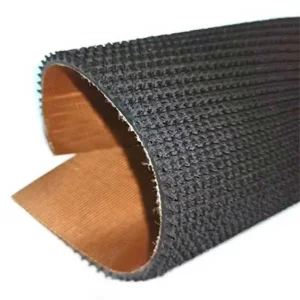
Unlike standard flat or troughed belts, a pipe conveyor belt must possess highly specialized elastic memory. It is flat when passing over the drive and tail pulleys, then curves smoothly into an overlapping tube when running through hexagonal idler panels. Ensuring the correct transverse stiffness is the most critical factor in this design. If the belt is too stiff, it will require immense motor energy to stay closed, accelerating mechanical fatigue and stressing the drive gearboxes. If the belt is too soft, it will sag between idler clusters, resulting in overlap failure and material spillage.
Our "Jinao" R&D team uses finite element analysis (FEA) to determine the exact proportion of synthetic polymers (EP, Nylon) and steel cord reinforcing elements required to achieve a stable cross-sectional geometry. This guarantees optimal sealing and minimizes friction along the line, ensuring a reliable performance life even in challenging desert environments.
We source our raw rubber compounds directly, verifying the chemical and structural properties of every batch. For belts deployed to the dry, hot climate of southern Israel, we compound specialized EPDM and SBR rubber matrices. This specialized compound profile ensures that the exterior shell resists continuous UV exposure and remains resistant to oxidation in high-ozone marine environments.
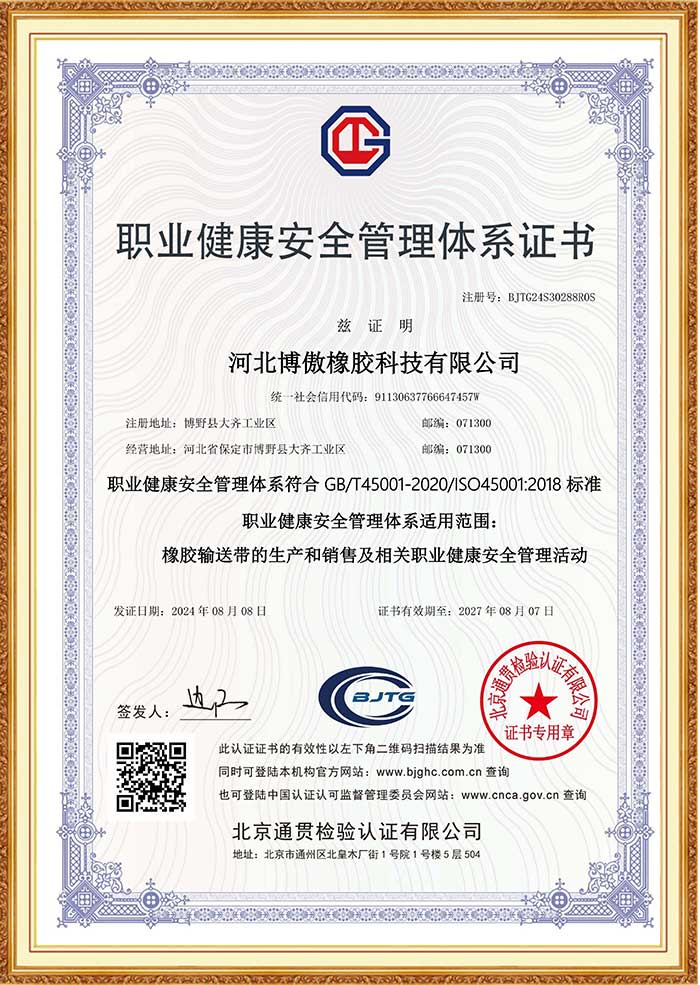
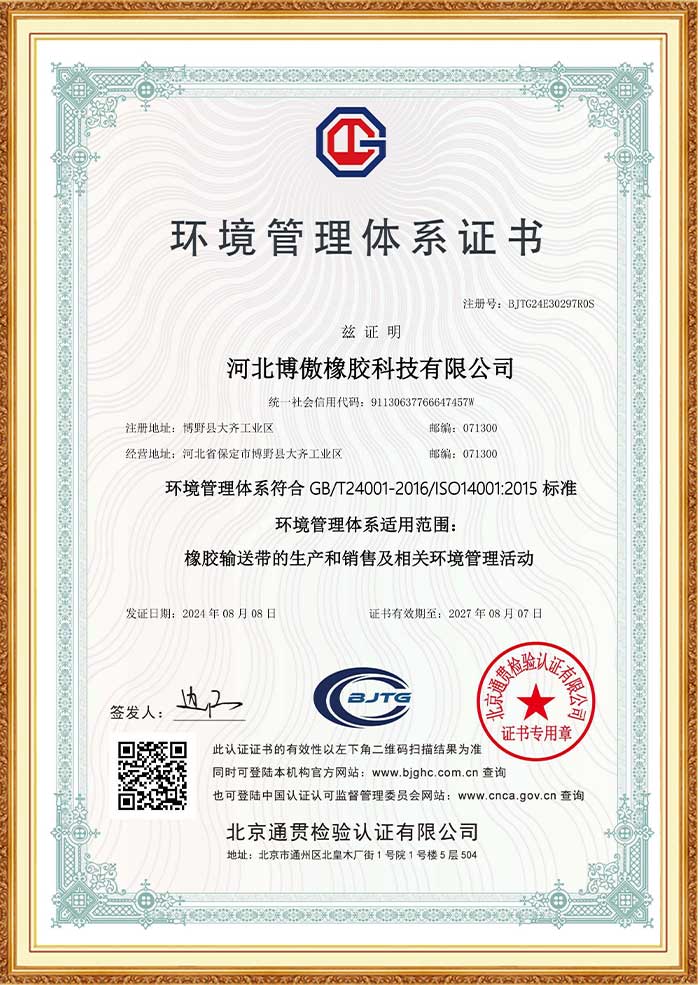
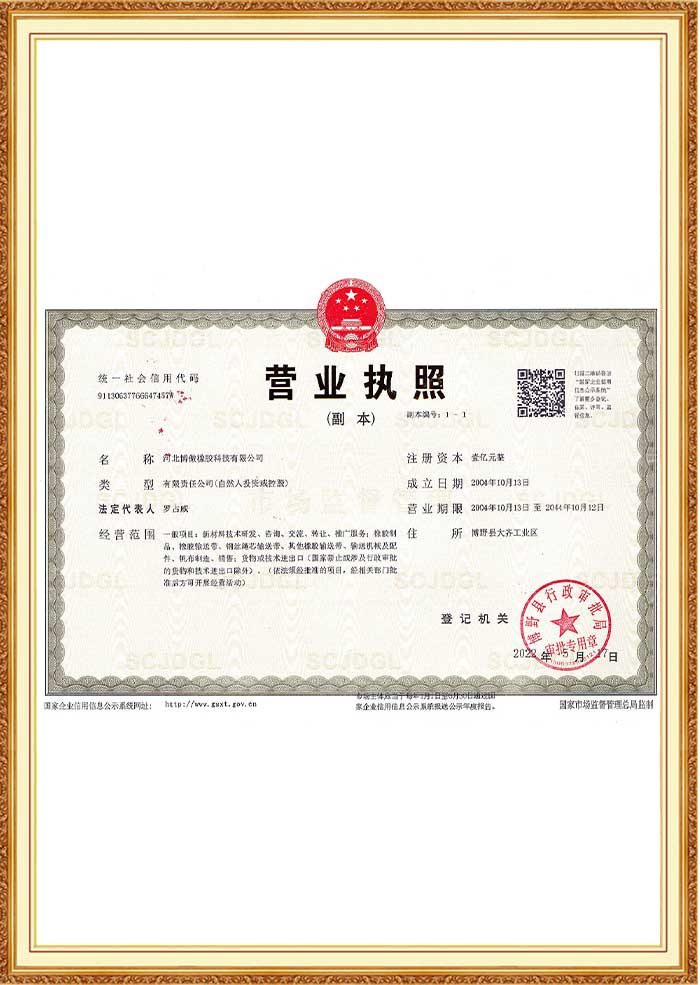
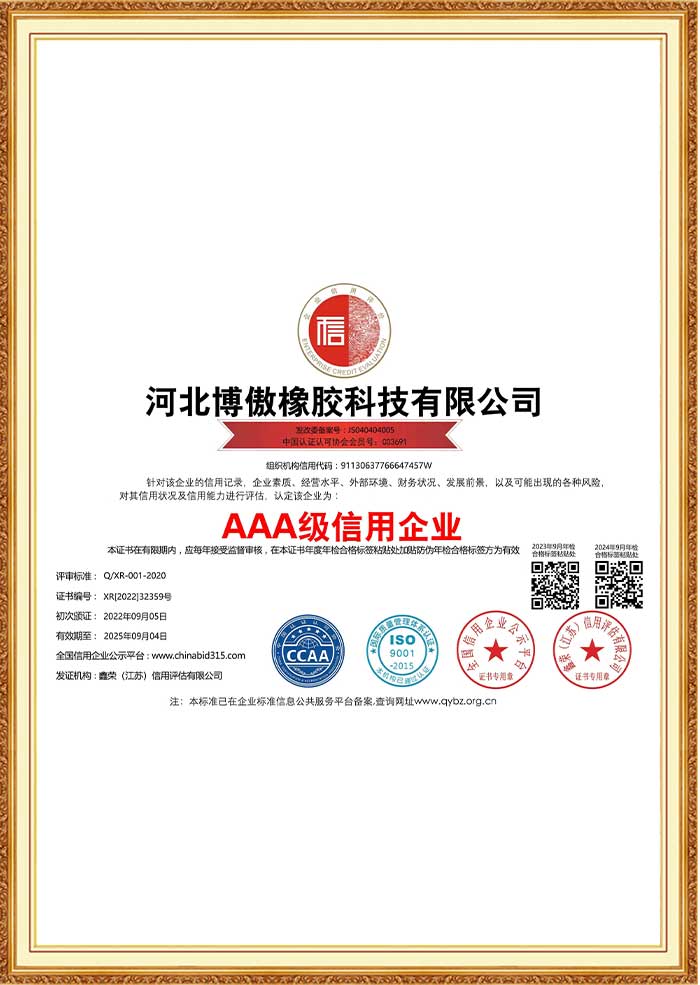
We hold international quality management system certifications in one go, complying with DIN, AS, ISO, API 6D, API 607, CE, ISO9001, ISO14001, and ISO18001 standards to secure full regulatory approval for Israeli infrastructure tenders.
Inside our independent chemical analysis room, physical properties laboratory, and modern vulcanization facility.
With 22 years of experience developing conveyor solutions, Hebei Boao Rubber Technology operates modern manufacturing equipment, including proportioning rooms, calendering and shaping lines, and specialized physical properties testing instruments. We ensure every compound meets strict tensile strength, elongation, and abrasion index standards.
Simulates millions of cycles of high-speed flexing to confirm the rubber-fabric bond remains intact and free from separation over long-distance operational life cycles.
Ensures optimal adhesion between the rubber cover and internal steel cords, preventing splice failures in heavy industrial handling environments.
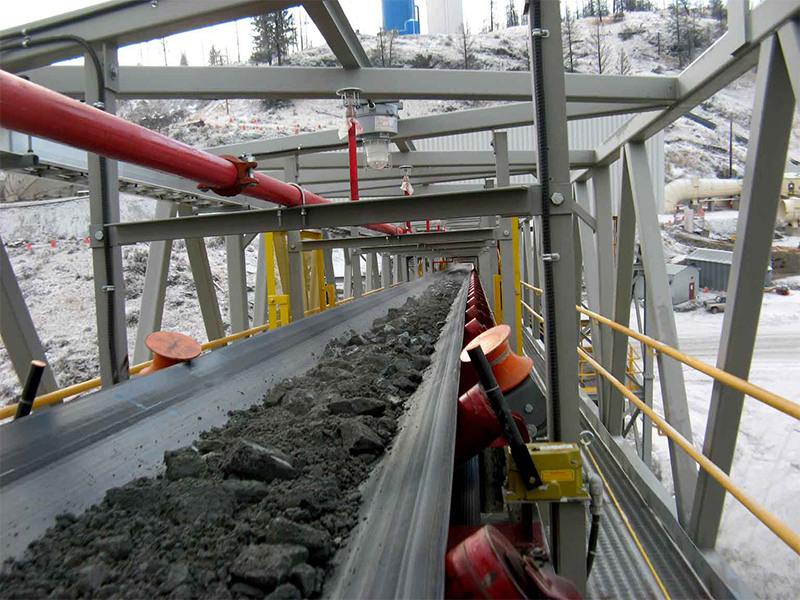
Monitors material wear parameters to guarantee compound performance under continuous handling of abrasive potash, copper concentrates, and iron ore.
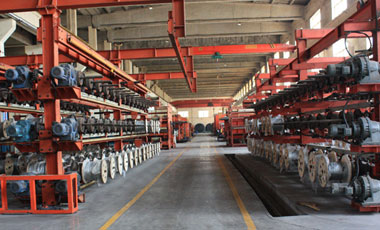
Steel Cord Belt Production Line
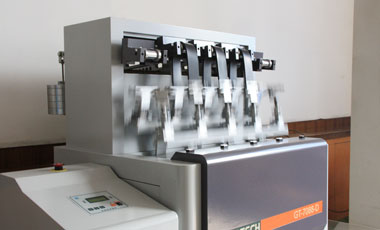
Dynamic Fatigue Tester
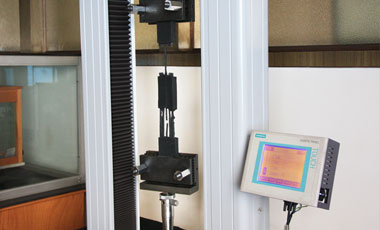
Steel Cord Pull-out Machine
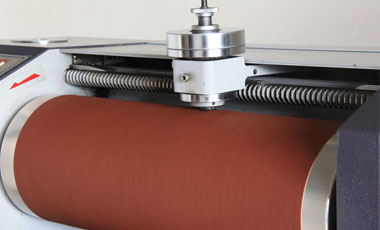
Abrasion Testing Facility
Our heavy-duty belts are trusted by major global mining, steel, and cement groups. Readily adaptable to Israeli ports and Negev mineral installations.
Important engineering, mechanical, and logistical considerations addressed by our Senior Technical Service Director.
The transition distance (from flat to fully formed tube) is calculated using the formula L = C * W, where W is the belt width and C is a coefficient based on belt construction and tension. For high-tension steel wire cord designs used in port installations, the coefficient C is generally between 25 and 30, meaning a 1000mm belt needs a 25 to 30-meter transition span to prevent edge overstressing and guarantee clean closure.
Potash is highly corrosive and hygroscopic. Standard rubber compounds degrade quickly under these conditions. Jinao belts use customized polymer matrices blended with specialized plasticizers and anti-corrosive agents. This compound prevents potash salts from extracting structural moisture from the rubber, maintaining the belt's flexibility and overlap seal geometry.
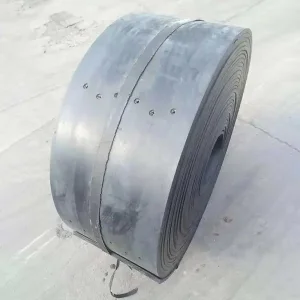
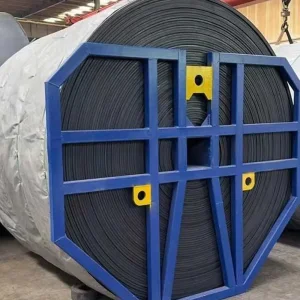
We package our belts on heavy-duty steel reels wrapped in protective PVC layers to prevent sea spray damage during transit. Logistically, items travel from Tianjin Port to Ashdod Port via major global shipping routes. Under standard conditions, manufacturing takes between 20 to 30 days, and maritime freight takes roughly 25 to 35 days, ensuring efficient delivery to Israel.
Explore our wider range of multi-layered fabric belts, steel cord reinforcements, and specialized components for heavy-duty material transport.
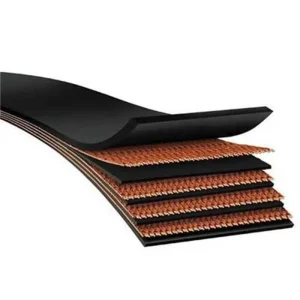
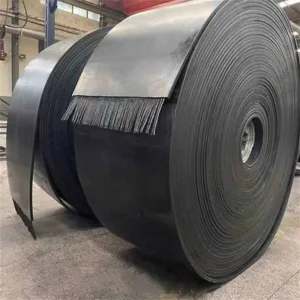
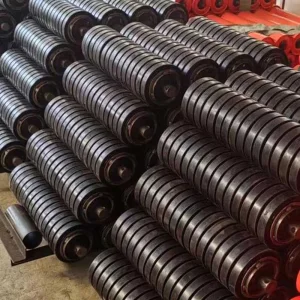
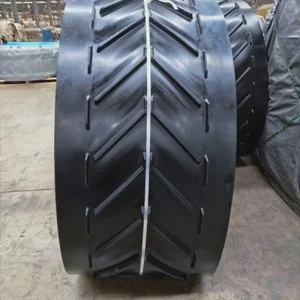
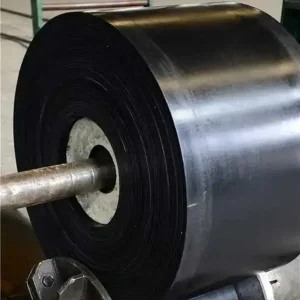
Get in touch with Hebei Boao Rubber Technology for dynamic load profiles, chemical compatibility matrix options, custom steel cord tensions, and custom quotes.
Send Inquiry Now Boao Rubber