 Boao Rubber
1 / 2
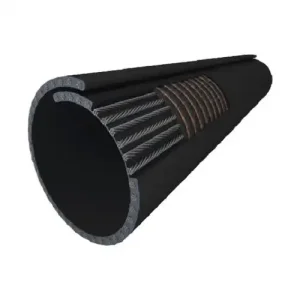
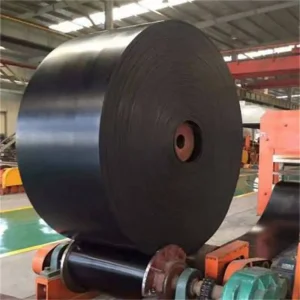
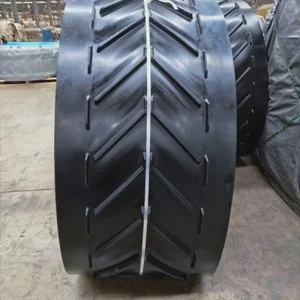
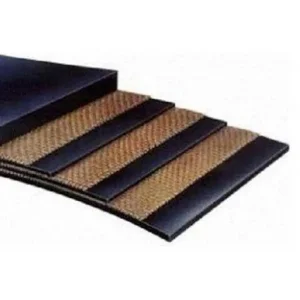
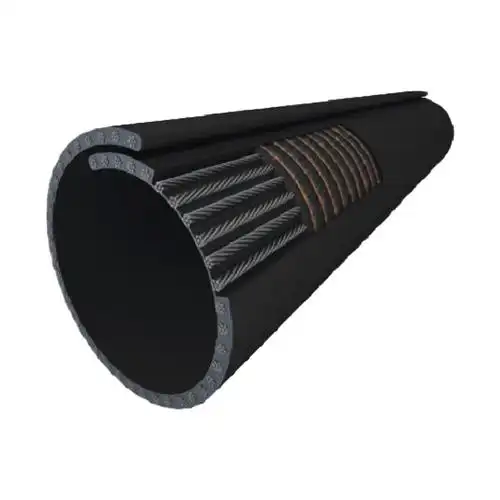
The tubular conveyor belt is mainly composed of the core body, the covering layer and the special edge structure. The core body is supported by high-strength canvas or steel wire rope, and is covered with high-strength and high-maintenance quality rubber. The two sides of the belt body are processed by special production methods, which give it appropriate lateral rigidity, making it easy to form a tube shape and resistant to fatigue. The belt edge is smooth to ensure a good seal at the joint. The tubular conveyor belt needs to be used in conjunction with the cylindrical belt conveyor, and is rolled into a tube shape by external force to achieve closed transportation. The main structure of the cylindrical belt conveyor usually consists of six parts: the feeding section, the forming device, the curved arc section, the vertical section, the discharging section and the return section.
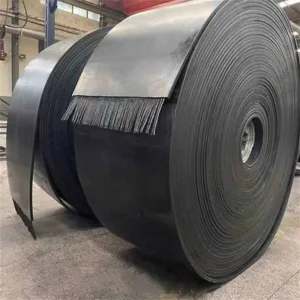
The core of the tubular conveyor belt mainly has two types: one is based on high-strength canvas as the framework, and the other is based on steel wire rope as the framework. The fabric core can be single-layer or multi-layer synthetic fiber canvas.
The core is covered with high-strength and high-maintenance quality rubber as the protective layer. The two sides of the belt body adopt special production processes to give it appropriate lateral rigidity, making it easy to form a tubular shape and resistant to fatigue. The belt edge is smooth to ensure a good seal at the connection points.
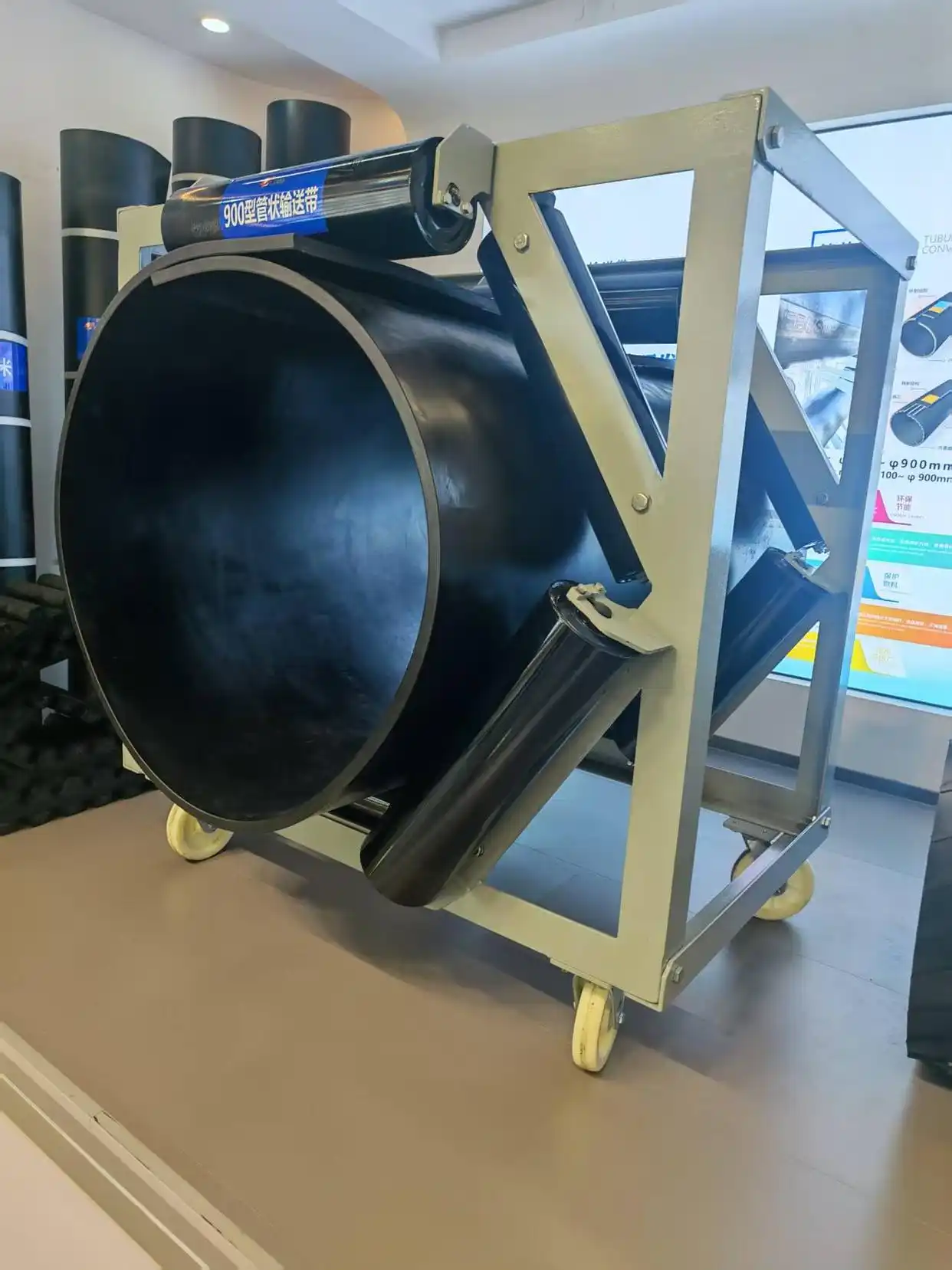
The tubular conveyor belt needs to be used in conjunction with the circular pipe belt conveyor. Its main structure is usually divided into six parts: the feeding section, the forming device, the arc-shaped section, the vertical section, the discharging section, and the return section. The forming device is used to wrap the conveyor belt into a sealed circular tube shape. During operation, after receiving materials at the tail transition section, the conveyor belt gradually changes from a flat shape to a U-shape, and then gradually rolls into an O-shape to enclose and run the materials; at the head transition section, it gradually unfolds to discharge the materials.
In the design of the conveyor belt structure, there is also modular innovation. For instance, by connecting multiple sub-belts and combining them with a quick-lock mechanism, the width of the tubular conveyor belt can be freely adjusted.
The tubular conveyor belt operates in a fully enclosed manner, ensuring that there is no dust flying or spillage of materials, and it does not affect the environment. It is particularly suitable for fine materials such as powders or pastes. It protects the materials from external environmental factors such as wind, rain, and snow. The closed conveyor system effectively reduces the emission of coal dust.
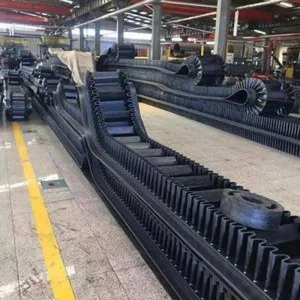
The tubular conveyor belt increases the friction coefficient between the material and the belt, and the maximum conveying angle can reach 30° to 45°. The tubular conveyor belt can achieve spatial curved arrangement, including horizontal, vertical and three-dimensional bending. One conveyor can replace a system composed of multiple ordinary conveyors. It has a smaller curve turning radius.
The closed structure can reduce noise, has a smaller cross-section and saves space. The rolling friction is small, energy-saving and efficient. There are cases showing that energy consumption is reduced by 25%.
The tubular conveyor belt has various types of fire resistance, heat resistance, cold resistance, chemical corrosion resistance, flame retardancy, and anti-static properties.
The belt is primarily composed of a core body (supported by high-strength canvas or steel wire rope), a covering layer made of high-strength and high-maintenance quality rubber, and a special edge structure designed to provide lateral rigidity and smooth sealing.
After receiving materials at the tail transition section, the conveyor belt gradually transitions from a flat shape to a U-shape, and then rolls into an O-shape to enclose the materials. At the head transition section, it unfolds back to a flat shape to discharge the materials.
The fully enclosed operation prevents dust and material spillage, protecting the surrounding environment. It also shields the transported materials from external weather factors like wind, rain, and snow, and effectively reduces coal dust emissions.
The belt increases the friction coefficient, allowing for maximum conveying angles of 30° to 45°. It also supports spatial curved arrangements—including horizontal, vertical, and three-dimensional bending—with a smaller turning radius.
Yes. Because of its closed design, it has low rolling friction, which saves energy. Documented cases show that this system can reduce energy consumption by up to 25% while simultaneously reducing noise and saving space.
Depending on the operational requirements, tubular conveyor belts can be customized to offer fire resistance, heat resistance, cold resistance, chemical corrosion resistance, flame retardancy, and anti-static properties.