Explore our elite range of heavy-duty fabric, rubber, and steel-reinforced conveying products manufactured to international standards.
An authoritative deep-dive into the technical parameters, carcass composition, and structural dynamics of cotton-canvas reinforced conveying systems.
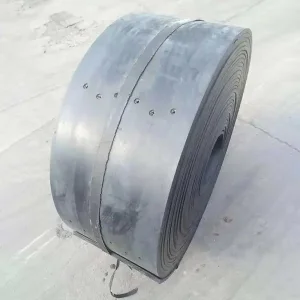
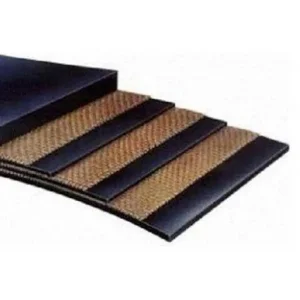
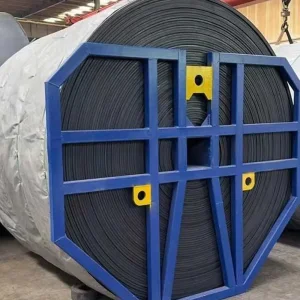
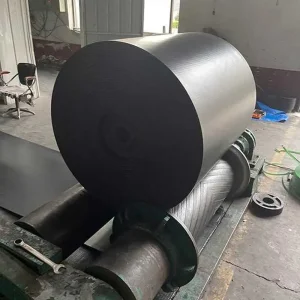
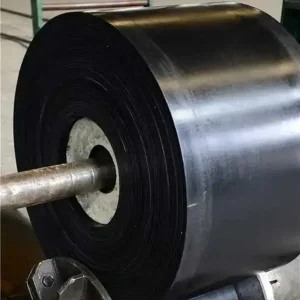
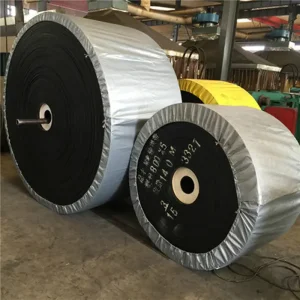
In heavy bulk handling operations, selecting the proper textile carcass is crucial to system uptime. The CC56 Conveyor Belt (Cotton-Cotton carcass with a rated longitudinal tensile strength of 56 kN/m per ply) represents one of the most reliable and versatile configurations for light-to-medium industrial conveying. Composed of premium natural cotton fibers woven in both warp and weft directions, the CC56 configuration offers superb heat resistance, exceptional cover rubber adhesion, and excellent troughability.
Unlike synthetic carcasses such as Polyester (EP) or Nylon (NN) which may lose structural integrity when exposed to operating temperatures exceeding 100°C, the cotton fibers in the CC56 carcass dry and consolidate under moderate heat, maintaining their physical properties. This characteristic makes the CC56 conveyor belt the premier choice for handling hot materials like foundry sand, sintering plants, slag, and parched grain matrices where temperature spikes are common.
| Performance Metrics | CC56 (Cotton-Cotton) | EP100 (Polyester-Nylon) | NN150 (Nylon-Nylon) |
|---|---|---|---|
| Tensile Strength per Ply (N/mm) | 56 kN/m | 100 kN/m | 150 kN/m |
| Adhesion Strength (Rubber to Fabric) | ≥ 4.5 N/mm | ≥ 4.5 N/mm | ≥ 5.0 N/mm |
| Elongation at Reference Load | ≤ 2.5% | ≤ 1.5% | ≤ 4.0% |
| Max Constant Temp Resistance (°C) | 120°C | 80°C | 80°C |
| Troughability Parameter | Excellent | Good | Very Good |
22 Years of Specialized Curing, Calendering, and Vulcanizing Expertise
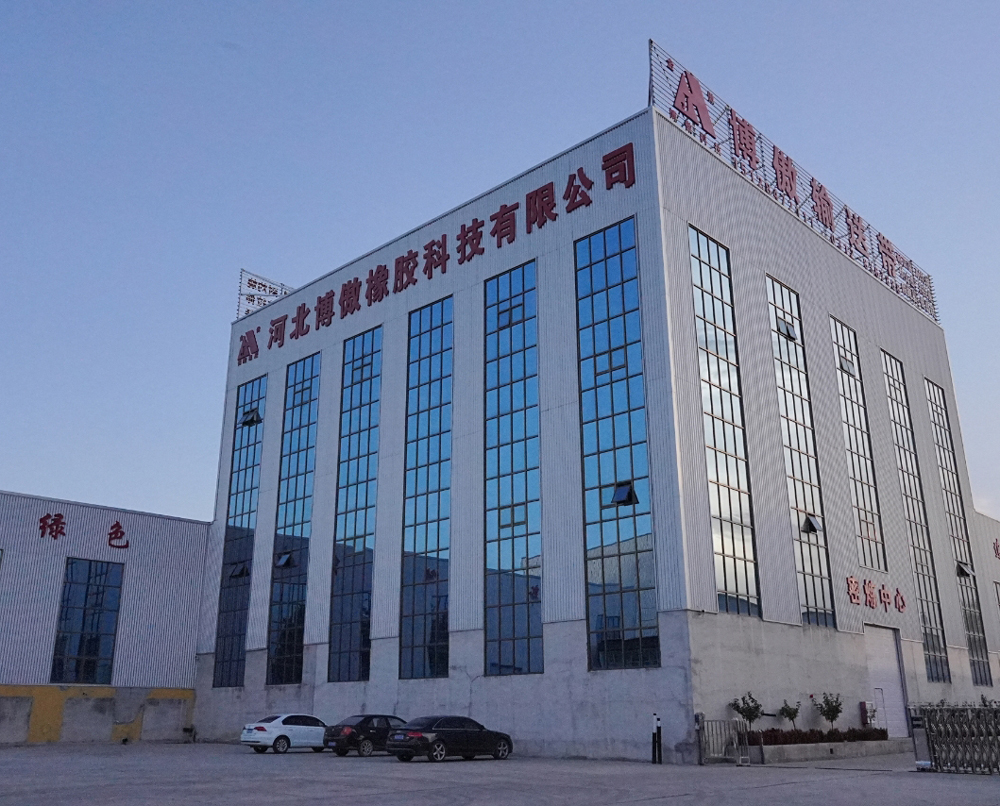
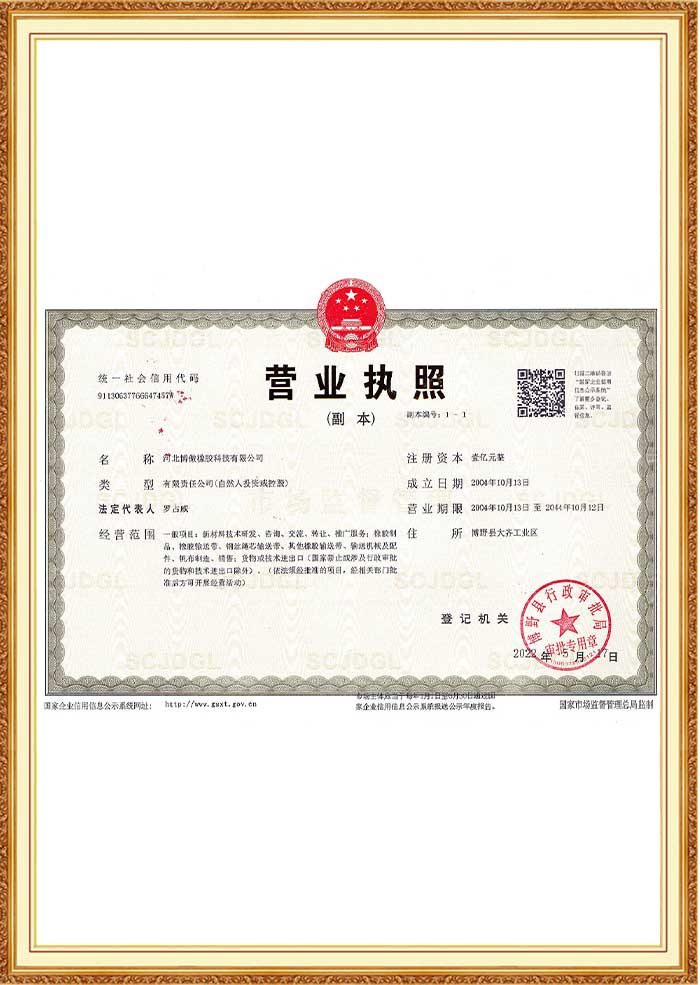
Located in the prestigious Rubber Industrial Park of Boye County, Baoding, Hebei Province, Hebei Boao Rubber Technology Co., Ltd. was established in 2004. Over the past two decades, the company has expanded to cover an area of over 30 acres, developing into a state-of-the-art manufacturing entity. Operating under our premium proprietary "Jinao" brand, we integrate material science research, chemical analysis, product design, and rigorous quality assurance processes.
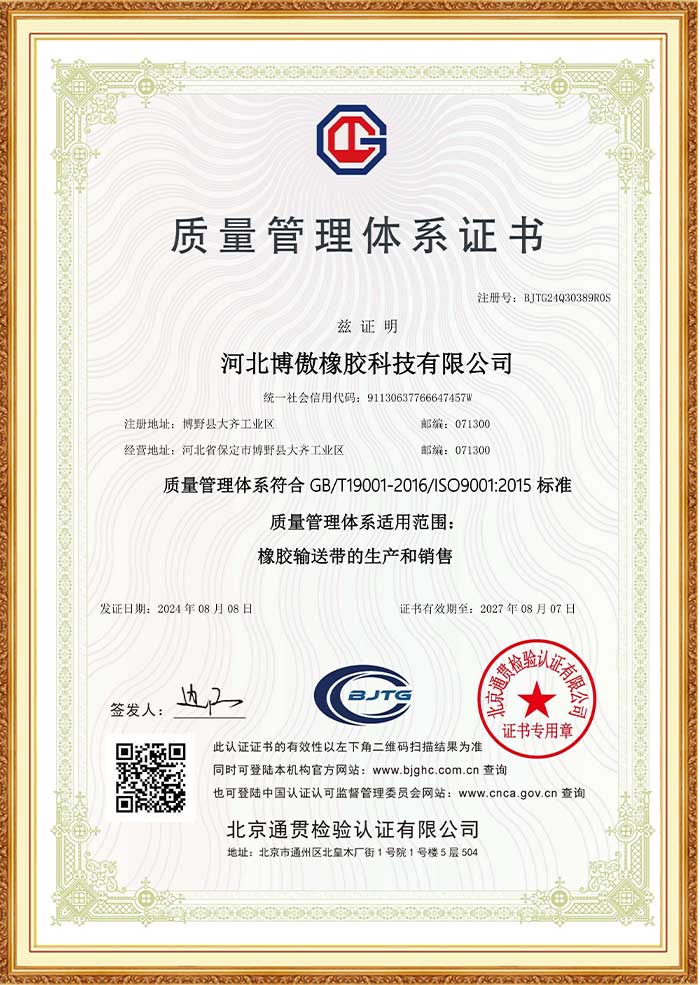
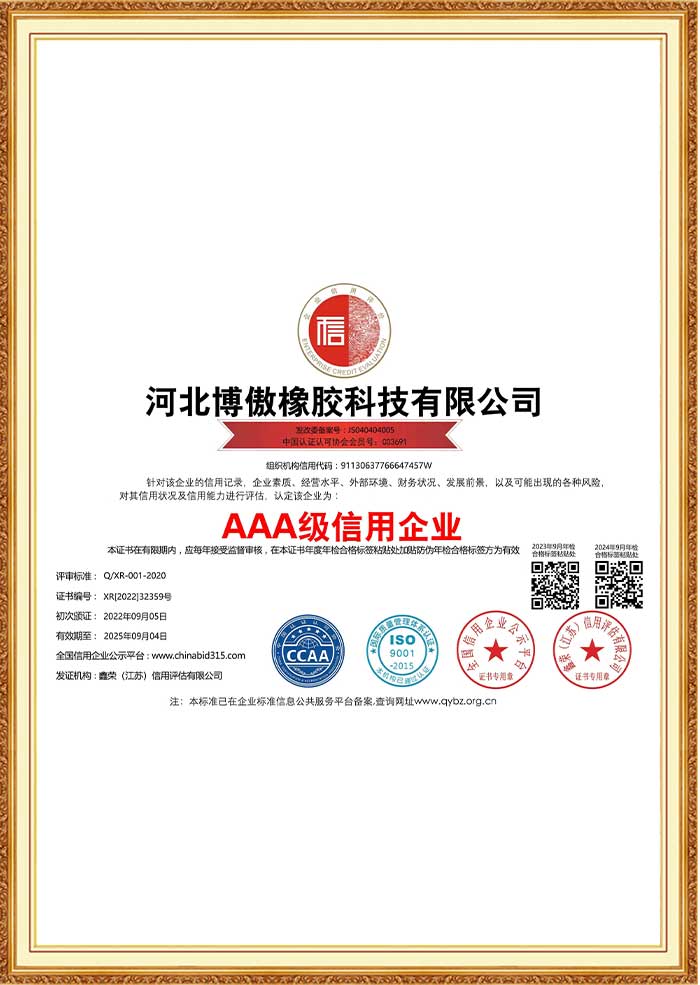
Our facility features multiple advanced production lines for rubber mixing, precision calendering, ply forming, and multi-platen vulcanization presses. Our scope stretches beyond basic fabrication; our dynamic in-house laboratories handle testing from raw polymers to finished industrial belts, ensuring full compliance with ISO 9001 and international quality management protocols.
Why global heavy-industry enterprises rely on Hebei Boao for bulk material handling conveyor belt programs.
From the initial raw polymer compound mixing in our computerized proportioning rooms to the multi-roll calendering and final vulcanization process, we supervise the entire production line. This eliminates middleman costs and ensures uniform compound stability.
Our advanced facilities feature dynamic fatigue testers, peeling testers, rubber abrasion meters, and steel cord pull-out rigs. We operate on a strict code: zero unqualified materials enter our facility, and zero sub-standard products leave.
Our location in Baoding, Hebei Province places us at the heart of China’s rubber manufacturing cluster. This gives us immediate access to raw material networks, specialized engineering talent, and seamless freight links to Tianjin and Qingdao ports.
Meeting stringent international criteria for mechanical safety, environmental compliance, and cost-to-performance efficiency.
Modern buyers require strict compliance with regional standards such as AS 1332 in Australia, DIN 22102 in Germany, and SANS 1173 in South Africa. Our manufacturing adapts cover grades (M, N, Y, X, W) to match exact wear, tensile, and elongation parameters.
As power consumption remains a critical operational expense, our compound formulations focus on reducing indentation rolling resistance (IRR). This ensures conveyor motors operate at maximum thermodynamic efficiency, cutting power draw by up to 15%.
Procurement teams require comprehensive support. We offer direct consultations, emergency vulcanization planning, preventive wear maintenance, and spare stock guarantees to limit downtime during belt transition cycles.
Where "Jinao" brand conveyor systems deliver operational reliability under high-load conditions.
In environments like Taihang Steel and Puyang Steel Group, conveyor belts handle intensely abrasive, high-temperature slag and hot coke. Our heat-resistant CC56 belts withstand constant temperatures of 120°C and transient peaks without delamination or premature carcass fatigue.
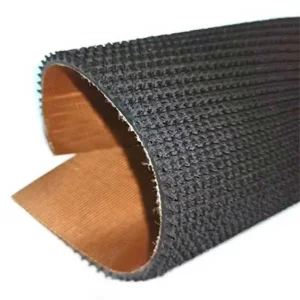
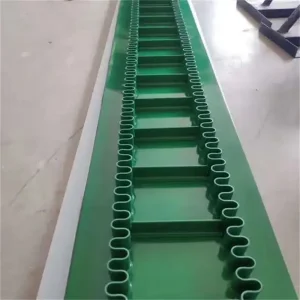
For cement giants like Conch Cement and Jidong Cement Group, our high-inclination wavy edge and patterned conveyor belts deliver consistent material transport on steep paths, avoiding slide-back of raw clinker and pulverized gypsum.
In underground mining lines like Datong Coal Group and Jinmei Group, static discharge and combustible dust require flame retardant characteristics. Our flame retardant rubber belts prevent fire ignition while handling heavy coal runs.
At chemical fertilizer processing facilities and mineral concentrators like Zijin Mining, belts must resist acid, alkali, and chemical attacks. Our specialized rubber formulations prevent ply separation under highly corrosive conditions.
A glimpse inside our specialized laboratories and production floor in Boye County, Baoding.
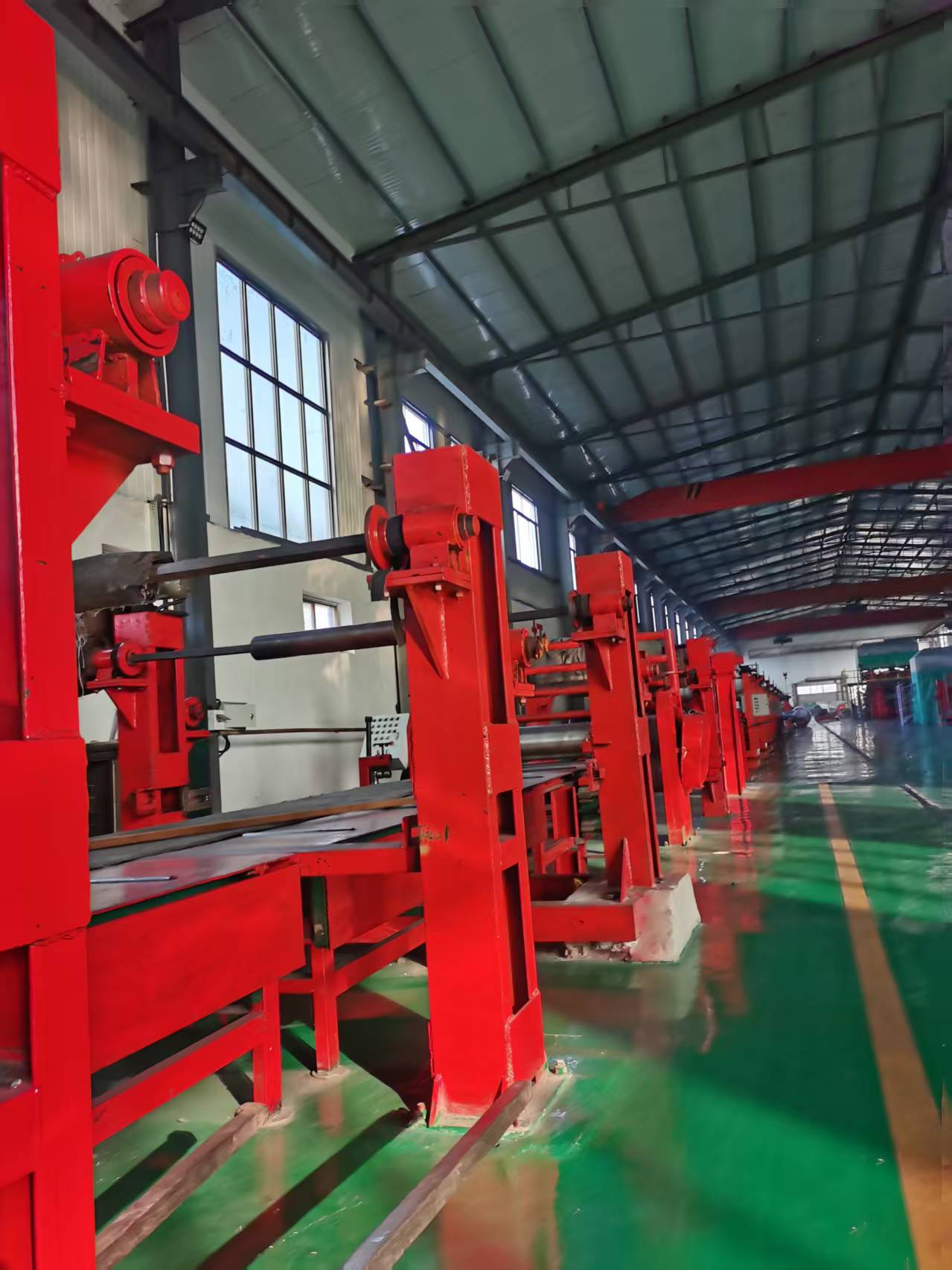
Calendering and tensioning system for multi-ply textile carcasses.
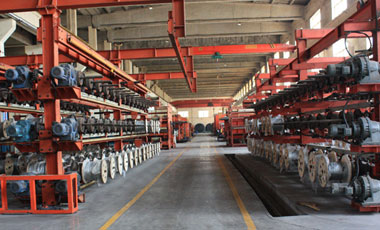
Precision wire-tensioning and rubber impregnation lines.
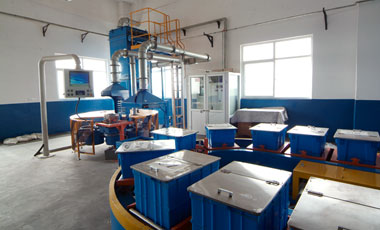
Automated, computerized polymer compound dosing system.
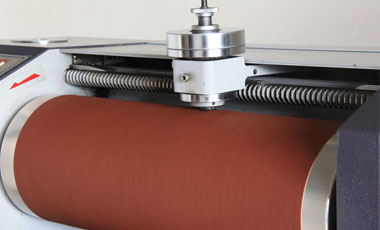
Testing rubber cover wear characteristics against hard surfaces.
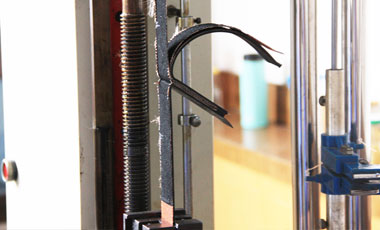
Verifying compound adhesion to the textile carcass.
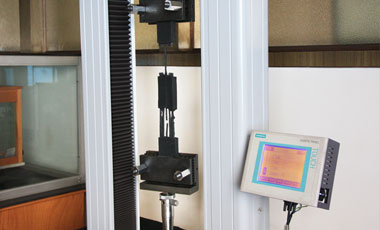
Evaluating shear strength under high load profiles.
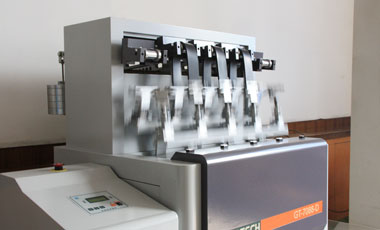
Checking longevity under continuous cyclic load curves.
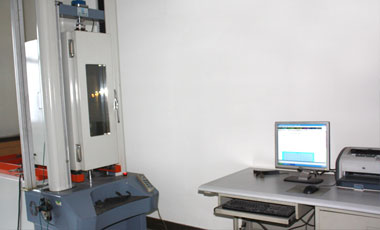
Validating elasticity and mechanical stretch capacity.
Guaranteed validation metrics and comprehensive plant maintenance support.
Our plant complies with international manufacturing norms including API 6D, API 607, CE, ISO9001, ISO14001, ISO45001 (OHSAS 18001), and TS. We provide comprehensive documentation for engineering inspections and cargo clearing.
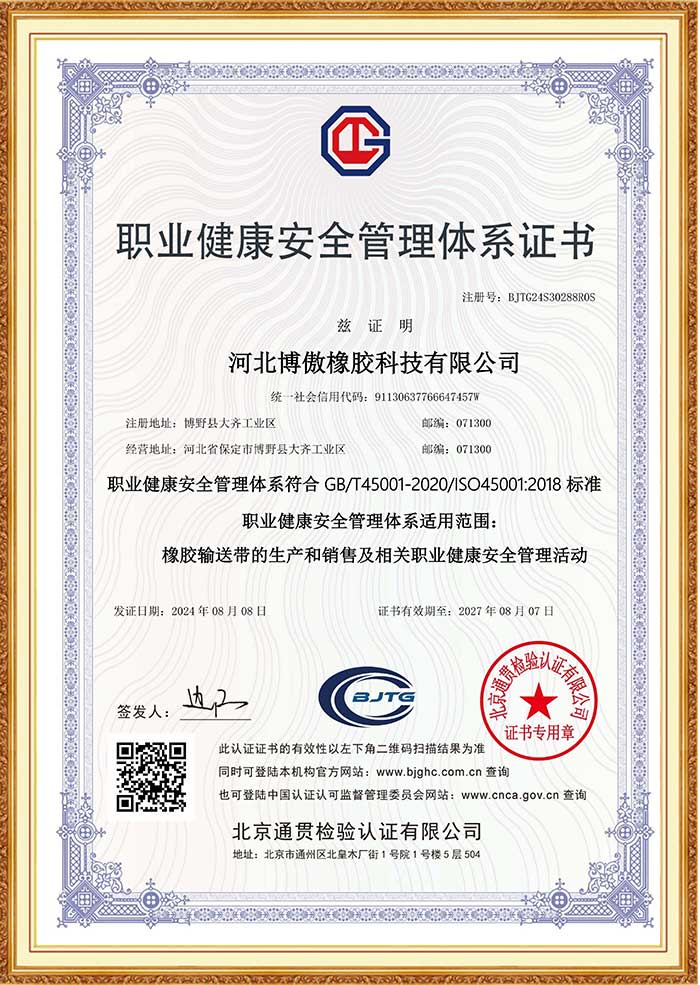
We offer specialized maintenance support to help prevent unscheduled outages:
Technical answers to help engineers and procurement leads select the correct conveyor belt configurations.
High-quality components and heavy-duty conveyor belts engineered for global industrial infrastructure.
 Boao Rubber