Why Choose Flame Retardant Conveyor Belts?
In mining, aggregate, recycling, and power facilities, conveyor belts often carry dusty materials through demanding environments. A hot bearing, seized roller, or welding spark can create a serious ignition risk. Flame-Retardant Conveyor Belts are designed to resist ignition and slow flame spread across the belt surface. This can provide workers with more time to stop equipment, isolate energy, and respond safely.
Their value extends beyond fire resistance. A well-selected belt can support reliable material handling, reduce unplanned stoppages, and protect nearby components from avoidable heat damage. Engineers usually assess the transported material, belt speed, loading impact, pulley diameter, and operating temperature before choosing a suitable construction. Maintenance teams should also inspect edges, covers, splices, and idlers regularly. Small defects matter.
Performance depends on more than the belt alone. Poor tracking can create friction against the structure. Material buildup can hide damaged areas. A belt may meet a test requirement yet perform poorly when installation or maintenance is neglected. That uncomfortable detail deserves attention.
Manufacturers and site managers should review verified technical data, application experience, and relevant safety testing before purchasing. Flame-retardant performance, tensile strength, abrasion resistance, and splice quality must work together. The right choice is not always the most expensive belt. It is the belt that matches the actual duty, receives proper maintenance, and performs consistently under pressure. Reliable protection begins with realistic evaluation, not assumptions.
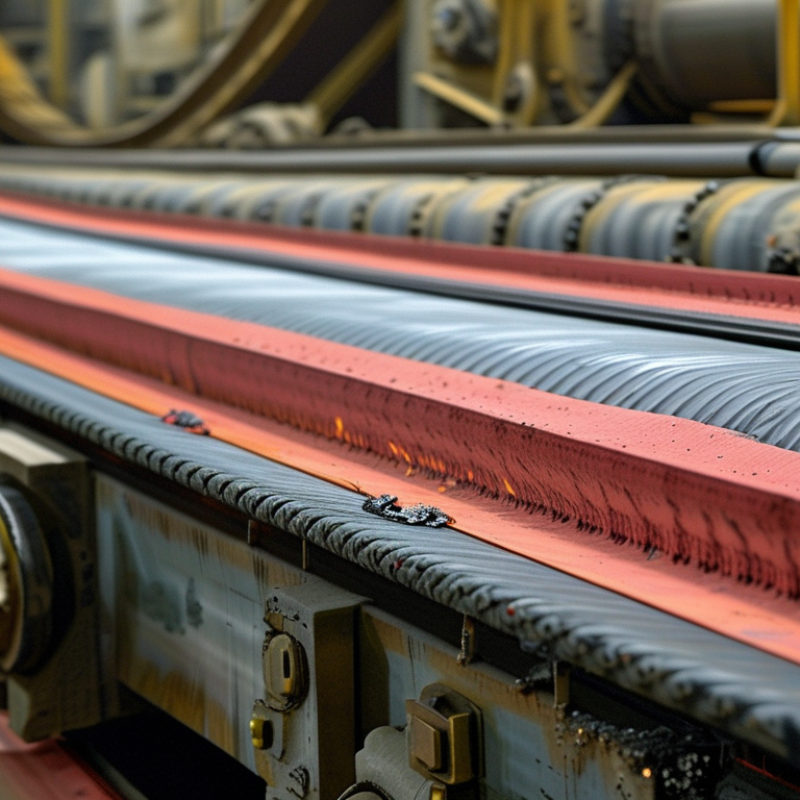
What Is a Flame Retardant Conveyor Belt?
A flame retardant conveyor belt is designed to resist ignition and slow flame spread after exposure to heat or fire. It is not fireproof. Its rubber covers and carcass use specially selected compounds that reduce burning and support safer shutdown procedures. Testing commonly follows ISO 340, which evaluates flame persistence after a controlled ignition source is removed. Some applications also reference EN 12882 for conveyor belt safety classification.
This protection matters where belts carry coal, grain, minerals, or other combustible materials through enclosed areas. The U.S. National Fire Protection Association reported 1.39 million fires attended by local departments in 2023. That figure covers all types of fires, not conveyors, but it shows why ignition control deserves practical attention. A belt rubbing against a seized idler can create heat, smell, smoke, and eventually visible damage. Small details matter.
A reliable selection process checks belt construction, test certificates, splice behavior, and operating temperature. The belt should also work with the site’s detection and suppression systems. A pass in a laboratory is not a guarantee in a dusty transfer point. That uncomfortable gap is often overlooked. According to ISO 340 guidance, flame resistance must be verified under defined test conditions, so buyers should request the exact test method and results. Safety improves when belt performance and maintenance discipline are treated as one system.
Why Choose Flame Retardant Conveyor Belts?
How Flame Retardant Conveyor Belts Work
Flame retardant conveyor belts use specially engineered rubber and polymer compounds. These materials slow ignition when exposed to sparks, hot particles, or open flame. The belt cover chars or forms a protective layer. This limits oxygen and reduces flame spread along the conveyor. Some designs also include antistatic properties. They help control static buildup, which can create ignition risks in dry operating areas.
The internal carcass provides strength while the covers resist heat, abrasion, and tearing. During testing, a belt may be exposed to flame and checked for continued burning. A reliable belt should stop burning within a specified time after the flame source is removed. However, flame resistance does not make a belt fireproof. Heat, oil, poor splicing, and trapped material can still create problems. This point is easy to overlook.
Tips: Check the belt’s temperature range, cover grade, and test documentation before selection. Inspect edges, joints, and worn areas during routine maintenance. A damaged cover may expose combustible layers beneath. Keep transfer points clean, because spilled material can feed a small fire. Verify that the belt matches the conveyor speed, load, pulley diameter, and operating environment. Ask a qualified engineer to review site conditions when heat or dust levels vary. Practical experience shows that installation quality matters nearly as much as belt specification.
| Technical Dimension | How It Works | Relevant Technical Fact | Practical Benefit | Selection Consideration |
|---|---|---|---|---|
| Flame-retardant rubber compound | Special additives reduce the ability of the rubber cover to ignite, sustain combustion, and spread flame. | Flame-retardant formulations are typically used in the top and bottom covers and may also be applied to the skim compounds. | Reduced flame spread | The formulation must be matched to the transported material, operating temperature, flexing conditions, and required test standard. |
| Combustion interruption | During heating, the additives can promote protective char formation, dilute combustible gases, or interfere with flame-propagating chemical reactions. | The exact mechanism depends on the rubber polymer and flame-retardant chemistry used in the belt compound. | Helps limit the development of a small ignition source into a travelling belt fire. | Flame retardancy does not make the belt non-combustible or immune to severe external fire exposure. |
| Fire-resistance testing | A belt sample is exposed to a controlled flame and assessed for flame persistence and afterglow according to the selected test method. | ISO 340 is widely used for the laboratory assessment of conveyor-belt flammability characteristics. | Provides a repeatable basis for comparing belt performance and verifying conformity. | Always confirm the exact edition, test configuration, and acceptance criteria required by the installation or local authority. |
| Mining and enclosed conveyors | Flame-resistant covers are designed to reduce flame travel along the belt when ignition occurs in a confined or difficult-to-access area. | Underground mining, tunnels, power plants, and enclosed material-handling routes commonly require enhanced fire-safety controls. | Can help slow fire development and provide more time for alarm, isolation, evacuation, and firefighting procedures. | Belt selection must be part of a complete fire-protection system that includes detection, suppression, ventilation, and emergency procedures. |
| Antistatic performance | Conductive materials and suitable belt construction help dissipate electrostatic charge and reduce spark-related ignition risk. | ISO 284 is commonly referenced for the electrical conductivity or antistatic property of conveyor belts; a commonly specified criterion is a maximum surface resistance of 3.0 × 10⁸ Ω. | Reduces the possibility of electrostatic charge accumulation during conveying. | Antistatic performance is separate from flame retardancy; both requirements may be needed in hazardous environments. |
| Smoke and toxic-gas control | Some belt compounds are formulated to reduce smoke generation or the release of corrosive gases during fire exposure. | Smoke density and gas toxicity are separate properties and are not automatically demonstrated by a flame-retardant classification. | May improve visibility and working conditions during an emergency, depending on the compound and test results. | Request independent test data when low smoke, low toxicity, or halogen-free performance is required. |
| Mechanical strength retention | The carcass carries tensile loads while the rubber covers protect the reinforcement from abrasion, impact, heat, and environmental attack. | Belt strength is selected by conveyor tension, belt width, troughing arrangement, material density, lift height, and starting loads. | Maintains conveying reliability while adding fire-safety characteristics. | Fire resistance does not replace the need to specify suitable tensile strength, splice performance, tear resistance, and cover thickness. |
| Abrasion and impact resistance | Resistant cover compounds and suitable carcass designs reduce wear and damage caused by coarse, sharp, or heavy materials. | Abrasion resistance is normally evaluated separately from flammability, for example through an applicable abrasion test method such as ISO 4649. | Longer service life can reduce belt changes, maintenance interruptions, and exposure to damaged-belt fire risks. | Choose the cover grade according to material abrasiveness, lump size, drop height, and loading-zone impact. |
| Temperature suitability | The rubber formulation and reinforcement are selected to withstand the temperature of the conveyed material and the surrounding environment. | Flame-retardant belts are available in different temperature ranges; no single temperature rating applies to every construction. | Helps prevent premature hardening, softening, cracking, or loss of adhesion. | Specify continuous and peak temperatures separately, including heat generated by friction, hot fines, or material retention. |
| Oil and chemical resistance | Specially selected polymers resist swelling, softening, or deterioration caused by oils, fuels, solvents, or process chemicals. | Flame-retardant and oil-resistant properties are independent; a belt may require both classifications. | Maintains cover integrity and reduces the chance that contamination will accelerate damage or ignition. | Identify the specific chemical, concentration, contact time, and operating temperature before selecting the compound. |
| Standards and compliance | Testing verifies defined safety properties under controlled laboratory conditions. | Commonly referenced documents include ISO 340 for flammability, ISO 284 for electrical conductivity, ISO 14890 for general conveyor-belt requirements, and EN 12882 for conveyor-belt safety classification. | Supports risk assessment, procurement specifications, inspections, and regulatory compliance. | Standards are not interchangeable; confirm whether the project requires ISO, EN, ASTM, national, mining, or site-specific requirements. |
| Maintenance and inspection | Regular inspections identify cover cuts, edge damage, splice deterioration, material buildup, belt mistracking, and overheated components. | Fire performance can be affected by aging, contamination, mechanical damage, improper splicing, and contact with hot components. | Preserves the belt's intended safety performance throughout its service life. | Use a documented inspection schedule and replace or repair belts when damage exceeds the site's acceptance limits. |
In mining, ports, recycling plants, and heavy manufacturing, conveyors may carry combustible materials for hours. A small heat source near the belt can become a serious incident. Flame retardant conveyor belts help limit flame spread after ignition. They can reduce the chance of fire traveling along the entire conveyor line.
That protection matters near transfer points, motors, idlers, and enclosed galleries. A belt with suitable flame resistance may give workers more time to stop equipment and begin emergency procedures. It can also reduce damage to nearby structures and cables. But flame retardant does not mean fireproof. The belt still needs correct storage, installation, and inspection.
Look closely at worn edges, exposed fabric, cracking, and material buildup. These details are easy to miss. They can weaken the belt’s protective performance. Regular cleaning also matters, especially where dust collects around pulleys and return rollers. A reliable selection should match the material, speed, tension, temperature, and ventilation of the site.
Check independent test records and the safety standard required in your region. Do not rely only on a product label. A belt may pass a laboratory test yet perform poorly when damaged or poorly maintained. This is an uncomfortable point, but safety depends on the complete conveyor system, not one component. Pair the belt with temperature monitoring, emergency stops, routine inspections, and trained operators.
Materials, standards, and performance requirements matter more than a flame-retardant label. In practice, belts face heat, friction, dust, and repeated impact near transfer points. A rubber compound with flame-resistant additives can limit flame spread, but excessive additives may reduce flexibility or splice quality. I have seen belts pass a laboratory test yet crack around poorly bonded joints. That detail is easy to miss.
ISO 340:2022 evaluates flame persistence after ignition and examines whether burning continues along the belt. ISO 284 also sets an electrical resistance limit of 3.0 × 10⁸ ohms, helping control static ignition risks. These figures are useful, but they do not describe every mine or plant condition. EN 12882 adds a safety classification framework for conveyor belts, while site rules may require stricter performance. The correct selection begins with the material being conveyed, belt speed, incline, ventilation, and nearby heat sources.
Performance testing should include the complete belt system, not only a rubber sample. Splices, cleaners, skirting, and carryback can influence fire behavior. Regular inspections should record cover wear, edge damage, temperature changes, and test intervals.
According to mine-safety incident reporting practices, equipment condition and maintenance records are critical during fire investigations. A belt that resists flame may still fail under prolonged heat, oil contamination, or mechanical abuse. That is the uncomfortable part. Lab compliance is necessary, not sufficient.
Why Choose Flame Retardant Conveyor Belts?
How to Choose the Right Flame Retardant Conveyor Belt
Choosing a flame retardant conveyor belt starts with the fire risk, not the price. A belt carrying coal, wood chips, or dusty minerals may face heat, friction, and hidden smouldering. The U.S. Mine Safety and Health Administration’s mine-fire investigation reports repeatedly identify conveyor systems as critical ignition and flame-spread areas. This is not a minor detail. A safer belt can protect people, equipment, and production continuity.
Check the required testing standard before comparing suppliers. ISO 340 evaluates flame persistence after a belt specimen is exposed to flame. ISO 284 measures electrical resistance, which helps reduce static-related ignition risks. Underground mining may also require regional approval, such as MSHA requirements or EN 14973 classification. Ask for current test reports, belt construction details, and batch traceability. Do not accept “fire resistant” as enough evidence.
Match the belt to its actual environment. Consider belt width, speed, material temperature, impact loading, and ventilation. Covers with suitable rubber compounds may resist heat better, while steel-cord belts can support demanding tension levels. Still, a stronger belt is not automatically safer. Poor cleaning can leave combustible dust beside the return roller. Regular inspections remain essential. In practice, selection is sometimes rushed, and that is where judgment can fail. The best decision combines laboratory results, site conditions, and maintenance experience, as recommended by ISO 14890 guidance for conveyor belt selection and inspection.
Flame-retardant conveyor belts are designed to reduce flame spread and support safer material handling in applications where combustible materials, heat, or ignition sources may be present.
Match the belt’s flame-resistance certification to the applicable safety standard, then confirm the required continuous operating temperature. ISO 4195-1 heat-resistant grades are commonly referenced at approximately 100°C, 125°C, 150°C, and 180°C. The belt construction, cover compound, belt width, tensile strength, abrasion resistance, conveying angle, and transported material should also be evaluated.
Flame retardance and heat resistance are different properties: a belt may resist flame spread but still require a higher heat-resistant grade for hot materials.
: It resists ignition and slows flame spread after exposure to heat or fire. It is not fireproof.
Special rubber and polymer compounds can char or form a protective layer. This reduces oxygen contact and burning along the belt.
They suit areas carrying coal, grain, minerals, or other combustible materials. Enclosed galleries need particular attention.
It may slow fire movement near transfer points, motors, idlers, and cables. Workers may gain extra response time.
No. Heat, oil, dust, damaged covers, and poor splices can still create hazards. This limitation is easy to overlook.
Testing commonly checks whether burning continues after a controlled flame is removed. Request the exact method and test results.
Check temperature range, cover grade, belt strength, splice behavior, and test documents. Also match speed, load, pulley diameter, and site conditions.
Inspect edges, joints, cracks, exposed fabric, and material buildup regularly. Keep transfer points clean. Small debris matters.
Yes. Laboratory results do not guarantee performance after poor installation or damage. We sometimes trust labels too much.
Use temperature monitoring, emergency stops, fire detection, suppression systems, and trained operators. One component cannot protect the whole conveyor.
Flame-Retardant Conveyor Belts are specially engineered to reduce the spread of fire and limit heat-related damage when combustible materials or unexpected ignition occur during conveying operations. Unlike standard belts, they typically use fire-resistant rubber compounds, reinforced fabrics, and protective layers designed to resist burning, minimize flame propagation, and reduce smoke or belt failure. Their performance is especially valuable in mining, power generation, recycling, manufacturing, and other high-risk environments where continuous material movement is essential.
Selecting the right belt requires more than simply choosing a fire-resistant model. Buyers should evaluate the transported material, operating temperature, belt speed, load, impact level, moisture, abrasion, and installation conditions. They should also confirm that the belt meets relevant safety standards and testing requirements for flame resistance, tensile strength, adhesion, and durability. A properly selected Flame-Retardant Conveyor Belts solution can improve workplace safety, protect equipment, reduce operational interruptions, and provide reliable performance throughout the belt’s service life.

Boao Rubber