Top 10 Anti Slip Conveyor Belt Types for Global Buyers

Time:2026-10-28 Author:Isabella
0%

Choosing the right Anti-Slip Conveyor Belts is not simply a matter of selecting the deepest surface pattern. Global buyers must consider moisture, oil exposure, incline angle, belt speed, load shape, and cleaning routines. A belt that grips cardboard boxes may struggle with wet grain or polished plastic containers. Small details matter. A six-degree incline can run smoothly, while a steeper line may require molded profiles, textured covers, or cleats.

R. Todd Swinderman, a respected conveyor safety specialist and former Martin Engineering executive, has stated, “The best way to control fugitive material is to prevent it from escaping in the first place.” His observation applies here. Reliable belt selection begins before installation. Buyers should review cover compounds, pulley compatibility, tensile strength, tracking behavior, and abrasion resistance. They should also request test data, application references, and clear maintenance guidance. Supplier claims need evidence.

This guide examines ten Anti-Slip Conveyor Belts types for international purchasing decisions. The comparison considers grip, flexibility, durability, temperature tolerance, sanitation needs, and typical industries. Some belts use diamond textures. Others use ribs, herringbone patterns, rough-top covers, or integrated cleats. Each design creates a different contact story between the belt and the material.

No ranking fits every plant. That is the uncomfortable part. A belt may perform well in a dry warehouse but fail beside a humid loading dock. Installation errors can also imitate poor belt quality. Careful measurement, realistic trials, and honest feedback remain essential. The strongest choice is not always the most aggressive surface. It is the belt that maintains control without creating unnecessary wear, noise, or cleaning difficulty.
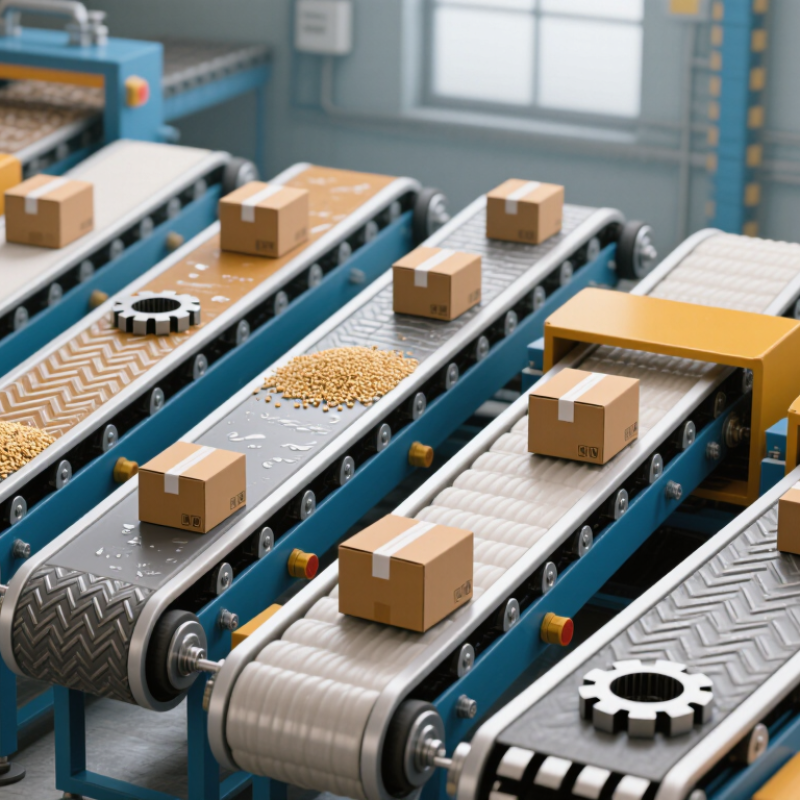
Top 10 Anti Slip Conveyor Belt Types for Global Buyers

What Anti-Slip Conveyor Belts Are and How Their Grip Works

Anti-slip conveyor belts are designed to hold materials in place while the belt moves. Their grip comes from the top cover’s texture, rubber compound, belt tension, and contact pressure. Raised patterns increase contact points. Cleats add mechanical support on steep inclines.

Grip is not a fixed number. Dust, oil, moisture, and cold temperatures can reduce traction sharply. CEMA’s Belt Conveyors for Bulk Materials, 7th Edition, stresses that belt tension, incline angle, loading conditions, and pulley wrap must be evaluated together. A soft surface may feel grippy by hand but wear faster under abrasive loads. That is an easy detail to miss.

The Grand View Research Conveyor Belt Market report estimated the global market at about USD 5.85 billion in 2023, with continued growth expected through 2030. This expansion reflects wider demand across logistics, mining, agriculture, and manufacturing. Yet market growth does not guarantee correct belt selection. Buyers should request test results under realistic conditions, using the actual material, moisture level, and incline angle. ASTM D1894 friction testing can offer useful comparative data, but it does not perfectly reproduce conveyor operation. A dry laboratory figure can mislead. Experience on the production floor still matters.

Key Materials and Surface Patterns Used in Anti-Slip Belts

Top 10 Anti Slip Conveyor Belt Types for Global Buyers

Anti-slip performance starts with the belt’s cover material. According to MarketsandMarkets’ 2024 Conveyor System Market report, the global market may grow from about USD 10.6 billion in 2024 to USD 13.1 billion by 2029. This expansion increases demand for safer handling surfaces. PVC belts suit cartons and light packages. TPU offers better resistance to oils, abrasion, and cleaning chemicals. Rubber remains useful for heavy loads and inclined conveying. Silicone performs well where heat and release properties matter.

Surface patterns control grip more directly than color. Diamond grooves can stabilize boxes while allowing dust to escape. Raised pyramids provide stronger contact on steep inclines. Crescent ribs support bags and flexible packaging. Rough matte textures improve traction, but they may trap powder. Deep profiles can also increase noise and cleaning time. That trade-off is often underestimated.

ISO 21182 provides a method for measuring the friction coefficient of light conveyor belts. Buyers should request test conditions, not only a friction value. Load, humidity, speed, and counter-surface material can change results. A belt showing strong grip on dry steel may slip on wet plastic. Field trials remain important. In one warehouse, a shallow rib pattern carried sealed cartons smoothly, yet failed with dusty sacks. The specification looked correct. The application was not.

Top 10 Anti-Slip Conveyor Belt Types for Different Applications

Anti-slip conveyor belts should match the material, incline, and working environment. For flat packaging lines, textured-top and rough-top belts provide steady movement for cartons and plastic trays. Grip-top belts suit wet or dusty surfaces, although aggressive textures can mark delicate products. Cleated belts control bags and boxes on steep inclines. Chevron belts improve tracking for sand, gravel, and agricultural materials. Raised-rib belts are useful when loose goods need repeated separation.

For heavier applications, corrugated-sidewall belts contain bulk materials during vertical conveying. Diamond-pattern belts offer balanced traction for metal parts and wooden panels. Perforated belts support drainage in food washing or cooling processes. Food-grade anti-slip belts need suitable surface design, easy cleaning, and documented material compliance. Heat-resistant textured belts serve foundries and hot processing areas, but temperature limits must be checked carefully. Oil-resistant grip belts help in mechanical workshops where liquid contamination is common. Not every “high-grip” surface performs well. I have seen overly soft covers wear quickly under sharp aggregate.

Tips: Measure the actual incline, not the catalog estimate. Check product weight, moisture, dust, and belt speed together. Request a sample test with real materials. Inspect splice strength and pulley compatibility before installation. A deeper pattern is not always better. Clean grooves regularly, because trapped powder can reduce traction and increase slippage. Keep a simple inspection record. Small cracks often appear before major tracking problems.

Top 10 Anti-Slip Conveyor Belt Types for Global Buyers - Top 10 Anti-Slip Conveyor Belt Types for Different Applications
Anti-Slip Belt Type Surface Structure Typical Applications Recommended Incline Range* Key Advantages Main Limitations Grip Level
Rough-Top Conveyor Belt Textured rubber or PVC top cover with a fine, non-directional rough finish. Parcel handling, warehouse transfer, airport baggage, carton conveying and general material handling. Typically up to 20°–25°, depending on the product and belt texture. Good general-purpose traction; reduces product sliding; suitable for horizontal and inclined conveying. Textured surfaces can be more difficult to clean and may mark delicate products. ★★★★☆
Grip-Top Conveyor Belt Deeply textured elastomer or thermoplastic surface designed to increase contact friction. Inclined packaging lines, bag conveying, box handling and unit-load transport. Typically up to 25°–30%? No; commonly up to 25°–30° depending on load stability. Higher traction than standard smooth belts; performs well with irregular or flexible packages. Can collect dust and debris; excessive grip may affect product release at discharge points. ★★★★★
Chevron Conveyor Belt V-shaped raised cleats molded continuously across the belt width. Bulk handling of coal, aggregates, sand, grain, wood chips and recycled materials. Commonly up to 25°–30°; some designs support steeper conveying with suitable loading conditions. Prevents bulk material rollback; provides directional grip and improved carrying capacity. Not ideal for very small, sticky or fragile products; pulley and cleaner selection is important. ★★★★★
Cleated Conveyor Belt Transverse flights or cleats arranged at fixed intervals on the conveying surface. Food processing, packaging, recycling, agriculture and steep elevation changes. Often 30°–45°; application-specific cleat height and spacing determine performance. Controls product movement and enables steep conveying; available with many cleat profiles. Cleats may limit cleaning access and can cause product tumbling if spacing is unsuitable. ★★★★★
Corrugated Sidewall Belt Transverse cleats combined with flexible corrugated sidewalls. Vertical or high-angle conveying of bulk solids, including minerals, grain and waste materials. Approximately 45°–90°, subject to belt construction, cleat design and material properties. Maximizes elevation in limited space; prevents side spillage and supports high-capacity transport. Higher system cost; requires careful alignment, sidewall inspection and specialized components. ★★★★★
Diamond-Pattern Conveyor Belt Raised diamond or cross-hatch pattern molded into the belt cover. Package handling, inclined conveyors, tire and rubber products, and general industrial lines. Typically up to 20°–25°, depending on product shape and surface condition. Multi-directional grip; offers a balance between traction, flexibility and product release. Patterned grooves may retain fine particles and require routine cleaning. ★★★★☆
Herringbone-Pattern Belt Angled ribs arranged in a herringbone or chevron-like surface pattern. Inclined conveying of cartons, bags, parcels and products requiring directional stability. Typically up to 25°–30° for stable packaged goods. Improves lateral stability and helps guide products toward the belt center. Performance can vary with conveying direction; not suitable for every small or loose product. ★★★★☆
Embossed PVC Conveyor Belt Embossed surface patterns such as fabric, matte, golf-ball or fine-grain textures. Light-duty packaging, electronics assembly, logistics, printing and clean production areas. Generally up to 15°–20°, depending on the embossing profile and product weight. Lightweight, quiet and available in many hardness and surface options; easy to fabricate. May have lower abrasion resistance than heavy-duty rubber belts in harsh applications. ★★★☆☆
Food-Grade Grip Belt FDA/food-contact suitable thermoplastic surface with a textured, non-slip finish. Bakery, meat, seafood, fruit and vegetable processing, packaged food and washdown lines. Typically up to 20°–25°; cleated food belts can handle steeper angles. Designed for hygienic production; can offer good oil resistance and cleanability when correctly specified. Must be matched to food regulations, temperature, chemicals and sanitation procedures. ★★★★☆
High-Temperature Anti-Slip Belt Heat-resistant rubber or specialized polymer cover with a textured or cleated conveying surface. Foundries, cement plants, metal processing, baking lines and hot-part handling. Usually up to 15°–25°; depends strongly on material temperature and belt construction. Maintains conveying performance in elevated-temperature environments when properly selected. Heat resistance is application-specific; excessive temperature can cause hardening, cracking or delamination. ★★★☆☆
*Incline ranges are typical engineering guidelines rather than guaranteed limits. The actual angle depends on belt material, surface profile, product shape, moisture, contamination, load distribution, speed and conveyor design. The “Grip Level” rating is a comparative guide for general purchasing evaluation, not a standardized laboratory measurement.

How to Compare Belt Performance, Durability, and Maintenance Needs

Top 10 Anti Slip Conveyor Belt Types for Global Buyers

How to Compare Belt Performance, Durability, and Maintenance Needs

Choosing an anti-slip conveyor belt requires more than checking surface grip. Compare traction under dry, wet, dusty, and oily conditions. A chevron, rough-top, cleated, or textured belt may perform differently on the same incline. Measure load capacity, belt speed, pulley diameter, and material temperature before deciding. Small design details matter.

Durability depends on abrasion resistance, splice quality, cover thickness, and daily loading impact. A belt carrying sharp stone needs different protection from one moving packaged goods. Inspect the belt after several operating cycles. Watch for edge fraying, surface cracking, tracking errors, and visible stretch. A belt can appear strong while its splice quietly weakens. This is easy to miss.

Maintenance should be judged by cleaning time, adjustment frequency, and spare-part access. Ask suppliers for test conditions, expected service intervals, and inspection guidance. Compare evidence, not attractive claims. In real facilities, poor alignment often causes more damage than the belt compound itself. That point deserves honest attention.

Tips: Record belt temperature and load changes during normal shifts. Clean trapped material near pulleys before it hardens. Check tracking weekly, especially after heavy impact. Keep spare fasteners and approved repair materials available. Do not assume the longest warranty means the lowest maintenance cost. A cheaper belt may demand more downtime. That calculation is often overlooked.

How Global Buyers Can Select the Right Anti-Slip Conveyor Belt

Selecting the right anti-slip conveyor belt starts with the material, not the catalogue ranking. Buyers should identify the conveyed goods, belt angle, moisture level, temperature, and cleaning routine. A belt moving dry cartons may need a fine textured surface. Wet vegetables often require deeper profiles and stronger drainage. Abrasion-resistant rubber suits stone, while PVC or PU can suit food-handling areas when compliance documents are available.

Check the top ten belt types by comparing grip pattern, cover hardness, tensile strength, and splice design. Chevron, ribbed, diamond, rough-top, cleated, perforated, and textured belts behave differently under load. During site inspections, I measure the steepest section and observe product movement at startup. A belt that grips well at steady speed may still allow cartons to slide during acceleration. Small details matter, including pulley diameter and scraper pressure.

Ask suppliers for test data, batch traceability, installation guidance, and documented operating limits. Samples should be tested with the actual product, especially when dust, oil, or condensation is present. Do not select only by maximum incline. It can mislead. I have seen buyers choose an aggressive profile, then face difficult cleaning and faster product damage. A quieter, shallower pattern may perform better overall. Recheck the choice after seasonal temperature changes, because belt stiffness and surface grip can shift noticeably.

FAQS

How do I choose an anti-slip conveyor belt for my material?

Start with the material, incline, moisture, dust, temperature, and cleaning routine. A belt for cartons differs from one for sharp stone.

Which belt surface works well for flat packaging lines?

Textured-top and rough-top surfaces can move cartons and plastic trays steadily. Test acceleration, not only normal running.

What belt suits steep inclines?

Cleated belts help control bags and boxes. Chevron or raised-rib patterns can support loose materials on inclined sections.

Are deeper grip patterns always better?

No. Deep patterns may improve traction but collect powder and complicate cleaning. Aggressive surfaces can also mark delicate products.

How should wet or oily conditions affect belt selection?

Wet applications may need drainage and stronger surface profiles. Oil-resistant grip surfaces can help in mechanical work areas.

What should I check before installing a heavy-duty belt?

Check load weight, belt speed, pulley diameter, splice strength, cover thickness, and impact conditions. Sharp aggregate needs strong abrasion protection.

How can I compare belt durability fairly?

Compare abrasion resistance, splice quality, edge wear, cracking, tracking, and visible stretch. Attractive claims are not enough.

What maintenance does an anti-slip conveyor belt need?

Clean grooves near pulleys before material hardens. Check tracking weekly and record temperature, load changes, cracks, and edge fraying.

Why should I test a belt with the actual product?

Surface grip changes with dust, oil, condensation, and acceleration. A sample may behave differently from the catalogue estimate.

What selection mistake should buyers reconsider?

Choosing only by maximum incline can mislead. A quieter, shallower pattern may reduce product damage and cleaning time, though this needs site testing.

Conclusion

Anti-Slip Conveyor Belts are designed to improve material stability and reduce sliding during conveying, especially on inclined, fast-moving, or vibration-prone lines. Their grip comes from carefully engineered surface textures, raised patterns, and material formulations that increase friction between the belt and the conveyed goods. Common construction materials include rubber, PVC, polyurethane, and specialty elastomers, while surface designs may feature diamond, ribbed, chevron, rough-top, or patterned profiles. Each combination provides different levels of traction, flexibility, wear resistance, and cleanability.

This guide introduces the top 10 Anti-Slip Conveyor Belts for applications such as packaging, warehousing, food handling, recycling, agriculture, and bulk material transport. It also explains how to compare belt performance by evaluating load capacity, grip, abrasion resistance, temperature tolerance, tracking stability, and maintenance requirements. Global buyers can select the right belt by matching its surface pattern, material, dimensions, and operating conditions with their equipment, product characteristics, hygiene needs, replacement expectations, and total cost considerations.


Isabella

Isabella

Isabella is a dedicated marketing professional with a sharp focus on driving brand growth and engagement through strategic content creation. With an extensive background in digital marketing, she combines her passion for storytelling with her keen understanding of industry trends to deliver......