Strip Patterned Conveyor Belts support steady material movement in warehouses, quarries, food plants, and packaging lines. Their raised strips improve grip and help products stay stable during inclined conveying. The pattern also influences cleaning, noise, wear, and energy use. Small design choices matter.
Industry forecasts show why belt selection deserves closer attention. Grand View Research reported continued growth in the global conveyor belt market, driven by mining, manufacturing, logistics, and automation. Fortune Business Insights also identified expansion in conveyor systems through industrial modernization and e-commerce investment. However, market estimates differ because researchers use different product categories and regional assumptions. That uncertainty should encourage careful comparison, not blind confidence.
This guide examines the Top 10 Strip Patterned Conveyor Belts Manufacturers through practical performance factors. These include rubber or PVC quality, strip geometry, tensile strength, oil resistance, joining methods, and after-sales support. Manufacturer experience matters when belts run beneath heavy cartons, dusty aggregates, or warm production equipment. A reliable supplier should provide technical drawings, load guidance, testing information, and traceable material specifications. ISO 9001 certification can support quality control, but certification alone cannot prove field performance. Real operating evidence remains essential.
The ranking is not absolute. A quarry belt may need different properties from a biscuit-line belt. Installation skill also affects service life. Even a strong belt can fail early when tension, alignment, or cleaning is neglected. Readers should treat this list as a practical starting point. Confirm local standards, application conditions, and maintenance capacity before making a purchasing decision. Sources include Grand View Research, Fortune Business Insights, and published manufacturer technical documentation.
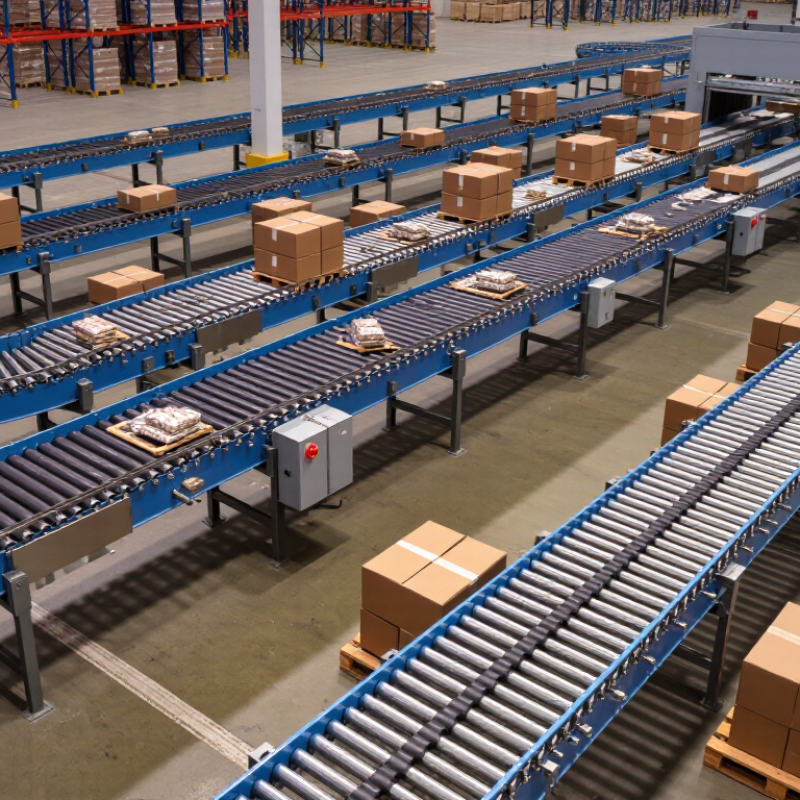
Strip patterned conveyor belts use raised longitudinal or diagonal strips to improve grip, guide products, and reduce slipping on inclined lines. Their structure usually combines a woven carcass, bonding layers, and a wear-resistant top cover. Rubber suits heavy bulk handling, while PVC or polyurethane supports cleaner food and packaging environments. Pattern height matters. Excessive height can trap residue and complicate cleaning.
Fortune Business Insights valued the global conveyor belt market at about USD 5.85 billion in 2023, with continued growth projected through 2032. MarketsandMarkets also forecasts expansion in conveyor system demand, driven by warehouses, mining, logistics, and automated production. These figures explain why manufacturers increasingly test belt geometry, tensile strength, abrasion resistance, and tracking stability before shipment. In field inspections, a poorly matched strip pitch can create product bounce, especially near transfer points. This is often overlooked.
Application conditions should guide the design. A steep aggregate conveyor may require deeper strips and stronger rubber covers. A parcel line may need finer patterns, tighter tolerances, and low-noise operation. Engineers should check pulley diameter, belt speed, moisture, temperature, and loading impact against recognized conveyor standards, including ISO 14890 where applicable. One practical mistake remains common: selecting traction first and maintenance second. That choice can shorten service life. Manufacturers should provide test data, splice guidance, and cleaning instructions, not vague performance claims.
| No. | Belt Construction Profile | Surface Pattern | Typical Belt Thickness | Pattern Height | Carcass and Cover | Common Materials | Recommended Incline | Typical Applications | Key Design Advantage |
|---|---|---|---|---|---|---|---|---|---|
| 1 | Standard inclined conveying profile | Chevron or V-shaped strips | 4–8 mm | 2–5 mm | Polyester fabric carcass with abrasion-resistant rubber or PVC cover | Aggregates, sand, packaged goods | Up to approximately 20° | Quarries, warehouses, general material handling | Improves traction and reduces product rollback |
| 2 | Deep-chevron heavy-duty profile | Moulded deep V strips | 8–14 mm | 8–16 mm | Multi-ply textile or steel-reinforced carcass with thick rubber covers | Crushed rock, coal, gravel, bulk ores | Approximately 20–25° | Mining, primary crushing, bulk transfer systems | Provides high grip under heavy loading and impact |
| 3 | Rough-top flexible profile | Fine raised strip or rough-top texture | 3–6 mm | 1–3 mm | Monofilament or fabric reinforcement with PVC or polyurethane cover | Cartons, parcels, bags, light boxes | Up to approximately 15° | Distribution centers, parcel handling, airport logistics | Balances grip, low noise, and gentle product handling |
| 4 | Corrugated-sidewall profile | Strip pattern with bonded sidewalls and cleats | 6–12 mm | 20–80 mm cleats | Rubber or PVC base belt with corrugated sidewalls and transverse cleats | Powders, grain, chips, recycled materials | Up to approximately 90° | Vertical conveying and space-limited installations | Maximizes conveying capacity in a compact footprint |
| 5 | Food-grade strip profile | Low-profile longitudinal strips | 2–5 mm | 1–2 mm | Polyurethane or thermoplastic belt with sealed, hygienic surfaces | Bakery products, vegetables, meat, packaged food | Typically 5–15° | Food processing, inspection, washing, packaging | Supports sanitation and controlled product movement |
| 6 | Oil-resistant industrial profile | Raised diagonal strips or herringbone pattern | 4–9 mm | 2–6 mm | Nitrile-based rubber or oil-resistant PVC with textile reinforcement | Oily parts, metal components, machining waste | Up to approximately 20° | Automotive plants, metalworking, component transfer | Limits swelling and loss of traction caused by oils |
| 7 | Heat-resistant strip profile | Shallow chevron or ribbed surface | 6–12 mm | 2–5 mm | Heat-resistant rubber cover with heat-stable textile carcass | Hot clinker, foundry sand, hot minerals | Typically 10–20° | Cement, foundries, thermal processing facilities | Retains flexibility and strength at elevated temperatures |
| 8 | Flame-retardant enclosed profile | Chevron strips with anti-slip texture | 5–10 mm | 2–5 mm | Flame-retardant rubber or PVC covers with reinforced textile carcass | Coal, mineral concentrates, combustible bulk materials | Up to approximately 20° | Underground mining and enclosed transfer galleries | Combines traction with improved fire-safety performance |
| 9 | Abrasion-resistant quarry profile | Heavy raised diamond or chevron strips | 8–16 mm | 4–10 mm | High-tensile textile or steel-cord carcass with abrasion-resistant rubber | Sharp stone, aggregate, demolition waste | Approximately 15–25° | Quarry plants, recycling, bulk aggregate processing | Resists cutting, gouging, and surface wear |
| 10 | Modular plastic strip profile | Raised ribs, transverse strips, or textured modules | 10–25 mm module pitch | 2–8 mm | Interlocking thermoplastic modules joined with hinge rods | Containers, food packs, bottles, wet-process products | Typically 5–20° | Washdown lines, food packaging, bottling, accumulation systems | Allows fast repair by replacing individual modules |
It has raised longitudinal or diagonal strips on its surface. These strips improve grip and guide products. Less slipping.
Rubber suits heavy bulk handling, mining, and abrasive materials. PVC or polyurethane fits cleaner packaging and food environments. Material choice matters.
Taller strips improve traction on steep conveyors. They may also trap residue and make cleaning harder. More grip is not always better.
Check belt width, strip height, incline angle, carcass strength, cover grade, speed, and pulley diameter. Moisture and temperature also matter.
No. Parcel lines may need fine patterns and quiet operation. Aggregate lines often require deeper strips and stronger rubber covers.
Request abrasion, tensile, elongation, ozone, and splice performance data. Batch records and inspection certificates add useful traceability. Brochures are not enough.
Compare service life, cleaning time, replacement lead times, and downtime risk. A cheaper belt may cost more later. This judgment remains imperfect.
Confirm minimum pulley diameter, belt tension, tracking behavior, splice methods, and cleaning instructions. Check product bounce near transfer points. Small errors become expensive.
This article provides a practical overview of Strip Patterned Conveyor Belts, explaining their surface design, structural features, material options, and common applications across industries such as logistics, food processing, packaging, manufacturing, and material handling. It also outlines the main criteria for comparing manufacturers, including belt durability, pattern quality, load capacity, dimensional accuracy, customization options, production standards, technical support, delivery capability, and overall value.
The article then presents a carefully organized selection of ten types of Strip Patterned Conveyor Belts manufacturers, focusing on their product capabilities and industry specializations without emphasizing brand names. Finally, it offers guidance on choosing the right supplier by matching belt specifications with operating conditions, conveying materials, cleaning requirements, temperature exposure, installation needs, and long-term maintenance expectations. The goal is to help buyers evaluate suppliers objectively and select a reliable solution that improves conveying efficiency, product stability, and operational performance.

 Boao Rubber