What Is a Herringbone Conveyor Belt Used For? This question matters when materials must move steadily across an inclined or uneven route. Herringbone Conveyor Belts use a chevron-shaped surface pattern to improve grip. The raised pattern helps products resist sliding, especially when the conveyor climbs toward a higher processing stage.
According to conveyor specialist David J. Kruse, “A belt pattern is useful only when it matches the material, incline, and operating conditions.” That principle deserves attention. A herringbone belt can carry aggregates, sand, grain, packaged goods, wood chips, and recycled materials. It is often selected for loading points, stockpiles, screening systems, and mobile conveyors. The chevron ribs guide material toward the belt’s center. This can reduce spillage beside the frame.
The pattern is not a universal solution. Wet clay may cling between the ribs. Fine powder can fill the grooves. Excessive speed may still cause dust and backward movement. Operators should check belt width, cleat height, incline angle, tension, and pulley compatibility. A small stone trapped near the return roller can create serious wear. I have seen specifications focus on carrying capacity while overlooking cleaning access. That is a practical mistake. The best choice depends on the complete conveying system, not the belt pattern alone. This article examines real applications, operating benefits, limitations, and selection details for Herringbone Conveyor Belts.
What Is a Herringbone Conveyor Belt?
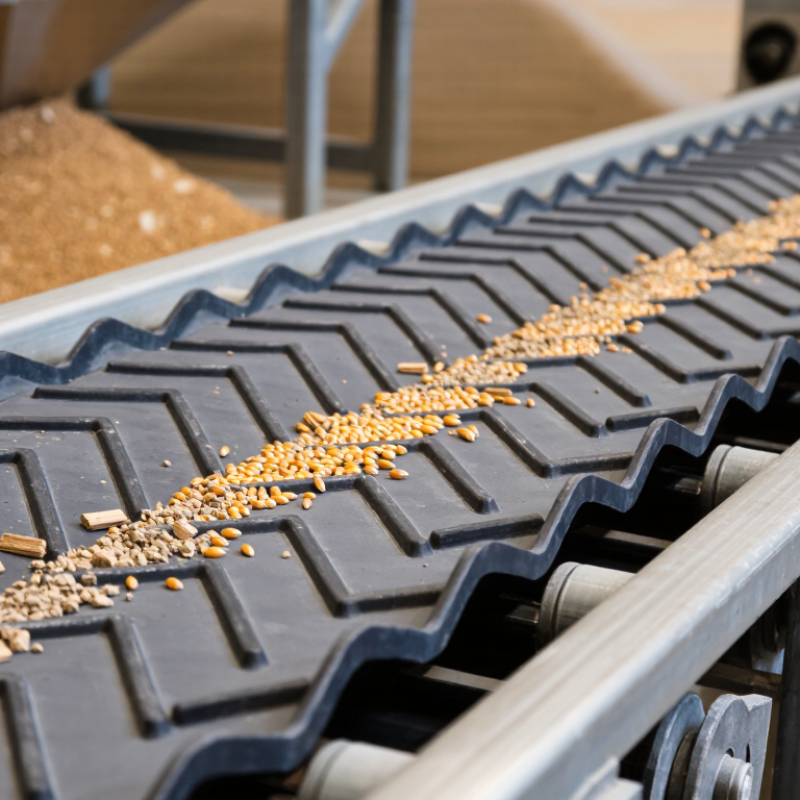
A herringbone conveyor belt has raised ribs arranged in repeating V-shaped patterns across its surface. The ribs help grip loose materials as the belt moves uphill, limiting rollback. Think of grain or small aggregates riding between angled ridges rather than sliding on a smooth surface. That matters.
The pattern’s shape and height vary by belt design. Selection depends on the material, incline, belt speed, and whether the load is dry or damp. A herringbone surface can improve traction, but it cannot guarantee that every product will stay in place. Test the actual material where possible. Small details matter.
Market context is useful, but it is not proof of a particular belt’s performance. Grand View Research valued the global conveyor belt market at USD 5.85 billion in 2023 and projected a 4.9% compound annual growth rate from 2024 to 2030. That broad industry figure covers many belt types, not just herringbone designs. A limitation worth remembering. For practical specification, compare rib geometry and belt construction with the load and operating conditions; a pattern that works well for dry grain may behave differently with damp material.
This top-view schematic shows the repeating V-shaped profile of a herringbone belt. These belts are commonly used to move loose materials on inclined conveyors; the raised pattern can help grip material and guide it toward the belt’s center. Performance depends on the material, belt profile, and conveyor angle.
Note: The chart illustrates the pattern only; its coordinates are normalized and are not measured operating data.
What Is a Herringbone Conveyor Belt Used For?
A herringbone conveyor belt uses angled ribs to control how materials travel. The ribs form repeated V-shaped channels across the belt surface. As the belt moves, these channels grip loose products and guide them toward the center. This action reduces sideways sliding, especially on inclined conveyors.
The pattern also creates small carrying pockets. These pockets help move aggregate, grain, packaged goods, and other bulk materials upward. Friction between the ribs and the load supports steady movement. The center-facing angles can limit spillage near the belt edges. This matters when material drops from a feeder or passes through a transfer point.
The effect is simple. Not always.
In field inspections, belt performance depends on more than the pattern. Belt speed, incline angle, material moisture, and loading rate all influence results. Wet clay may stick between the ribs, while dry fines can escape through gaps. Operators should check whether the rib height matches the material size. Oversized ribs may disturb fragile products, and shallow ribs may offer too little grip.
A properly loaded belt usually works better than an overloaded one. Material should enter near the belt center, not heavily against one side. Regular checks can reveal worn ribs, tracking problems, or buildup beneath the belt. The herringbone design improves control, but it cannot correct poor feeding or unsuitable conveyor settings.
Agriculture and food processing are common settings for herringbone conveyor belts. Their angled cleats help grip loose or damp materials on inclines, such as grain, fruit, and packaged foods. The USDA reported that U.S. corn production reached 14.9 billion bushels in 2024, illustrating the scale of material handling required across agriculture. The belt pattern can help reduce rollback, but performance depends on cleat height, belt speed, and product shape.
Food plants may use these belts to move produce between washing, sorting, and packing areas. FAO’s Food Loss Index estimates that 13.2% of food was lost between harvest and retail in 2021. Better conveying cannot prevent every loss, but stable movement may reduce spillage at transfer points. Recycling and aggregates operations also use cleated belts to carry mixed materials or small stones up inclines. Still, the pattern is not a cure-all: sticky residue can collect between cleats, and irregular loads may shift.
Tips: Match cleat spacing to the material. Test with real product, including damp or uneven loads. Check transfer points for spills; small problems often start there.
| Industry | Common Materials | Typical Use | Why Use a Herringbone Belt? | Application Considerations |
|---|---|---|---|---|
| Agriculture and grain handling | Grain, seed, animal feed, and other dry bulk crops | Moving materials from receiving points to storage, processing, or loading areas | The patterned surface can help improve grip and reduce material rollback on inclined runs. | Select a belt and cleat profile suited to the material, incline, throughput, and cleaning requirements. |
| Mining and quarrying | Coal, ore, sand, gravel, and crushed stone | Transporting bulk material on inclined conveyors | Raised chevron-style profiles can help contain material and limit backward movement on slopes. | Consider abrasion, impact, belt tension, lump size, and the conveyor’s operating environment. |
| Construction and building materials | Aggregate, cement raw materials, and other granular products | Feeding or transferring material between processing stages | The surface pattern can provide added traction where a smooth belt may allow material to slide. | Check incline angle, particle size, moisture, and whether the belt is compatible with the conveyed material. |
| Recycling and waste processing | Mixed recyclables, shredded material, and selected dry waste streams | Moving material to sorting, screening, or processing equipment | A patterned surface can help maintain material movement on inclined sections. | Account for sharp objects, contamination, variable loads, and the need for routine belt inspection. |
| Forestry and wood processing | Wood chips, bark, and other wood-processing residues | Transferring loose by-products between machines or storage areas | The raised pattern can improve grip when loose material is conveyed uphill. | Choose a design that suits the material’s size and moisture level, as well as the required incline. |
| Food processing and agricultural products | Selected packaged or bulk products, depending on belt design | Inclined transfer in compatible handling or processing lines | A suitable patterned belt can help reduce product slip on an incline. | Use only belt materials and constructions that meet the line’s hygiene, food-contact, and washdown requirements. |
In general: Herringbone conveyor belts are used where a patterned surface can improve grip or help reduce rollback, particularly on inclined conveying runs. The appropriate belt depends on the material, incline, operating conditions, and any industry-specific requirements.
Herringbone conveyor belts use angled ribs or grooves to help carry loose materials, especially on inclined runs. The pattern guides items toward the belt’s center and can improve grip. It is useful for grain, seeds, packaged goods, and some damp materials. That matters when a flat belt lets items slide backward. Still, the pattern alone cannot prevent every spill.
Common belt materials include PVC, polyurethane, rubber, and fabric-reinforced constructions. PVC is often chosen for general handling and easy cleaning, while polyurethane can suit applications needing a smooth, wear-resistant surface. Rubber offers flexibility and grip for heavier or rougher loads. The belt’s carcass also matters: fabric layers add strength, but the right thickness depends on load and conveyor design. More material is not always better.
Designs vary in rib height, spacing, angle, and surface finish. Lower ribs can suit smaller items; taller patterns may hold bulkier loads more securely, though they can make cleaning harder. Some belts use a continuous chevron, while others have separated ribs that leave more open surface. Check pulley size, incline, temperature, and washdown needs before choosing. Small details count. I would not assume one pattern fits every product; testing a sample with the actual load is a sensible step.
A herringbone conveyor belt uses angled grooves or cleats to move materials upward with better grip. It is common in agriculture, recycling, food handling, and bulk material processing. The chevron pattern helps guide loose products toward the belt center. This reduces sideways movement during transport.
Its main benefit is traction. The belt can carry grain, sand, soil, boxes, and other uneven loads on moderate inclines. Materials are less likely to slide backward when the conveyor starts or stops.
The pattern also improves load stability during short, fast transfers. In practical use, this can reduce spillage around loading points. Quieter operation is possible with suitable speed and belt tension.
Limitations still matter. A herringbone surface can trap dust, seeds, or wet residue inside its grooves. Cleaning may take longer than cleaning a flat belt. Deep patterns can also mark delicate products. High-impact materials may wear the cleats unevenly. Incorrect alignment causes edge damage and unstable tracking. It is not a universal fix. Very steep applications may need additional mechanical support. Operators should check the material’s moisture, size, weight, and abrasiveness before choosing the belt. I have found that performance often depends more on correct tension and loading than on the pattern alone. That detail is easy to overlook.
It has raised ribs forming repeated V-shaped patterns. These ribs grip loose materials during upward movement.
Angled ribs create small carrying channels. They guide materials toward the belt center and reduce sideways sliding.
It can move grain, fruit, aggregates, packaged foods, and small stones. Material shape still matters.
Yes, especially when loose materials might roll backward. However, belt speed and incline angle still affect performance.
Often, yes. Damp grain may stay controlled, but wet clay can stick between the ribs.
Match them to the material size, moisture, and fragility. Large ribs may disturb delicate products.
Feed material near the center. Avoid heavy loading along one side, and do not overload the belt.
Check worn ribs, material buildup, tracking issues, and transfer-point spills. Small problems often begin there.
No. It can reduce rollback and edge movement, but it cannot fix poor feeding or unsuitable settings.
Test the actual material, including damp or uneven loads. A pattern that works for dry grain may fail elsewhere.
Herringbone Conveyor Belts are designed with a repeating angled pattern that helps guide, grip, and stabilize materials as they move along a conveying system. The herringbone structure can improve traction and reduce slipping, especially when products travel on inclined or inclined-to-horizontal surfaces. Depending on the application, the belt may be produced with different widths, surface textures, materials, and reinforcement layers to handle varying loads, temperatures, moisture levels, and cleaning requirements.
These belts are commonly used in industries such as agriculture, food processing, recycling, packaging, and general material handling. Their main benefits include reliable product movement, improved load control, and flexible installation options. However, the patterned surface may require more careful cleaning and maintenance, and it may not be suitable for every product type or conveying condition. Proper belt selection should consider material size, weight, incline angle, operating environment, and required durability to achieve safe and efficient performance.

Boao Rubber