A Polyester Rubber Conveyor Belt may look simple on a factory floor: a dark rubber surface, woven polyester plies, and a splice joining the loop. Its performance, however, depends on more than belt strength. Load, speed, pulley diameter, material abrasiveness, and site conditions all affect service life. A mismatch can mean edge wear, mistracking, or unplanned stoppages. Small details matter.
Grand View Research estimated the global conveyor belt market at about US$5.85 billion in 2023, with projected growth through 2030. This is a broad market estimate, not a polyester-belt sales figure. Still, it signals sustained demand for dependable conveying systems. Professor Gabriel Lodewijks, a researcher in conveyor transport systems, has published work emphasizing the importance of evaluating conveyor performance as a complete system. A useful takeaway is: “Choose the belt for the whole conveying system, not for a single specification.” This is a concise editorial paraphrase, not a verified verbatim quotation.
For buyers comparing manufacturers in China, the practical questions are specific. What reinforcement fabric is used? How are tensile strength, adhesion, and cover thickness tested? Can the supplier provide traceable test records and support after delivery? A polished catalogue is not enough. Nor is a low quoted price proof of value. The right manufacturer should explain its specifications clearly and match them to the working conditions. That judgment is not always easy. This guide examines the evidence behind the claims and the details that deserve a closer look.
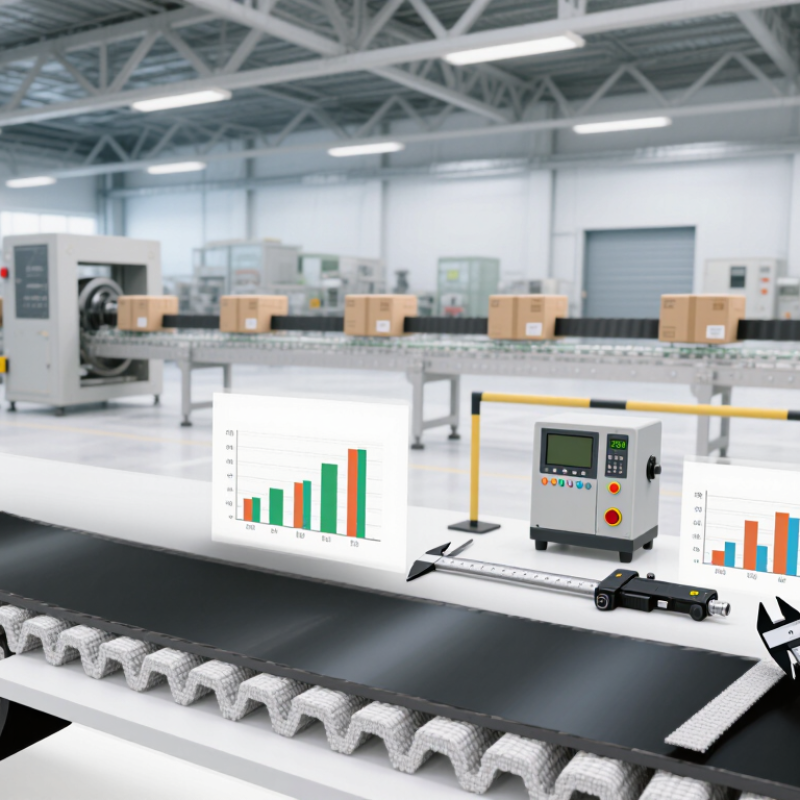
A polyester rubber conveyor belt uses a fabric carcass made mainly from polyester yarns. The lengthwise yarns carry tension, while crosswise yarns help the belt stay stable. Rubber covers surround this core and help resist abrasion, impact, and moisture. The exact cover compound and thickness vary with the material being conveyed.
In practical use, this construction can suit mines, aggregate plants, warehouses, and general material handling lines. For example, a belt moving crushed stone needs different wear resistance from one carrying packaged goods. Polyester fabric also tends to stretch less than some other textile options, which can help maintain tracking. Still, no belt works perfectly in every layout. A tight transfer point, poor pulley alignment, or trapped stones can shorten its service life, even when the specifications look right.
Tips: Match belt strength, cover grade, and width to the load and operating conditions. Share details such as material size, temperature, belt speed, and pulley diameter when requesting a selection. Check joints and edges during routine inspections. Small cracks matter. Specifications are useful, but observing the belt under real operating conditions can reveal issues a product sheet misses.
A polyester rubber conveyor belt begins with its fabric carcass. Polyester yarns form the lengthwise warp, while crosswise yarns commonly use nylon or another suitable fiber. This arrangement helps the belt resist stretching while staying flexible around pulleys. Fabric layers are inspected for alignment, thickness, and visible damage before production continues. Small variations matter.
Rubber compounds are mixed to suit the belt’s working conditions, such as abrasion, temperature, or contact with oils. The rubber is then calendered into sheets and pressed into the fabric layers. This step helps the rubber penetrate and bond with the textile. Operators build the belt to its specified number of plies and thickness, then join the ends into a continuous loop. A poor splice can weaken an otherwise well-made belt.
The assembled belt enters a vulcanizing press, where controlled heat and pressure cure the rubber and bond the layers. After cooling, technicians check dimensions, surface condition, splice quality, and, where required, adhesion or tensile performance. Exact settings depend on the compound and belt construction; one recipe does not fit every line. Even careful inspection can miss a minor defect, so process records and consistent sampling remain important.
Best Polyester Rubber Conveyor Belt Manufacturer in China
Which Features Distinguish Leading Chinese Manufacturers?
A capable manufacturer can explain its belt construction in measurable terms. Polyester warp yarns help limit elongation, while the weft and rubber covers must suit the conveyor’s load, pulley diameter, and environment. Ask for test records showing tensile strength, cover thickness, adhesion, and abrasion results—not just a product catalogue. Small details matter. Grand View Research estimated the global conveyor belt market at USD 5.6 billion in 2023, with projected growth from 2024 to 2030. That outlook makes consistent quality control more than a sales claim.
Look for batch traceability, documented inspection steps, and samples that match the proposed specification. A useful supplier will ask about belt speed, material size, impact points, and operating temperature before recommending a grade. ISO 14890 provides requirements for textile-carcass conveyor belts used in general applications; it is a useful reference, not proof that every belt suits every site. Request the actual test method and results. Check whether the factory tests finished belts as well as raw materials. No factory is flawless. Clear records and direct answers make shortcomings easier to spot before installation, when a mismatched cover or weak splice can become costly.
Polyester rubber conveyor belts serve industries that move heavy or abrasive materials continuously.
In mining and quarrying, they carry crushed stone, ore, and sand from feeders to screens and stockpiles. A polyester fabric carcass provides dimensional stability with moderate stretch, while rubber covers help resist impact and surface wear. Cover grade, splice quality, and pulley diameter still matter.
Cement and aggregate plants use these belts to transport limestone, clinker, and other bulk materials. Ports and warehouses rely on conveyor systems to move grain, fertilizer, and packaged goods between storage areas and vessels.
In agriculture, belts carry harvested crops and animal feed. Food-contact requirements should be checked separately, since ordinary rubber compounds may not suit direct food handling. Details matter.
Recycling facilities use conveyor belts to move mixed paper, plastics, and metal scrap toward sorting lines. Sharp edges and uneven loading can damage belt covers, so operators should inspect tracking, joints, and idlers regularly.
A belt may match a specification on paper yet fail early if it runs misaligned. Not every site is gentle.
Temperature, moisture, chemical exposure, and material size should guide selection. That choice can be less simple than a catalog suggests.
Choosing a polyester rubber conveyor belt manufacturer requires matching the belt to the actual duty, not just comparing prices. Grand View Research’s 2024 global market report valued the conveyor-belt market at USD 5.85 billion in 2023 and forecast 4.1% annual growth through 2030. That scale makes supplier claims easy to find, but not equally easy to verify. Ask for the carcass construction, rated tensile strength, cover thickness, and suitable operating conditions. A belt carrying abrasive ore needs different cover performance from one moving packaged goods.
Request recent test reports tied to the proposed belt specification. Check tensile strength, elongation, adhesion between plies, and abrasion resistance. Confirm that the test methods match recognized standards, such as ISO 14890 for conveyor belts with textile carcasses. A certificate without test values tells you little. That matters.
Assess production controls as well as samples. Ask how the factory tracks raw materials, cures belts, and handles nonconforming batches. Compare a sample’s measured thickness and splice guidance with the written quotation. Speak with references whose loads, speeds, and environments resemble yours. A glossy sample can still mislead; I would want batch-level records before committing. Price is useful, but downtime, replacement intervals, and service response belong in the same comparison.
Compare the belt’s specified longitudinal tensile-strength class with your application requirements. These representative classes are expressed in newtons per millimetre (N/mm); they are specification options, not a manufacturer ranking.
When evaluating a supplier, request product-specific test reports and verify belt construction, cover requirements, applicable standards, and jointing details. Confirm the current standard and exact specification for your application before ordering.
It has a fabric core made mainly from polyester yarns, covered with rubber. The core carries tension and helps the belt stay stable.
It can handle crushed stone, aggregate, and packaged goods. The right cover depends on the material and working conditions.
The covers help resist abrasion, impact, and moisture. Their compound and thickness should match the job.
It tends to stretch less than some other textile options. That may help tracking, but it cannot fix poor pulley alignment.
Share the load, material size, temperature, belt speed, and pulley diameter. These details help narrow the suitable strength, width, and cover grade.
Ask for test records on tensile strength, cover thickness, adhesion, and abrasion. Check batch traceability, too.
No. A tight transfer point or trapped stones can shorten its life. Specifications do not tell the whole story.
Inspect joints and edges during routine checks. Small cracks matter. A product sheet may miss what you see on a running belt.
A Polyester Rubber Conveyor Belt combines a strong polyester fabric carcass with durable rubber covers to move materials reliably in demanding environments. Its performance depends on the quality of the fabric, rubber compounds, bonding, and construction. Manufacturing typically involves preparing and aligning fabric layers, applying rubber compounds, building the belt structure, and vulcanizing it under controlled heat and pressure. Careful process control helps create consistent strength, flexibility, and resistance to wear.
Leading Chinese manufacturers distinguish themselves through dependable quality control, technical expertise, customization options, and clear product documentation. These belts serve industries such as mining, construction, agriculture, manufacturing, and logistics, where suitable strength and cover properties are essential. Buyers can compare manufacturers by reviewing material specifications, test results, production capabilities, quality procedures, delivery reliability, and after-sales support. Matching belt construction to the conveyed material, operating conditions, and equipment requirements helps buyers make a practical, long-term selection.

Boao Rubber